science
The science of staying young, healthy, and in-shape.
The Silent Killer Hiding in Your Gut: Why Visceral Fat Is More Dangerous Than You Think
You might think that pinchable belly fat—the muffin top, the love handles—is the worst offender when it comes to health risks. But here’s the twisted truth: the real danger isn’t what you can grab… it’s what’s lurking beneath.
By Rukka Nova2 years ago in Longevity
Got Extra Fat?
It all started with a discovery that didn’t seem particularly life-altering. A cosmetics company sponsoring research on human longevity figured out special properties of the cells that make up the outer human ear, scientifically known as Keratinized Stratified Squamous Epithelium (KSSE), or type of tissue characterized by multiple layers of flattened cells that are hardened and waterproofed by keratin. Specifically, KSSE have longer biological life and virtually do not age or form wrinkles.
By Lana V Lynx2 years ago in Longevity
The Incredible Egg
"The Misunderstood Champion" For centuries, eggs have been a breakfast staple–simple, humble, yet packed with more nutrition than most so-called "superfoods". Yet somewhere along the way, fear crept in. "Aren’t eggs bad for cholesterol?" "Won’t they clog my arteries?" However, we need facts–science has cleared the charges once held against the egg. Not only are they not capable of harm–they’re one of the most nutrient-filled dishes on Earth. Let’s crack open the “8 proven benefits” of eggs and discover why they deserve a permanent spot on your plate. 1. The Cholesterol Myth: Why Eggs Don’t Harm Your Heart Yes, eggs contain cholesterol–about ‘187mg per egg’ (two-thirds of your daily intake). But here’s the twist: “dietary cholesterol doesn’t spike blood cholesterol" “like we once thought”. - Studies reveal that “70% of people experience no rise in LDL (a.k.a ‘bad’ cholesterol) from eggs.” - Eggs actually boost HDL (a.k.a ‘good’ cholesterol), which protects your heart. - The liver produces cholesterol daily–if you eat more, it simply makes less (Cholesterol homeostasis). Verdict: Eggs aren’t the villain. They’re a “heart-healthy food”. 2. Choline: The Brain’s Secret Weapon (You’re Probably Deficient) Ever heard of “choline”? Most people haven’t—yet it’s “vital for brain function, cell membranes, and liver health”. - “One egg = 100mg+ of choline” (25% of your daily needs). - Critical for “memory, fetal brain development, and detoxification”. - Low choline? Linked to “fatty liver disease and cognitive decline”. Fun fact: Pregnant women need *extra choline—and eggs are the easiest source! 3. Heart Protector: Eggs Fight LDL Cholesterol For decades, eggs were blamed for heart disease. Now, research flips the script: - Eggs *raise HDL* (the "cleanup crew" cholesterol). - They *change LDL particles from small/dense (dangerous) to large/fluffy (harmless). - A 2020 study found “no link between eggs and heart disease in healthy adults. Bottom line: Eggs reduce heart risks, not worsen them. 4. Eye Armor: Lutein & Zeaxanthin (Nature’s Sunglasses) Aging eyes face macular degeneration—the leading cause of blindness. Eggs fight back: - Loaded with lutein and zeaxanthin, antioxidants that ‘shield your retinas’. - Studies show ‘egg eaters have 20-30% lower cataract risk’. - These nutrients are *better absorbed from eggs than spinach* (thanks to the fat in yolks!). Pro tip: Want maximum eye benefits? Don’t skip the yolk!
By FAVOURFRANCIS OFILI2 years ago in Longevity
How climate change is supercharging pollen allergies
Climate change amplifies the potency of pollen allergies, making them more severe than ever. Climate change presents itself as a current life-threatening issue through unexpected impacts that affect our daily routines. Pollen allergies have emerged as a prevalent medical complication that ranks among the most unpleasant allergies today. Allergy seasons are becoming longer and more severe based on reports from worldwide populations that suffer from allergic reactions. Seasonal symptoms such as sneezing and eye itching, along with respiratory discomfort, now qualify as long-term health issues. But why is this happening? The rising temperature of the Earth affects the seasonal cycle of plants that produce pollen.
By Fuad Naser2 years ago in Longevity
Ageless Mind: Simple Daily Habits
Aging is an inevitable part of life. Our hair grays, our skin wrinkles, and our joints may ache a little more with each passing year. But while we accept these physical signs of aging, the thought of cognitive decline—forgetting names, misplacing keys, or struggling with simple tasks—can be far more concerning. Fortunately, just as we can maintain our physical health through exercise and diet, science shows we can also nurture our brains and slow cognitive aging.
By Muhammad Adil2 years ago in Longevity
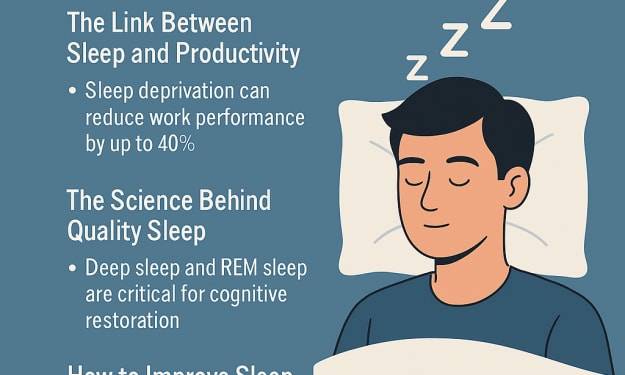
Sleep to Succeed: The Untapped Power of Rest in Boosting Productivity. AI-Generated.
The Science of Sleep: Why Rest is the Key to Productivity In the relentless pursuit of productivity, sleep often becomes the first casualty. Yet, contrary to popular belief, sacrificing rest doesn’t enhance performance—it undermines it. Scientific research continues to confirm that sleep is not a luxury but a biological necessity intricately tied to our ability to think clearly, make decisions, manage emotions, and maintain physical health. Let's investigate the science behind sleep and the reasons why it is essential for true productivity. The Biological Importance of Sleep
By Md Nusaib Ul Islam2 years ago in Longevity
When Love Meets Legacy: How Romantic Relationships Shape the Stories We Leave Behind
Introduction Love is not merely a fleeting emotion confined to a moment in time; it is the foundation upon which legacies are built. When two lives intertwine in romance, they create a narrative that extends far beyond their immediate relationship. Their love becomes a thread woven into the broader tapestry of family traditions, artistic expressions, memories, and cultural identities. In this exploration, we reflect on how romantic relationships shape the stories we leave behind, touching every aspect of our lives—from the intimate corners of home to the grand stages of art and collective memory.
By Mysteries with Professor Jahani2 years ago in Longevity
The Reason Why Moving Slow Can Create Faster Progress
We live in a World that Frequently wants Faster Progress. More Results, Less Time, Obtained Yesterday. I get it. There is a Pressure that is Placed On Us from our Society Today that Pushes this Agenda.
By H.E. Dr. Cody Dakota Wooten, COIE, DFM, DHM2 years ago in Longevity