longevity magazine
Longevity Magazine highlights health, wellness, anti-aging, inspirational weight loss stories, and healthy tips.
Longevity. Content Warning.
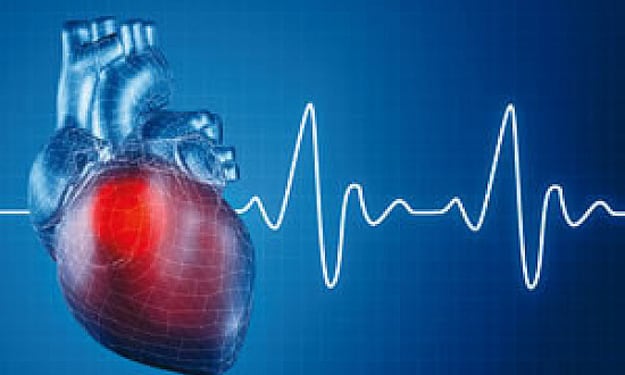
“High Blood Pressure: Unveiling the Facts & Myths” Introduction: Greetings, dear reader! As I delve into the fascinating world of high blood pressure, I can't help but be intrigued by the array of facts and myths surrounding this silent yet significant health concern. High blood pressure, also known as hypertension, affects millions of people worldwide and is a leading cause of cardiovascular diseases. Yet, there are many misunderstandings and misconceptions that cloud our understanding of this condition. Fear not, for I am here to be your guiding light through the maze of information. In this informative expedition, we will debunk the myths and unveil the realities of high blood pressure, empowering you with knowledge and understanding. So, fasten your seatbelts, and let's navigate this captivating journey with a sprinkle of humor and a touch of wisdom!
By Khusal Ram Dhital3 years ago in Longevity
SLEEP PHYSIOLOGY
Sleep Physiology Sleep is a brief state of unconsciousness in which the brain responds predominantly to internal rather than external stimuli. It is a self-regulating and easily reversible process. Unlike other states of unconsciousness such as coma or general anesthesia, sleep is a natural, cyclic process that is self-regulated and easily reversible to wakefulness. Electroencephalograms, or EEGs, are used to assess electrical activity in the cerebral cortex's superficial layers. Different types of brain waves correspond to different levels of consciousness. High-frequency low-voltage beta-waves are produced by a fully awake and alert brain. Brain waves become slower in frequency and greater in voltage as consciousness fades. Sleep is divided into two stages: rapid eye movement (REM) sleep and non-rapid eye movement (non-REM) sleep. Non-REM sleep occurs in three stages: N1 through N3 N1 is the condition of transition between awake and sleep. Alpha-waves dominate the EEG. Light stimulation easily wakes the sleeping. N1 is usually only present for a few minutes. N2 is the following stage, a deeper sleep state in which stronger stimuli are required to awaken. Slower and more irregular brain activity with small bursts of "sleep spindles" and "K-complexes." Memory consolidation is thought to happen during this period. N3 is greater in depth than N2. Delta-waves that are slow dominate. Muscles relax, vital signs drop, and rousing the sleeper is tough. Before REM sleep, N3 is often followed by a transition to N2. REM sleep is distinguished by rapid eye movements under the eyelids, as the term implies. It's also known as "paradoxical" sleep since the EEG of the brain is quite similar to that of awake. Most dreams and autonomic reflexes occur during REM sleep. Vital signs are normal, but skeletal muscles are completely inhibited, preventing sleepers from acting out their dreams. This stage sequence occurs 4 to 5 times in a typical night. As the night progresses, the duration of N2 and REM sleep increases, while N3 decreases. Sleep duration and timing are controlled by two key factors: homeostatic drive and circadian rhythm. The body's need for sleep, or the pressure to sleep, is referred to as homeostatic drive. It is at its lowest after a good night's sleep and begins to rise when we awaken. The desire to sleep will continue to grow until sleep is achieved. Adenosine is understood to be a chemical that accumulates throughout awake hours and causes the pressure to sleep. Caffeine appears to increase wakefulness by acting as an antagonist to adenosine. Sleeping requirements rise with illness, as well as cognitively challenging or physically demanding activities. Circadian rhythm is the body's circadian clock for the sleep-wake cycle. It regulates the time of sleep. The master clock is housed in the hypothalamic suprachiasmatic nucleus, or SCN. It gets light input from the retina and resets the clock every day in accordance with the day-night cycle. The SCN is most active during the day and least active at night. The sleep-promoting area is found in the hypothalamic ventrolateral preoptic nucleus, VLPO. The SCN inhibits and adenosine activates the VLPO. GABA is used by the VLPO to inhibit wake-promoting areas of the brain, such as numerous nuclei in the reticular formation and the posterior hypothalamus. The tuberomammillary nucleus, or TMN, and hypocretin neurons are two of these locations. The TMN is mostly made up of histaminergic neurons, but it also generates GABA, which inhibits VLPO. The "switch" between sleep and wake is based on this mutual restraint. The hypocretin neurons stimulate the TMN and are essential for staying awake. Narcolepsy is caused by the loss of these neurons. During the day, the SCN inhibits VLPO and stimulates hypocretin neurons, driving the switch towards waking. By the end of the day, when SCN activity is lowest and pressure to sleep is highest, VLPO is activated, and sleep is "switched" on.
By Davina Ehiaghe Amiator3 years ago in Longevity
15 Major Benefits of Walking, According to Experts
One of the most powerful ways to maintain a healthy weight, keep your joints strong, and live longer is also one of the simplest, no matter your age. The health benefits of walking are endless, and experts agree by adding walking to your daily routine, you can greatly improve your physical and mental health.
By malang nizam3 years ago in Longevity
Longevity
Diabetes: Facts & Myths Introduction: Greetings, dear reader! As I embark on this enlightening journey to unravel the truths about diabetes, I can't help but marvel at the misunderstandings and myths that surround this complex condition. Diabetes is a widespread health concern that affects millions worldwide, yet it remains shrouded in confusion and misconception. Fear not, for I am here to be your guiding light through the maze of misinformation. In this informative expedition, we will debunk the myths and face the reality of diabetes, arming you with knowledge and understanding. So, fasten your seatbelts, and let's dive into the fascinating world of diabetes, where clarity and humor go hand in hand!
By Khusal Ram Dhital3 years ago in Longevity
7 Stamina -supporting food sources to fuel your body with energy
7 Stamina -supporting food sources to fuel your body with energy Further developing stamina is fundamental for improving, generally speaking, wellness. Stamina is the capacity to support physical or mental exertion for a lengthy period of time. It underlies further developed execution in cardiovascular exercises, strength preparation, and day-to-day exercises. To assemble perseverance, steadily increment preparation time and distance while integrating lighter loads and more repetitions for strong perseverance. Pushing through mental and actual obstructions, permitting time for recuperation, and keeping up with appropriate energizing and hydration are essential.
By Shobhit Srivastava 3 years ago in Longevity
Longevity
The Latest Research on Longevity Introduction: Greetings, dear reader! As I embark on this enlightening journey to explore the latest research on longevity, I can't help but imagine a world where age is just a number, and the passage of time is a gentle breeze, rather than a relentless force. The quest for longevity has been an enduring fascination of humanity, driving scientists and researchers to unravel the mysteries of aging. Today, we stand at the cusp of revolutionary breakthroughs, where science and innovation converge to offer us a glimpse of a longer, healthier, and more vibrant future. So, fasten your seatbelts as we delve into the realm of cutting-edge research, where the fountain of youth awaits!
By Khusal Ram Dhital3 years ago in Longevity
Lower Your Blood Pressure with Just a Few Minutes: The Surprising Power of Wall-Sits Revealed!
Hypertension: The Silent Threat Hypertension, often known as the "silent killer," can quietly damage your arteries and lead to severe complications like heart attacks and strokes without displaying any symptoms. Alarming statistics show that nearly 47% of adults in the United States suffer from high blood pressure, contributing to around 670,000 deaths in 2020. Finding effective ways to manage and lower blood pressure is crucial for millions of individuals.
By Nova Green3 years ago in Longevity