lifestyle
Living your life - the health and wellness way.
Why Are More People Getting Cancer? Doctors Reveal: It’s Not Smoking or Drinking, but These 4 Habits Are to Blame!
Walking down the street or scrolling through social media, it’s hard to avoid hearing about someone who’s been diagnosed with cancer. It seems like more and more people are falling ill, especially in bustling cities where cases are skyrocketing. This begs the question: What’s causing cancer to spread like wildfire? Is it the environment we live in, or are our daily habits unknowingly planting the seeds of danger?
By Skillful Living2 years ago in Longevity
What Are Angel Numbers? A Beginner’s Guide to Divine Messages
You know when you just happen to glance at the clock right at 11:11? Or you get a receipt that totals up to $5.55? What about spotting the same few digits on license plates or phone numbers? If this happens to you a lot, it's probably not just random chance. Many people believe these repeating number patterns are actually gentle nudges, little signs, or even high-fives from the universe, your angels, or maybe just your own deeper knowing. They're often called "angel numbers."
By Angel Insights by Divine Vibes2 years ago in Longevity
Three Japanese concepts that can offer insights into finding happiness.
a world that praises speed, achievement, and personal gain, the quiet, enduring wisdom of Japan offers an alternate compass for those seeking a more peaceful, fulfilling existence. Rooted in centuries of cultural values, Japanese philosophies surrounding happiness, resilience, and connection invite us to shift our focus—not toward what we can accumulate, but toward what we can cultivate: presence, balance, and compassion. At the heart of this philosophy is the idea that happiness is not merely a solo pursuit. It is relational, communal, and deeply intertwined with the people around us. In contrast to the Western emphasis on self-actualization and individual triumph, Japanese perspectives remind us that joy often lives in the spaces between us. It's not just about who you are alone, but who you are with others—how you show up, how you care, and how you hold space for both pain and peace. Harmony as a Foundation for Happiness Japan’s long history with natural disasters and societal rebuilding has carved into its cultural consciousness a deep respect for harmony—both with nature and each other. There is a shared understanding that no one truly stands alone. Interdependence is not a weakness but a natural state of being. This perspective fosters systems of mutual support and social responsibility, allowing communities to bounce back together when life becomes difficult. This collective mindset offers strength not through domination or control but through cohesion. Even in the aftermath of tragedy, there exists a unique capacity for what can be called “eudaimonic well-being”—a form of happiness based not on fleeting pleasure, but on meaning, purpose, and the ability to stay connected to something larger than oneself. The Beauty of the Ordinary In the pursuit of long-term contentment, Japanese wisdom often centers around subtlety. There is beauty in simplicity, grace in imperfection, and richness in routine. Unlike the pursuit of peak experiences or dramatic milestones, this philosophy embraces the steady rhythm of everyday life. This outlook is encapsulated in the phrase heibun na jinsei—a stable, ordinary life. Not ordinary in a dull or unremarkable sense, but in the way a calm sea is ordinary after a storm, or a warm cup of tea is ordinary on a cold morning. It is in these gentle moments where happiness quietly takes root: a shared smile, a home-cooked meal, or the sound of birdsong through an open window. The emphasis is not on amplifying life’s highs, but on appreciating its constants. This practice of noticing the micro-delights of daily life can make contentment feel more accessible, more consistent. Rather than waiting for extraordinary joy, we become receptive to the subtle beauty that’s already present. Three Core Concepts for Inner Peace Three deeply embedded cultural concepts offer a blueprint for cultivating this kind of lasting happiness: 1. Omoiyari – Often translated as empathy or compassion, omoiyari goes beyond sympathy. It is an intuitive understanding of another’s feelings, needs, or unspoken emotions. It fosters deep relational harmony, and just as importantly, can be directed inward. Practicing omoiyari toward ourselves—meeting our own flaws and struggles with gentle acceptance—can transform how we navigate hardship. 2. Wabi-sabi – This is the art of finding beauty in imperfection and impermanence. A cracked bowl, an aging tree, a faded photograph—wabi-sabi honors the passing of time and the uniqueness born of wear and weather. In life, it encourages us to release our pursuit of perfection and instead embrace what is real, raw, and evolving. There is serenity in accepting that things don’t need to be flawless to be meaningful. 3. Shikata ga nai – Meaning “it cannot be helped,” this phrase embodies a spirit of radical acceptance. Life will bring discomfort, failure, loss. Rather than resisting what we cannot change, this mindset encourages us to acknowledge reality and move forward with grace. It’s not resignation, but resilience—a way of bending rather than breaking when the winds of life blow strong. A Slow, Sustainable Joy While modern life often tells us to maximize productivity and chase the next thrill, Japanese philosophy invites a different pace—one that’s slow, mindful, and deeply rooted. It teaches us that happiness is not a finish line, but a rhythm we learn to dance to. It’s the steady beat of breath, the pauses between words, the stillness between seasons. By integrating these values into our daily lives, we can begin to redefine what success, peace, and happiness truly mean. We can learn to measure wealth not by what we own, but by how present we are in our lives. We can start to see ourselves not as isolated individuals but as threads in a greater tapestry—connected, significant, and enough. In the end, Japanese wisdom offers more than cultural insight; it offers a quiet revolution for the heart. One that says you don’t need more to be happy. You need to be here—fully, gently, and with an open heart. That’s the beginning of a good life.
By SophiaSoso2 years ago in Longevity
''Sugarcane'' The Sweet Plant That Fights Disease
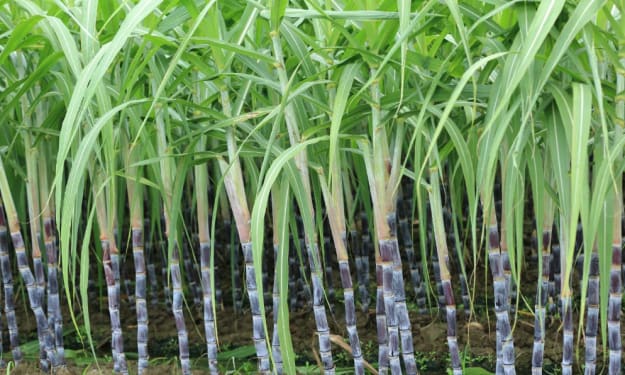
Sugarcane that could cure cancer Among sugar-containing plants, the sugarcane tree is preeminently the one to which we must pay homage. Kids love sugarcane trees as fruit. Sugarcane, that delectable food and fruit, also forms a basic stock for making sugar. Moreover, sugarcane is a precious medicinal plant that has curative agents for various diseases. SUGAR-CANE, a plant with stems, but not raised from seed. Sugarcane, which grows in a bushy form, grows to 4 to 12 feet tall. Sugarcane, a member of the Panchamula species, is recognized by various names in Ayurveda.
By Rohitha Lanka2 years ago in Longevity
Embracing Soft Feminity: My Journey as a 25 Year-Old Woman in
As I stand at the threshold of adulthood, I find myself drawn to a path less traveled - the journey of soft femininity. In a world that often celebrates toughness and resilience, I yearn to explore the gentle yet profound power of embracing my femininity in its softest form. Join me as I embark on this journey of self-discovery and empowerment.
By Mikyah Henderson2 years ago in Longevity
STOP Eating Sugar NOW: The Silent Killer Hijacking Your Brain, Body & Future
You’ve heard it before—"cut down on sugar." But what if we told you that sugar isn't just unhealthy... it’s potentially destroying your brain, aging your body faster, and setting you up for chronic disease and early death?
By Rukka Nova2 years ago in Longevity
The Aromatic Heritage of Sri Lanka
Sri Lanka, the resplendent island once known as Serendib and Ceylon, has enchanted the world for centuries with its fragrant treasures. Its legacy as a major trading hub for spices has shaped both its history and its natural wellness industry. Today, Sri Lanka continues to shine through its rare and high-quality essential oils—aromas steeped in tradition, purity, and the lush biodiversity of the island.
By Chanul Benedict2 years ago in Longevity
Unlocking the Secrets of Ayurveda
Introduction: The Ancient Wisdom of Ayurveda In today's world, where health and wellness trends come and go, one ancient practice has stood the test of time: Ayurveda. Originating in India over 5,000 years ago, Ayurveda, meaning "the science of life," offers a holistic approach to health that emphasizes balance in all aspects of life—mind, body, and spirit.
By Pankaj Ayurveda2 years ago in Longevity
The Seeds of Light
The Seeds of Light Long ago, before steel ruled the earth and cities choked the skies, there was a land cloaked in lush green and kissed by golden sunlight. It was a world untouched by human greed—a place called **Zarava**. In Zarava, life blossomed not just in form, but in purpose. Every leaf, every stream, every creature had a role in keeping the land in harmony.
By Gabriela Tone2 years ago in Longevity
Desi meals
The Rich Cultural Heritage of Desi Sobat/Pashtun Cuisine The Pashtun culture, also known as Desi Sobat, is a rich and vibrant heritage that spans centuries. One of the most integral parts of this culture is its cuisine, which reflects the region's history, geography, and traditions. Pashtun cuisine is known for its bold flavors, aromas, and spices, which are carefully blended to create dishes that are both nourishing and delicious.
By Imdad Ullah 2 years ago in Longevity