health
Keeping your mind and body in check - popular topics in health and medicine to maintain a long and healthy life.
Ultimate Review of the Reinmoson 800GPD 7-Stage Reverse Osmosis System: The Key to Pure, Safe Drinking Water. AI-Generated.
In an era where water quality is increasingly under scrutiny, the Reinmoson 800GPD 7-Stage Reverse Osmosis System emerges as a robust solution for ensuring clean, purified water. This comprehensive review delves into five key aspects of the Reinmoson system, examining its features, the harmful contaminants it addresses, and the benefits of adopting a reverse osmosis (RO) filtration system.
By Future of Resilience 2 years ago in Longevity
10 foods that get rid of nicotine and the damage to tobacco that causes heart disease
Smoking is among the main causes of diseases due to bad lifestyle habits, the Journal of Psychology and Health says, that tobacco smoking is one of the leading causes of premature deaths worldwide, and the sad thing is, smokers often acknowledge the damage they inflict on their bodies and may report their desire to stop it while continuing to smoke, because the nicotine in cigarettes generate a strong desire to smoke, which overcomes all other anti-smoking emotions.
By reda hamouda2 years ago in Longevity
Unleashing Your Potential: A Review of "Strength Within: A Fitness Journey Journal". AI-Generated.
Embarking on a fitness journey requires more than just dedication to workouts; it necessitates a structured approach to tracking progress, setting goals, and fostering mental resilience. "Strength Within: A Fitness Journey Journal" offers a comprehensive solution to these needs, providing users with a powerful tool to support their journey toward physical and mental well-being. This review explores five key benefits of fitness journaling as embodied in "Strength Within," highlighting how it can transform your approach to achieving fitness goals.
By Future of Resilience 2 years ago in Longevity
The Surprising Link Between Diet and Heart Disease
Heart disease is a condition that affects millions of people worldwide. The prevalence of heart disease is rising, and it has become a major concern for public health. It’s often believed that genetics and lifestyle factors like smoking and lack of exercise contribute to heart disease. However, recent studies have revealed a surprising link between diet and heart health, suggesting that what we eat plays a crucial role in preventing and managing heart disease.
By Sanjay Upadhyay2 years ago in Longevity
The Hidden Dangers of Ignoring Cardiac Symptoms
The heart, the mighty engine that keeps us alive, is more than just a symbol of love and affection. This vital organ works tirelessly, pumping fresh blood and oxygen to every inch of our body. However, we often take its tireless devotion for granted, ignoring the subtle warnings it sends us. In this article, we will delve into the world of cardiac symptoms and uncover the hidden dangers of disregarding them.
By Sanjay Upadhyay2 years ago in Longevity
Drinking Alcohol In Moderation Maybe Harmful
art writing...Extensive research indicates that consuming even small amounts of alcohol shortens your life expectancy. The only people who advocate for moderate drinking are those who have major defects. This is the finding of a review that examined 107 research that examined the relationship between alcohol use and an individual's chance of dying at a certain age from any cause. According to Tim Stockwell of the University of Victoria in Canada, "people need to be skeptical of the claims that the industry has fuelled over the years." "It is evident that they have a strong interest in portraying their product as a life-extending agent rather than a cancer-causing agent." Despite the low dangers associated with moderate drinking, consumers should be informed of its negative effects, according to Stockwell. "It may not be as dangerous as many other things you do, but it's still important for customers to know," he states. "I believe it's crucial that warning labels be used by manufacturers to alert consumers to potential risks." The ideal way to evaluate the effects of alcohol would be to monitor people's health and alcohol consumption throughout their lives after randomly assigning them to drink or not as children. Researchers are forced to ask people about their drinking habits and observe them over far shorter periods of time since such studies are not possible. Numerous research of this type had by the 2000s revealed that there was a J-shaped curve in the association between drinking and the chance of dying at a given age. That is, compared to non-drinkers, persons who drank a little had a somewhat lower chance of dying from any cause, but those who drank more had a significantly higher risk. At the time, Stockwell claims he was certain the science was settled. However, since then, he and other researchers have demonstrated that these studies had serious faults. The primary issue is that they frequently fail to make a comparison between individuals who have never consumed alcohol and those who have. Rather, a number of research contrast those who no longer drink with those who do. According to Stockwell, people who stop up drinking, particularly in later age, frequently do so due to health issues; hence, moderate drinkers seem healthier in contrast. According to Stockwell, while some studies purport to compare "never drinkers" with current drinkers, their definitions of the latter group frequently include occasional drinkers. One study, for example, classified people as lifetime abstainers even if they drank up to 11 times a year. According to Stockwell, "the vast majority of studies do not, in our opinion, deal with this potential source of bias." To be clear, efforts have been made to address this. We don't believe that they handled it properly. As a matter of fact, his team discovered that only six out of the 107 papers they examined effectively addressed these potential sources of bias, and none of these six indicated that moderate drinking decreased risk. According to Stockwell, "the [high-quality] studies suggest a linear relationship." "Although our research focuses on all-cause mortality, the primary concern is heart disease, which is inevitably the result of excessive alcohol consumption." Poorer quality studies are more likely to claim a positive effect, as the review unequivocally demonstrates (Duane Mellor, British Dietetic Association). However, he draws attention to the fact that it ignores the social implications of moderate drinking. The advantages of interacting with people are still probably going to outweigh the risks associated with consuming one or two drinks, he says, even though it is healthier to socialize without alcohol. "The difficulty might be in limiting alcohol consumption in this manner." With these few findings it is essential to take into consideration if you should keep drinking that Alcohol or not.
By Claire_Madu2 years ago in Longevity
Risk factors that increase high blood pressure
High blood pressure is a common medical condition that has recently increased even among young people, and the causes of high blood pressure are due to genetic and lifestyle factors, and high pressure may result from another health conditions, such as kidney disease, adrenal disorders, and others.
By reda hamouda2 years ago in Longevity
What is Haola ?
Haola what does it mean? Haola means All is well so be it, well it doesnt mean that everything is okay around but to manifest the change so that the bad won't drain us down we can uplift through chanting haole or haola every time life gets too tough or relation with people it also has great power to heal more serious issues and diseases
By Antea Lumina Kala Matylda 2 years ago in Longevity
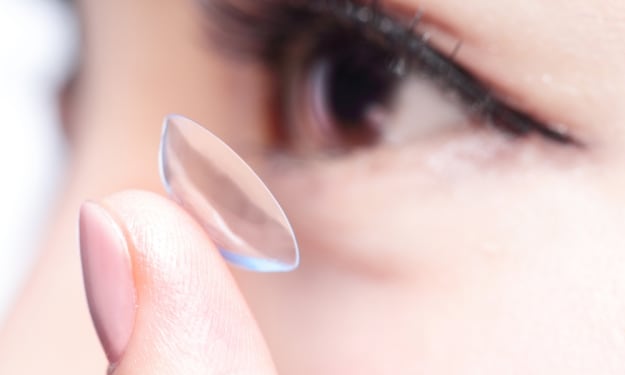
Clear Vision, Clear Choice: Contact Lens Supplier Guide
Navigating the world of contact lenses can be like trying to find your way through a foggy forest. With countless brands, types, and suppliers, it's easy to feel overwhelmed and unsure where to start. But fear not! This guide is your trusty compass to help you find your way to clear vision and comfortable wear.
By Barbara Honey2 years ago in Longevity
Why PRP Treatment for Joints in London is Gaining Popularity Among Patients
As the field of regenerative medicine continues to advance, Platelet-Rich Plasma (PRP) treatment for joint pain in London has emerged as a promising non-surgical solution for patients seeking relief from chronic musculoskeletal conditions. In London, the popularity of PRP therapy for joints has been on the rise, drawing attention from individuals looking for effective and natural alternatives to traditional treatments. This article delves into the reasons behind the growing demand for PRP treatment, its benefits for joint health, the safety and effectiveness of PRP injections, as well as considerations for choosing a reputable clinic in London. By exploring the key aspects of PRP therapy, prospective patients can gain a better understanding of this innovative approach to managing joint pain and promoting healing.
By John Francis2 years ago in Longevity
Managing Post-Surgery Urinary Issues: Solutions for Frequent and Incomplete Urination After Cystitis Glandularis Treatment
Cystitis glandularis is a common bladder condition characterized by symptoms such as urinary frequency, urgency, and incomplete emptying. For some patients, surgery may be an effective method to alleviate these symptoms. However, even after the procedure, some patients may still experience frequent urination and the sensation of incomplete emptying, significantly affecting their quality of life. Why do these symptoms persist after surgery, and how can they be addressed?
By Jane Smith2 years ago in Longevity