fact or fiction
Is it a fact or is it merely fiction? Fact or Fiction explores the lesser known truths in the health and wellness world of Longevity.
Why the Unseen Is More Real Than the Seen
Most people instinctively treat what they can see as what is most real. Events, outcomes, behavior, and results feel concrete because they can be measured, witnessed, recorded, and verified. What happens in front of us appears more solid than what formed it before anyone noticed. That instinct is understandable, but it quietly reverses the order of reality. The visible world is usually not where causality begins. It is where causality finally becomes visible.
By Peter Thwing - Host of the FST Podcast6 months ago in Longevity
Belief Does Not Create Truth
When Belief Is Treated as Authority One of the most persistent confusions in modern discourse is the idea that belief itself carries epistemic authority. People speak as though believing something strongly, collectively, or sincerely grants it a special status, as if conviction were a substitute for correspondence with reality. This confusion is not harmless. It collapses the distinction between what people think and what actually is. Once that distinction collapses, truth becomes negotiable and error becomes untouchable.
By Peter Thwing - Host of the FST Podcast6 months ago in Longevity
Comfort Is Not a System
When Comfort Becomes a Compass Modern culture increasingly treats comfort as a guiding principle. Ease is framed as wisdom. Emotional smoothness is treated as maturity. Difficulty, tension, or frustration are often interpreted as warning signs rather than signals to be examined. Over time, this shift quietly reshapes how people make decisions, resolve conflict, and structure their lives. A life organized around avoiding discomfort eventually loses the ability to interpret difficulty correctly.
By Peter Thwing - Host of the FST Podcast6 months ago in Longevity
Anger Is a Signal, Not a Verdict
When Feeling Becomes Authority Modern culture increasingly treats emotional intensity as moral clarity. The stronger a feeling is, the more justified it is assumed to be. Anger, in particular, is often treated as evidence that something is wrong and that action is required immediately. This assumption collapses an important distinction between emotional response and moral truth. A feeling may be real without being reliable. It may reveal pressure without revealing justice. It may expose conflict without explaining what the conflict means.
By Peter Thwing - Host of the FST Podcast6 months ago in Longevity
What the Unseen Realms Might Actually Be
When people hear talk of “unseen realms,” the mind often jumps immediately to the abstract or the speculative. It can sound mystical, distant, or untethered from ordinary life, as though it refers to something separate from daily experience rather than something embedded within it. That reaction is understandable. The unseen, by definition, resists direct inspection. But it may be worth asking whether what we call unseen is actually less real, or whether it is simply less acknowledged.
By Peter Thwing - Host of the FST Podcast6 months ago in Longevity
Out with the Old, In with the New, for We Are the Only Solution
When One Season Ends When one season ends, another begins. That sounds simple until the season ending is one that carried pain, history, attachment, regret, and people who once mattered deeply. Letting go is not always a clean decision. Sometimes it feels like tearing away a part of life that once gave identity, comfort, or familiarity. The past can become a place people revisit because it is known, even when it is not healthy. Familiar pain can feel safer than unfamiliar peace because the mind knows how to survive what it has already endured. But survival is not the same as growth, and remembering is not the same as living.
By Peter Thwing - Host of the FST Podcast6 months ago in Longevity
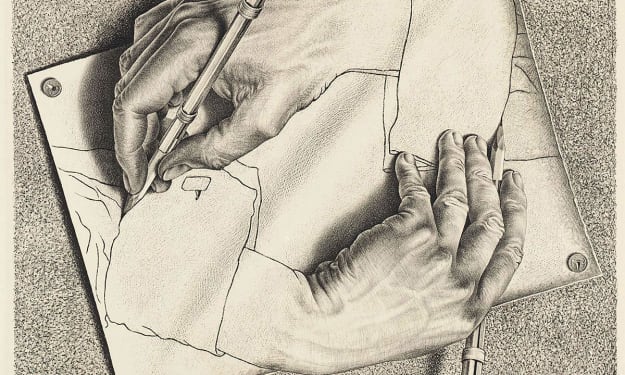
Why Handwriting Could Be Good For You
Introduction Text from the Instagram post below: 1. Dr. Tanaka tracked seniors over 80 in Kyoto and found one constant: they wrote by hand for 15 minutes a day. Typing uses one neural pathway, but physical writing hits 17 different zones. You’re robbing your focus when you pick a keyboard over a pen. 2. MRI scans show that writing by hand forces your brain to manage spatial logic and memory at the same time. This effort keeps you off autopilot. Typing is just muscle memory, while writing is active thinking. It’s the clear difference between simple data storage and actual cognitive engagement. 3. In one trial, those journaling by hand had 41% better recall and 34% faster processing. “The pen builds the hardware,” Tanaka noted. The industry hid this for years to protect revenue, since you can’t patent a pen. They chose profit over your memory. Write three original sentences every morning to keep your mind sharp.
By Mike Singleton 💜 Mikeydred 6 months ago in Longevity