
Staying Awake During a Colonoscopy Is Not for the Faint-Hearted
How to Get a Cancer Diagnosis in Real Time


When I went for an annual physical in November of 2023, little did I know it would turn up a common heart irregularity that would lead me to discover a cancerous tumor on my colon the size of an egg.
After an EKG (electrocardiogram), my doctor looked at me and said, “You have Atrial fibrillation, commonly known as AFib.” She explained that it was an electrical problem in the heart that made the upper chamber quiver, causing the heart to beat too fast or too slow.
The irregular heartbeat could also cause blood to accumulate in the upper chamber, creating blood clots that could trigger paralyzing or deadly strokes. So, she referred me to a cardiologist pronto.
I saw him within a week, and after taking an echocardiogram and a stress test to determine the overall health of my heart, he put me on the latest, greatest blood thinner, Eliquis.
It was around Thanksgiving, and after that annual feast, I first noticed blood in my toilet bowl after having a bowel movement.
This had not happened to me in years, ever since I was diagnosed with internal hemorrhoids. I changed my diet then, and they shrank—and the bleeding stopped.
However, this time the blood was much darker and came after every bowel movement.
Blaming the hemorrhaging on the blood thinner, I called my cardiologist, who, after hearing my symptoms, suggested I call a gastroenterologist (GI doctor).
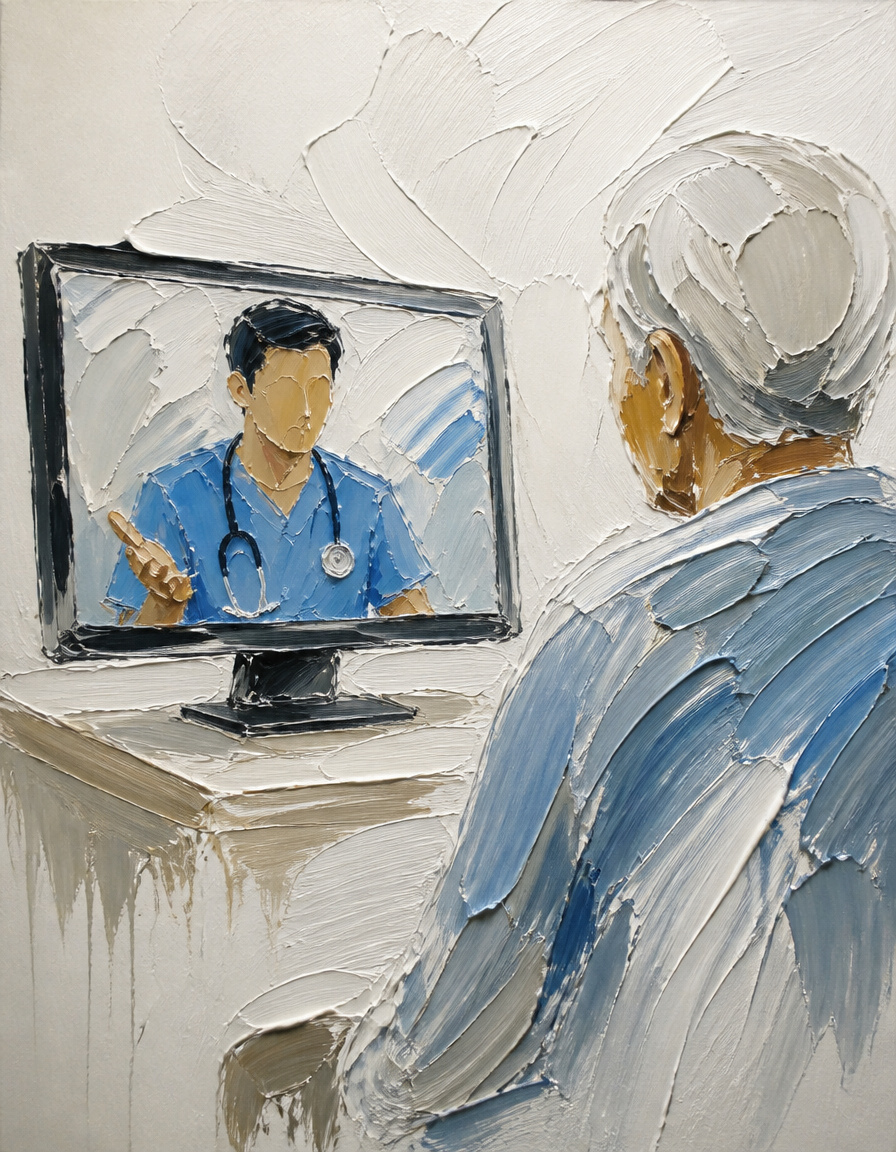
I called one of the health providers I was referred to and had an online consultation with a young, pleasant GI Doctor, who, after hearing my symptoms, said: “The bleeding could be caused by many things. I don’t want to alarm you, but sometimes when a patient starts taking a blood thinner, it can cause an unknown tumor to bleed.”
When he said that, it was as though someone had just sucker-punched me hard, and my face was so numb I could hardly move my lips and say, “Guess I need a colonoscopy?”
The doctor agreed, and when I told him I never had one before at age 74, he said it was long overdue. He didn’t lecture me, but my face turned red with shame as he told me he would have an assistant call me to set up an appointment as soon as one was available.
It was now mid-December, and after a life of good health, no operations, and little experience with the healthcare system, I soon learned that getting a colonoscopy was easier said than done.
There was at least a two-month wait, and the holidays, COVID looming, and inclement weather caused even more delays. So, after a short bout with COVID, I finally booked my Colonoscopy for March 2024.
As my trek into procedures and tests continued, I soon learned that it was a full-time job trying to secure, coordinate and stay on top of these tasks.
I am not going to get into the mechanics involved in the nasty, unpleasant preparation for a colonoscopy, but let’s just say you will be hungry and spend at least a full day a few feet away from your toilet bowl.
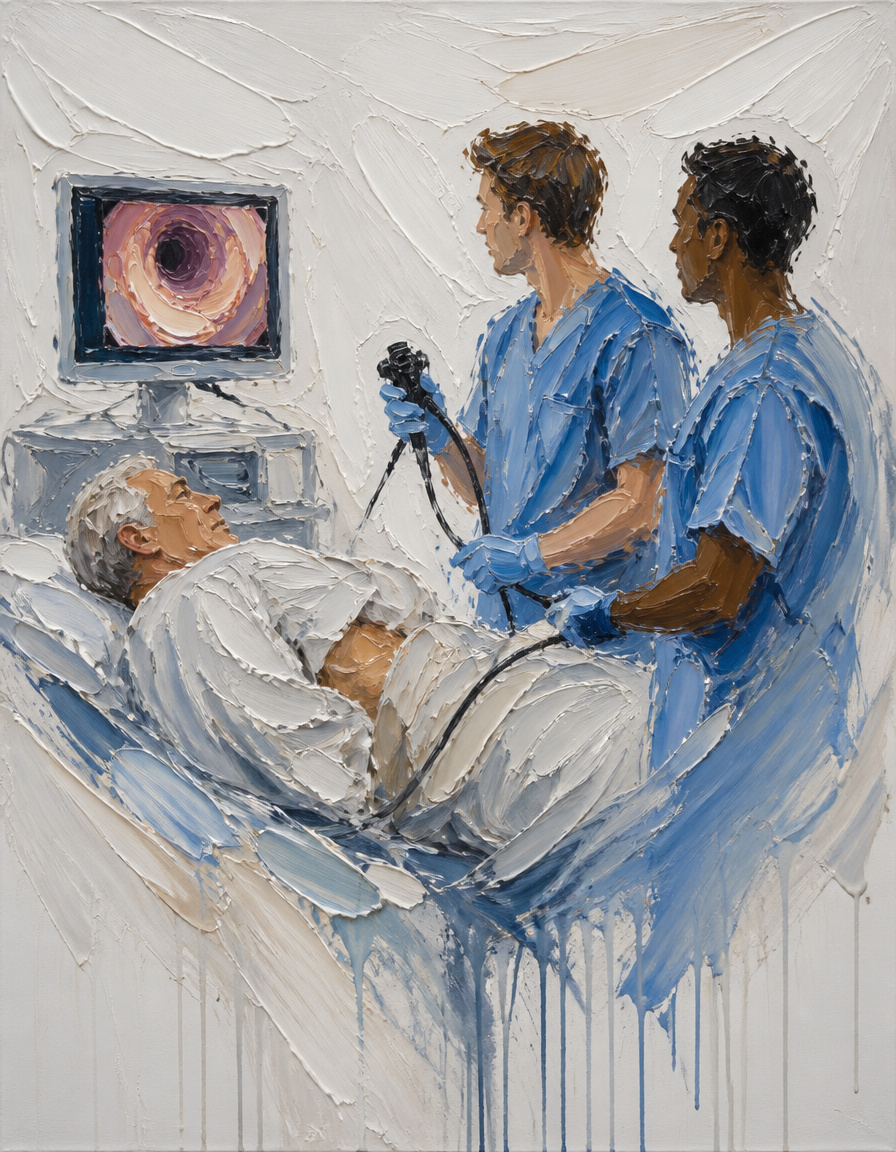
The day of my colonoscopy, near the end of March, 2024, my wife and I drove to the surgical center where I was prepped for the procedure. Both of us believed that the source of my rectal bleeding was most likely internal hemorrhoids.
My cardiologist had signed off on me being put asleep during the procedure, but I didn’t like the idea because I hadn’t been put under in 40 years, since getting dental surgery.
I mentioned this in passing to my GI doc, who paused, looked at me, and said, “If you think you want to stay awake during the procedure, it’s your decision.”
I told him I preferred to stay awake, as his assistant protested, saying, “I don’t think that is a good idea.”
The anesthetist looked at the doctor curiously and said, “If you need me, I will be out here.” She then left the room.
The next 30 seconds changed my life forever.
As he began probing my colon, I could feel a slight pressure, but it wasn’t painful, just strange, like something moving around in your gut.
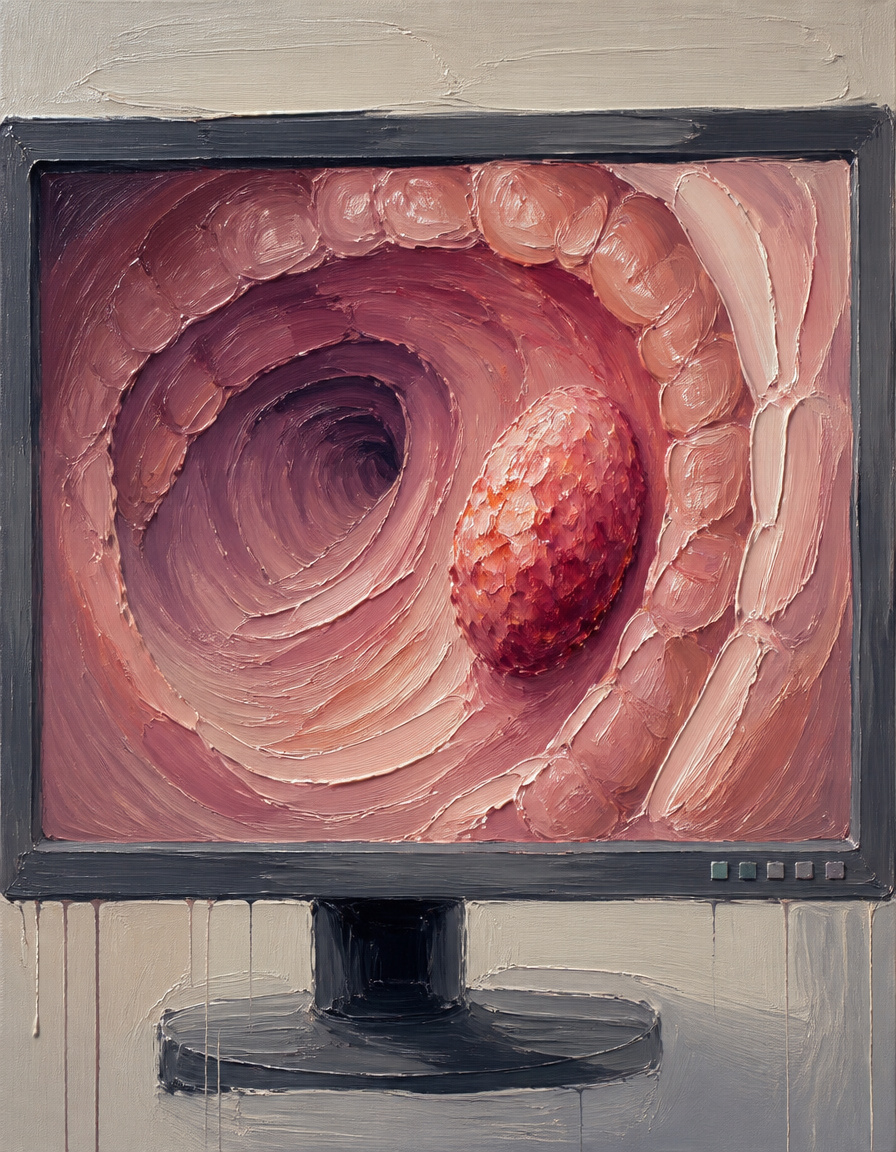
As I looked up at the large monitor viewing my colon, it reminded me of a video game, and these two, doctor and assistant, were a real team, really getting into it.
But then the probing suddenly stopped, and the doctor said, “Man, that is ugly.”
I looked, and before my eyes, I saw a dark mass in my colon shaped like an egg.
Quickly switching gears, the doctor said, “We will come back to that later.”
Keeping in good form, I said nothing and watched as this two-man team found, biopsied, and clipped no less than 11 polyps from my 70-year-old plus colon that was making its debut in dramatic fashion over the next 20 minutes.
They reminded me of a pilot and co-pilot in a high-tech jet fighter cockpit, eliminating enemy targets in rapid succession.
After taking care of the polyps, the doctor came back to my tumor, measured it, and took a biopsy, saying, “The biopsy will confirm it, but I believe this is a cancerous tumor. We’ll talk more about it once I finish my report.”
With that, they wheeled me out into a common area where others in curtained-off cubicles discussed their results with their doctors.

If there is one advantage to staying awake during a colonoscopy, it is that you get the good or bad news in real time, rather than being told as you come out of twilight sleep. The other advantage is, you can drive yourself home immediately.
When I got back to the cubicle, my wife was anxiously waiting for me. I looked at her and blurted out: “I have colon cancer, I think.”
She looked shocked, and her face turned pale.
Within a few minutes, my young doctor came into the room and solemnly told my wife what I already knew: that I had cancer.
He then said he had ordered a CAT scan with a local provider, which prompted my wife to ask, “Why do you need that?”
I turned to her and said: “Because he wants to see if the cancer has spread.”
My wife looked startled and managed to say: “Oh.”
“That’s right,” the young doctor said cheerfully.
“Is this a death sentence?” I asked the young man.
“No, with today’s medicine many things can be done. It is not a death sentence.”
He then asked if I had a surgeon.
I said no, and he offered to recommend one.
I said, “Please do.”
While I was there, he called the surgeon’s office and referred me. Because of this personal intervention, I saw the surgeon the very next week, without waiting.
This was the beginning of my cancer journey I am sharing with you. I have been in remission for almost two years and have had 2 major operations, extensive radiation, and chemotherapy.
I am grateful to be alive, and treasure every day I wake up. But I am not out of the woods, as no man or woman is who has a serious health problem.
This article is just one of many I intend to write about this subject and others in plain words, as I experienced them.
After looking and still looking death in the eye, I have the desire to tell the simple truth, as I see it, devoid of spin or orthodoxy.
Hope you stay for the ride.
Chet is an award-winning print journalist who has covered technology, government, and the Pentagon for various news organizations in the Baltimore/Washington corridor for over a decade. Chet has completed stints as a reporter for the Washington Business Journal, the Federal Times, and the Baltimore Daily Record.
About the Creator
Chet Dembeck
Chet is an award-winning print journalist who has covered technology, government, and the Pentagon for news organizations across the Baltimore/Washington corridor for decades. He also edited a healthcare newsletter.
Enjoyed the story? Support the Creator.
Subscribe for free to receive all their stories in your feed. You could also become a paid subscriber, letting them know you appreciate their work.
Comments
There are no comments for this story
Be the first to respond and start the conversation.