
Moment earthquake shakes hospital operating room in Japan
Doctors and nurses remain focused as an earthquake strikes during a critical operation, highlighting Japan’s advanced disaster preparedness and medical resilience.
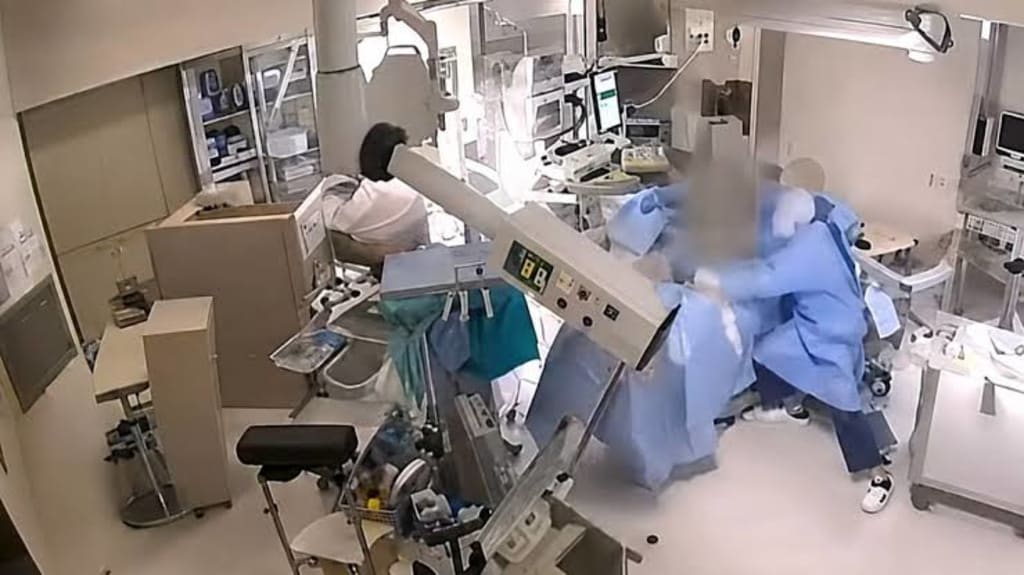
A dramatic moment unfolded inside a Japanese hospital when an earthquake struck while doctors were performing surgery, forcing medical staff to respond instantly as the operating room began shaking. The incident captured global attention as images and reports showed healthcare workers maintaining their focus despite the sudden natural disaster.
Japan, one of the world's most earthquake-prone countries, has developed some of the most advanced disaster preparation systems in the world. Hospitals across the nation are designed with strict safety standards, emergency power systems, and specialized training to ensure that medical teams can continue treating patients even during major earthquakes.
The earthquake occurred while a surgical team was carrying out a procedure, creating an extremely challenging situation. Medical staff reportedly felt the building move as tremors spread through the facility. Instead of abandoning the operation, the team followed emergency protocols designed for earthquake situations and worked together to protect the patient.
Operating rooms require complete concentration and precision, making any unexpected disruption extremely dangerous. Even a small movement can create risks during delicate procedures. However, Japanese medical professionals are trained to remain calm during emergencies and prioritize patient safety.
The hospital’s emergency response system immediately became active. Staff members checked medical equipment, stabilized instruments, and ensured that essential systems remained functional. The surgical team continued monitoring the patient while waiting for the shaking to stop and confirming that the operating environment remained safe.
Japan’s experience with earthquakes has shaped its approach to healthcare infrastructure. Hospitals are built with earthquake-resistant designs, including reinforced structures, flexible construction methods, and backup systems that allow critical services to continue during disasters.
Experts say this incident demonstrates the importance of disaster preparedness in medical facilities. In countries located along active seismic zones, hospitals must be prepared not only to survive earthquakes but also to provide emergency care immediately afterward.
The ability of medical teams to continue working during an earthquake is the result of years of planning and training. Japanese hospitals regularly conduct disaster drills involving doctors, nurses, emergency workers, and administrative staff. These exercises prepare healthcare workers for scenarios including building damage, power failures, mass casualties, and equipment challenges.
The earthquake also highlighted the professionalism and teamwork of healthcare workers. Operating room staff must communicate clearly under pressure, making quick decisions while avoiding panic. Their response showed the importance of experience and preparation during unexpected emergencies.
Patients undergoing surgery are among the most vulnerable during natural disasters. Unlike people who can quickly move to safety, surgical patients depend entirely on medical teams to protect them. Maintaining stability during an earthquake requires careful coordination between surgeons, anesthesiologists, nurses, and technical staff.
Japan’s medical facilities use advanced technology to reduce earthquake-related risks. Many hospitals have automatic safety systems that monitor building movement, emergency generators that activate during power loss, and equipment designed to remain stable during vibrations.
The country’s earthquake preparedness is based on lessons learned from previous disasters, including major earthquakes that caused widespread damage and loss of life. Each event has contributed to improvements in construction standards, emergency planning, and public awareness.
Natural disasters remain a major challenge for Japan because of its location along the Pacific Ring of Fire, an area known for intense seismic activity. Thousands of earthquakes occur in and around Japan every year, although many are too small to be felt.
While the earthquake inside the operating room was frightening, experts noted that the outcome demonstrated how preparation can reduce the impact of disasters. A well-trained response can make the difference between chaos and controlled action during emergencies.
Social media users praised the medical team’s professionalism after footage of the incident circulated online. Many people described the doctors and nurses as examples of courage and dedication because they continued their work despite facing a dangerous situation themselves.
However, disaster specialists also emphasized that even advanced preparation cannot eliminate all risks. Hospitals must continue improving emergency plans as climate change, urban development, and population growth create new challenges for disaster management.
The incident has renewed international interest in Japan’s approach to earthquake safety. Countries located in earthquake-prone regions often study Japanese systems for building design, emergency response, and public education.
Medical experts worldwide say hospitals should have clear earthquake procedures that include securing equipment, protecting patients, maintaining communication systems, and ensuring access to emergency supplies. The Japanese experience provides valuable lessons for healthcare facilities facing similar risks.
Beyond the immediate event, the earthquake serves as a reminder of the unpredictable nature of natural disasters. Hospitals are expected to function as places of safety, even when the surrounding environment becomes dangerous.
The successful response of the surgical team demonstrates the strength of preparation, teamwork, and professional training. Their ability to remain calm under pressure reflects the resilience of Japan’s healthcare system and its commitment to protecting patients during emergencies.
As investigations continue into the earthquake’s impact, the incident stands as a powerful example of how preparation and discipline can help overcome even the most challenging circumstances. The moment when an operating room shook during surgery was frightening, but it also showed the world the importance of readiness, cooperation, and medical dedication.
SEO Keywords: Japan earthquake, hospital operating room earthquake, Japanese medical team, earthquake preparedness Japan, disaster response, hospital safety systems, earthquake emergency management, Japan natural disasters.
About the Creator
Enjoyed the story? Support the Creator.
Subscribe for free to receive all their stories in your feed.
Comments
There are no comments for this story
Be the first to respond and start the conversation.