
Japan Retinal Surgery Device Market Set for Strong Growth as Advanced Eye Care Technologies Transform Vision Treatment
Aging Population, Rising Retinal Disorders, and Technological Innovation Drive Demand for Advanced Surgical Solutions Across Japan

The Future of Vision Care in Japan Is Taking Shape
Japan has long been recognized as one of the world's most advanced healthcare markets, and nowhere is this more evident than in ophthalmology. As the country continues to experience demographic changes driven by an aging population, the demand for specialized eye care treatments is increasing rapidly. Among the most critical areas of focus is retinal health, where advanced surgical devices are helping physicians preserve and restore vision for thousands of patients.
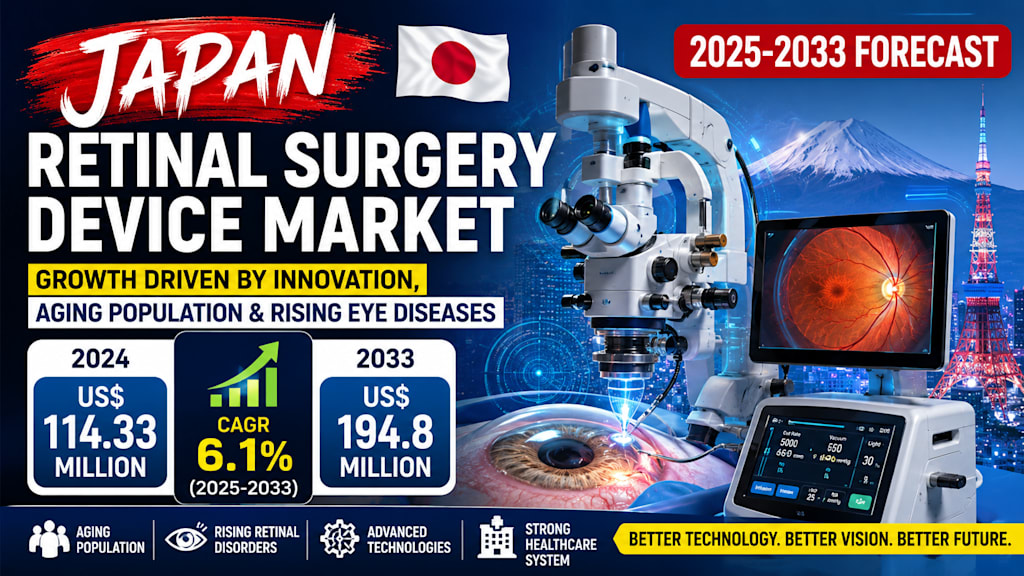
According to Renub Research, the Japan Retinal Surgery Device Market is projected to grow from US$ 114.33 million in 2024 to US$ 194.8 million by 2033, expanding at a CAGR of 6.1% between 2025 and 2033.
This growth reflects not only the rising prevalence of retinal diseases but also the country's commitment to adopting cutting-edge medical technologies that improve patient outcomes and surgical precision.
Why Retinal Surgery Devices Are Becoming Increasingly Important
The retina is a thin layer of tissue located at the back of the eye that plays a critical role in vision. Damage to the retina can lead to severe visual impairment and, in some cases, permanent blindness.
Conditions such as diabetic retinopathy, retinal detachment, macular holes, and epiretinal membranes are becoming more common in Japan due to increasing life expectancy and the growing burden of chronic diseases.
Retinal surgery devices enable ophthalmic surgeons to perform delicate procedures with greater accuracy, helping patients maintain their vision and quality of life.
As awareness about eye health improves and diagnostic technologies become more sophisticated, more patients are seeking treatment before vision loss becomes irreversible.
Aging Population Creates Significant Market Opportunities
Japan is one of the most rapidly aging nations globally. A substantial portion of its population is over the age of 65, creating a growing demand for age-related healthcare services.
Vision-related disorders often increase with age. Conditions such as age-related macular degeneration and retinal detachment are more frequently diagnosed among older adults, resulting in a higher number of surgical interventions.
The growing elderly population is therefore creating sustained demand for retinal surgery devices, including vitrectomy systems, retinal lasers, illumination equipment, and microsurgical instruments.
Healthcare providers are increasingly investing in advanced surgical technologies to accommodate the needs of this expanding patient population.
Rising Cases of Diabetic Retinopathy Fuel Market Expansion
Diabetes remains one of the leading public health challenges worldwide, and Japan is no exception.
As diabetes prevalence rises, diabetic retinopathy has become a major cause of vision impairment among adults. The condition occurs when high blood sugar levels damage retinal blood vessels, potentially leading to blindness if left untreated.
Early diagnosis and timely intervention have become priorities within Japan's healthcare system. Retinal surgery devices play an essential role in treating advanced diabetic retinopathy cases, particularly through vitrectomy procedures and laser therapies.
As healthcare providers continue to emphasize preventive screening and early management, the demand for specialized retinal treatment technologies is expected to increase significantly.
Technological Innovation Revolutionizing Retinal Surgery
One of the strongest drivers of market growth is continuous technological advancement.
Modern retinal surgery procedures are dramatically different from those performed just a decade ago. Today's surgeons have access to sophisticated imaging systems, high-precision laser equipment, and minimally invasive surgical tools that improve both safety and effectiveness.
Innovations transforming the market include:
High-resolution optical imaging systems
Robotic-assisted surgical technologies
Real-time intraoperative visualization
AI-supported diagnostic platforms
Advanced laser treatment systems
Improved microsurgical instruments
These innovations enable surgeons to perform highly complex procedures with greater confidence and precision.
Patients also benefit from shorter recovery periods, reduced complications, and improved visual outcomes.
Strong Healthcare Infrastructure Supports Growth
Japan's healthcare system is widely regarded as one of the best in the world. Universal healthcare coverage and access to specialized medical facilities provide a strong foundation for market expansion.
Hospitals, academic medical centers, and dedicated eye clinics across the country are equipped with advanced ophthalmic technologies, allowing patients to receive timely diagnosis and treatment.
Government initiatives promoting preventive healthcare have also increased awareness regarding retinal diseases. Routine eye examinations and screening programs help identify retinal disorders at earlier stages, enabling faster intervention and better patient outcomes.
The country's supportive regulatory environment further encourages the introduction of innovative retinal surgical technologies.
Growing Preference for Minimally Invasive Procedures
Modern patients increasingly prefer treatments that minimize discomfort, reduce recovery times, and lower the risk of complications.
This trend is driving demand for minimally invasive retinal surgical devices throughout Japan.
Advanced vitrectomy systems now feature smaller gauge instruments that require less invasive entry points, reducing surgical trauma and improving patient recovery.
Enhanced visualization systems and precision laser technologies further support minimally invasive approaches by allowing surgeons to operate with exceptional accuracy.
As patient expectations continue to evolve, manufacturers are focusing on developing devices that deliver both clinical effectiveness and superior patient experiences.
Key Product Segments Driving Revenue
Vitrectomy Machines
Vitrectomy machines represent one of the most important segments within the retinal surgery device market.
These systems are widely used to remove vitreous gel and treat various retinal conditions, including retinal detachment, diabetic retinopathy, and macular holes.
Continuous innovation in vitrectomy technology has improved procedure efficiency and safety.
Vitrectomy Packs
Disposable vitrectomy packs provide essential surgical tools and accessories required during retinal procedures.
The growing number of retinal surgeries is driving consistent demand for these products.
Surgical Instruments
Precision instruments remain indispensable in retinal surgery.
Manufacturers continue to develop more ergonomic and sophisticated instruments designed to improve surgical control and outcomes.
Microscopic Illumination Equipment
Advanced illumination systems enable surgeons to visualize retinal structures more clearly during procedures.
Improved visibility contributes directly to enhanced surgical accuracy.
Retinal Laser Equipment
Laser technology plays a critical role in treating retinal diseases, particularly diabetic retinopathy and retinal tears.
The growing adoption of laser-based treatment approaches continues to support market growth.
Hospitals Lead Market Demand
Among end users, hospitals account for a significant share of the retinal surgery device market.
Large healthcare institutions often have access to advanced infrastructure, highly trained specialists, and substantial investment budgets.
However, specialized eye clinics are also emerging as important contributors to market expansion. These facilities offer focused ophthalmic care and frequently adopt the latest technologies to attract patients seeking expert treatment.
As awareness of retinal diseases grows, both hospitals and eye clinics are expected to increase investments in advanced surgical equipment.
Challenges Limiting Faster Market Expansion
Despite strong growth prospects, several challenges remain.
High Cost of Advanced Technologies
Many modern retinal surgery devices require substantial capital investment.
Advanced imaging systems, robotic-assisted platforms, and precision laser technologies can be expensive to acquire and maintain.
While major urban hospitals often have sufficient resources, smaller healthcare facilities may struggle to adopt these technologies.
This creates disparities in access to advanced retinal care across different regions of Japan.
Shortage of Specialized Retinal Surgeons
Retinal surgery requires highly specialized skills and extensive training.
Japan, like many developed healthcare markets, faces challenges related to workforce availability.
The limited number of surgeons trained in complex retinal procedures can create treatment bottlenecks and reduce the utilization of advanced surgical technologies.
Addressing this talent gap will be critical to maximizing future market growth.
Competitive Landscape Remains Highly Dynamic
The Japanese retinal surgery device market features a mix of global leaders and specialized ophthalmic technology providers competing through innovation, product development, and strategic partnerships.
Companies are investing heavily in research and development to create next-generation retinal treatment solutions that enhance clinical outcomes while improving procedural efficiency.
As competition intensifies, manufacturers are expected to focus increasingly on artificial intelligence, digital imaging, robotic surgery, and minimally invasive technologies.
10 Recent Developments and Strategic Activities by Leading Companies
1. Topcon Corporation
Topcon continues expanding its ophthalmic imaging portfolio with advanced diagnostic systems designed to support earlier detection and improved management of retinal diseases.
2. Alcon AG
Alcon has strengthened its vitreoretinal surgery portfolio through innovations in vitrectomy platforms and surgeon-focused workflow enhancements.
3. Carl Zeiss
Carl Zeiss continues investing in digital ophthalmology solutions, integrating imaging, diagnostics, and surgical visualization technologies.
4. Bausch Health Companies Inc.
Bausch has expanded its ophthalmology business through product development initiatives aimed at improving retinal disease treatment outcomes.
5. Iridex Corporation
Iridex continues advancing laser-based retinal treatment technologies designed to improve precision and patient safety.
6. Escalon Medical
Escalon Medical has focused on delivering specialized ophthalmic products supporting both diagnostic and surgical retinal applications.
7. Quantel Medical
Quantel Medical continues enhancing laser and ultrasound solutions used in retinal diagnosis and treatment procedures.
8. Rhein Medical, Inc.
Rhein Medical remains active in providing surgical instruments and retinal procedure support technologies to ophthalmic specialists.
9. Industry-Wide Integration of AI
Leading manufacturers are increasingly incorporating artificial intelligence into retinal imaging and surgical planning systems to improve diagnostic accuracy.
10. Increased Investment in Minimally Invasive Technologies
Major industry participants continue investing in smaller-gauge instruments and advanced visualization systems that reduce patient recovery times and improve surgical outcomes.
Final Thoughts
Japan's retinal surgery device market stands at the intersection of demographic transformation, technological innovation, and healthcare excellence.
As retinal disorders become more prevalent among an aging population, the need for advanced surgical solutions will continue to rise. Simultaneously, breakthroughs in imaging, robotics, artificial intelligence, and minimally invasive surgical techniques are redefining what is possible in retinal care.
With the market expected to grow from US$ 114.33 million in 2024 to US$ 194.8 million by 2033 at a CAGR of 6.1%, Japan is poised to remain one of the most influential markets for retinal surgery technologies worldwide. Healthcare providers, technology developers, and investors alike will find significant opportunities as the country continues advancing toward a future where vision preservation and restoration become increasingly effective and accessible.
About the Creator
Enjoyed the story? Support the Creator.
Subscribe for free to receive all their stories in your feed.
Comments
There are no comments for this story
Be the first to respond and start the conversation.