
IRONMAN 0.0
The Race That Got Canceled, and Why I Did It Anyway


I did not grow up particularly athletic. I am (still) not good at running, and I say that as someone who has now done a lot of it. When I signed up for a 70.3, I struggled to run a mile without stopping and I certainly didn’t know how to swim, or at least not properly.
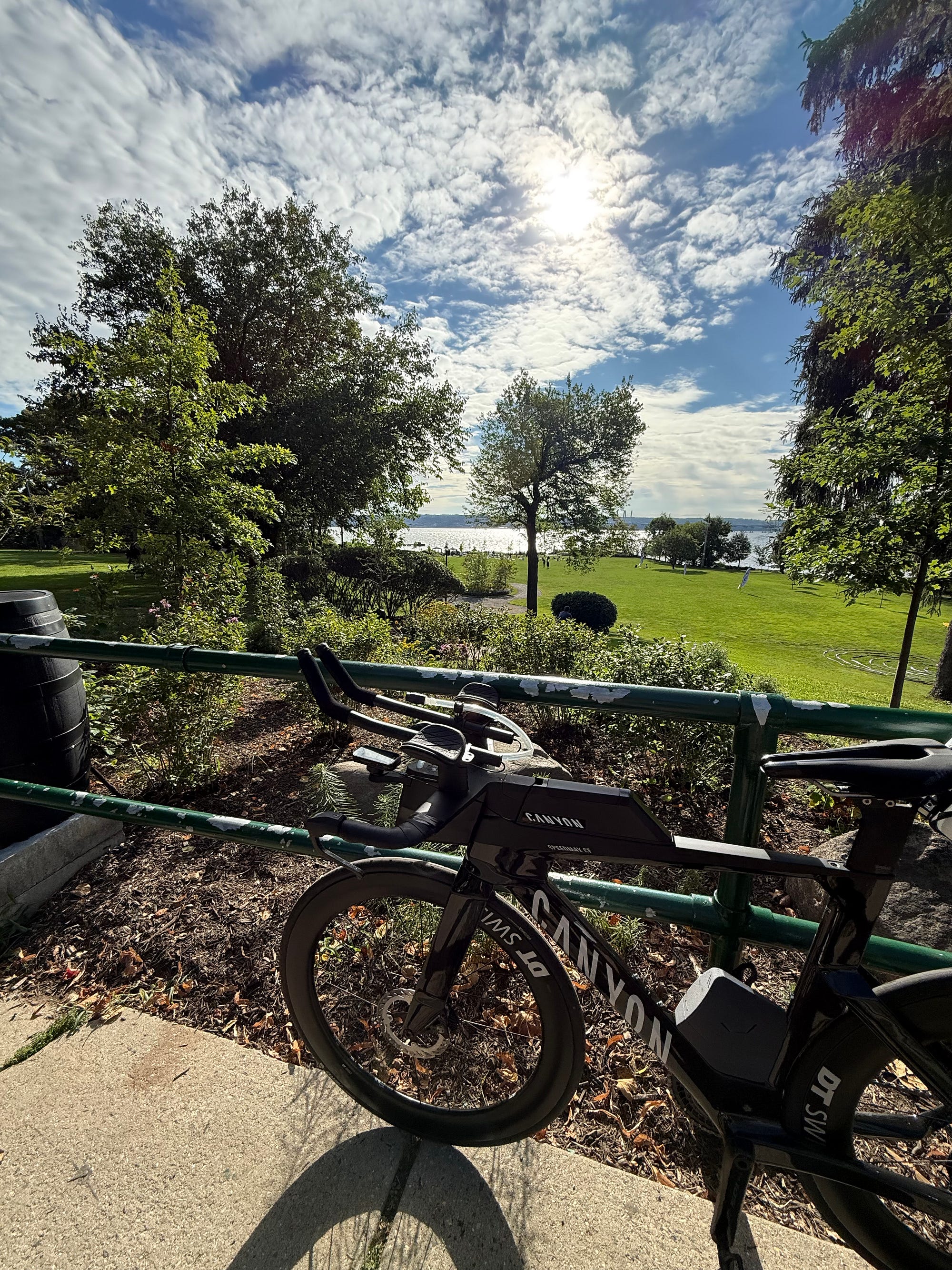
If I’m honest, the triathlon was at least partly an excuse to buy a really good-looking bike. A white Canyon Speedmax. However, due to what I am learning is a particularly trying time for global supply chains, I settled for a gloss black finish. For the record, it is a ridiculously good-looking bike. I regret nothing.
March — September
For the next several months, I trained. And that’s more or less all I did outside of work.
I signed up for swim lessons twice a week as a grown adult. My slot was right after the five- and six-year-olds got out of the pool, which, let’s just say, made for a warmer-than-average swim. I ran, badly, and then slightly less badly. I spent a lot of early weekend mornings on the bike, which was the one part I was never going to complain about, for reasons already discussed.
All of it had to fit around a job in M&A, which does not care about your training plan. So I swam before client calls, rode the trainer after flights that landed later than they were supposed to, and moved long runs around like a deal calendar. Most weeks fell apart by Tuesday, and I patched them back together by Thursday. It wasn’t a great system, but it was the one I had. By September, I was feeling prepared. By race week, I was ready to zip up my goofy-looking wetsuit and put the swim behind me.
A Change of Plans
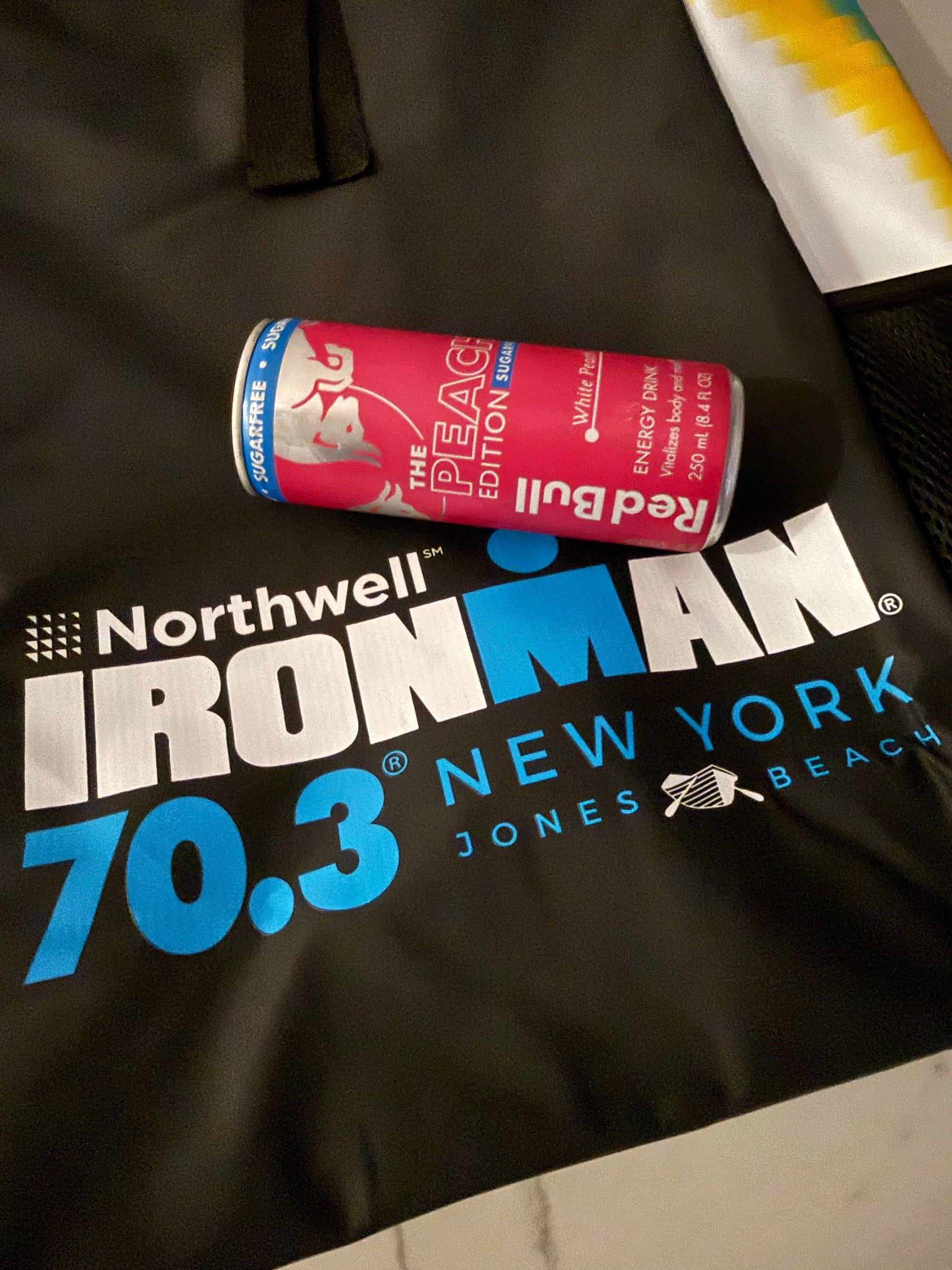
The day before the race, I drove out to Jones Beach, entered IRONMAN village, and racked my bike in 45 mph winds. Checked in, full of hope, and crossing my fingers that we would keep the race (but perhaps shorten the run)…
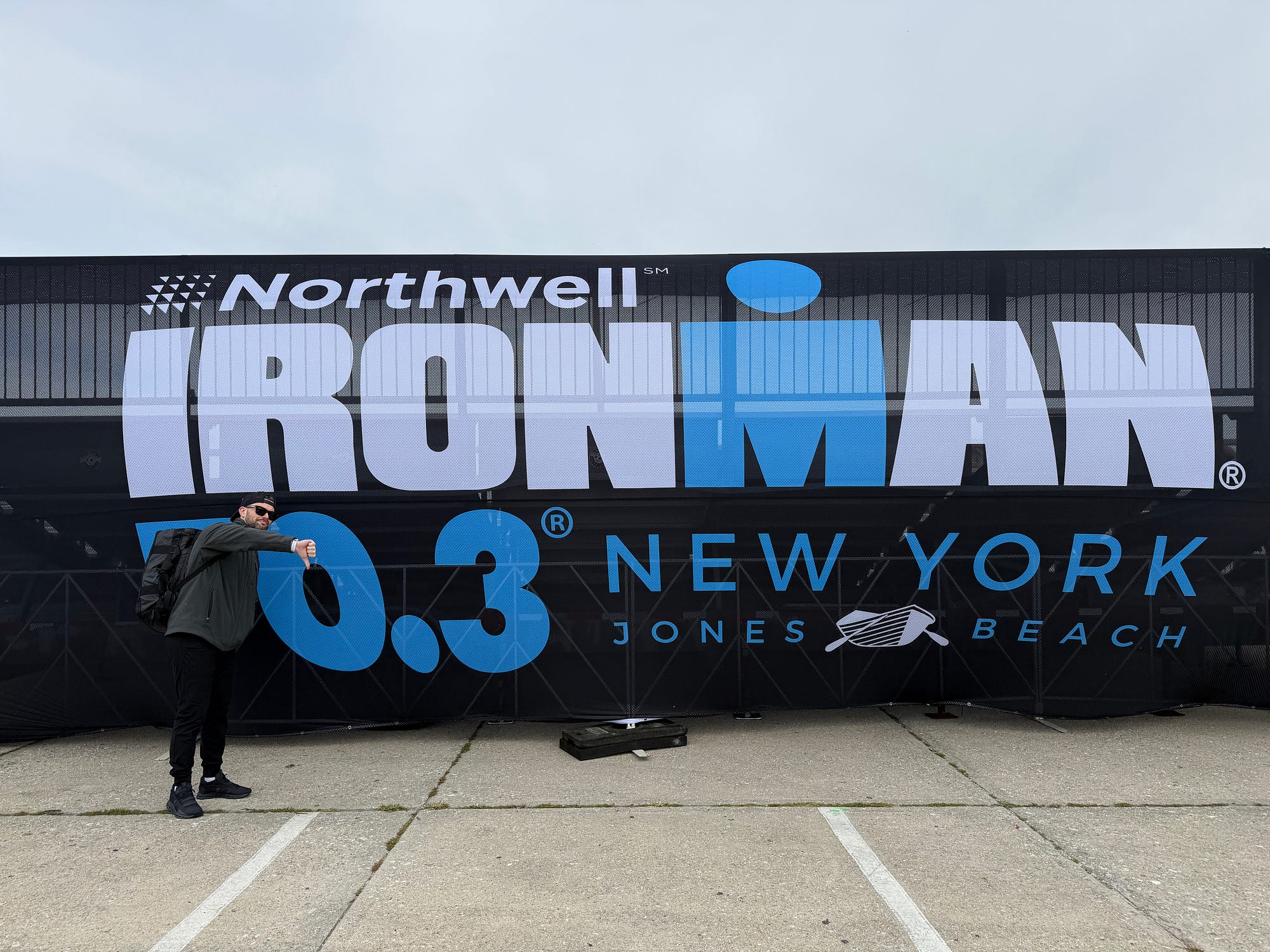
And as luck would have it, about thirty seconds later, the entire race was canceled.
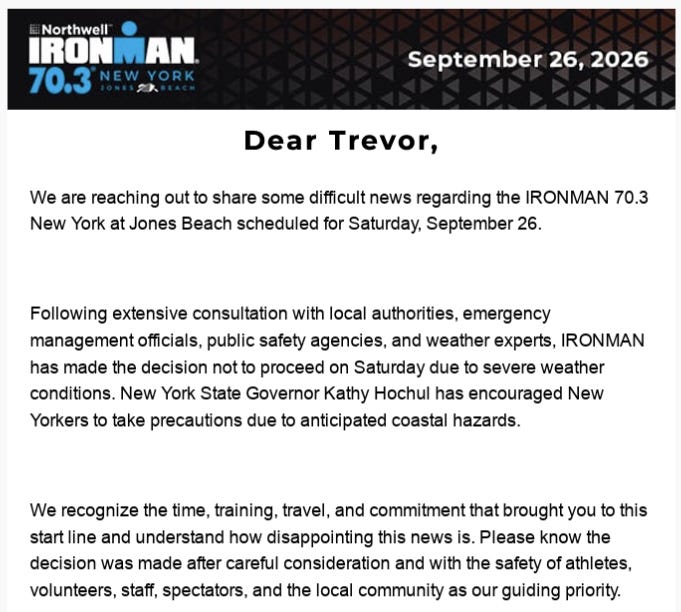
A Nor’easter was on its way, and IRONMAN wasn’t going to put a field of amateurs into open water with 45+ MPH winds. Fair enough.
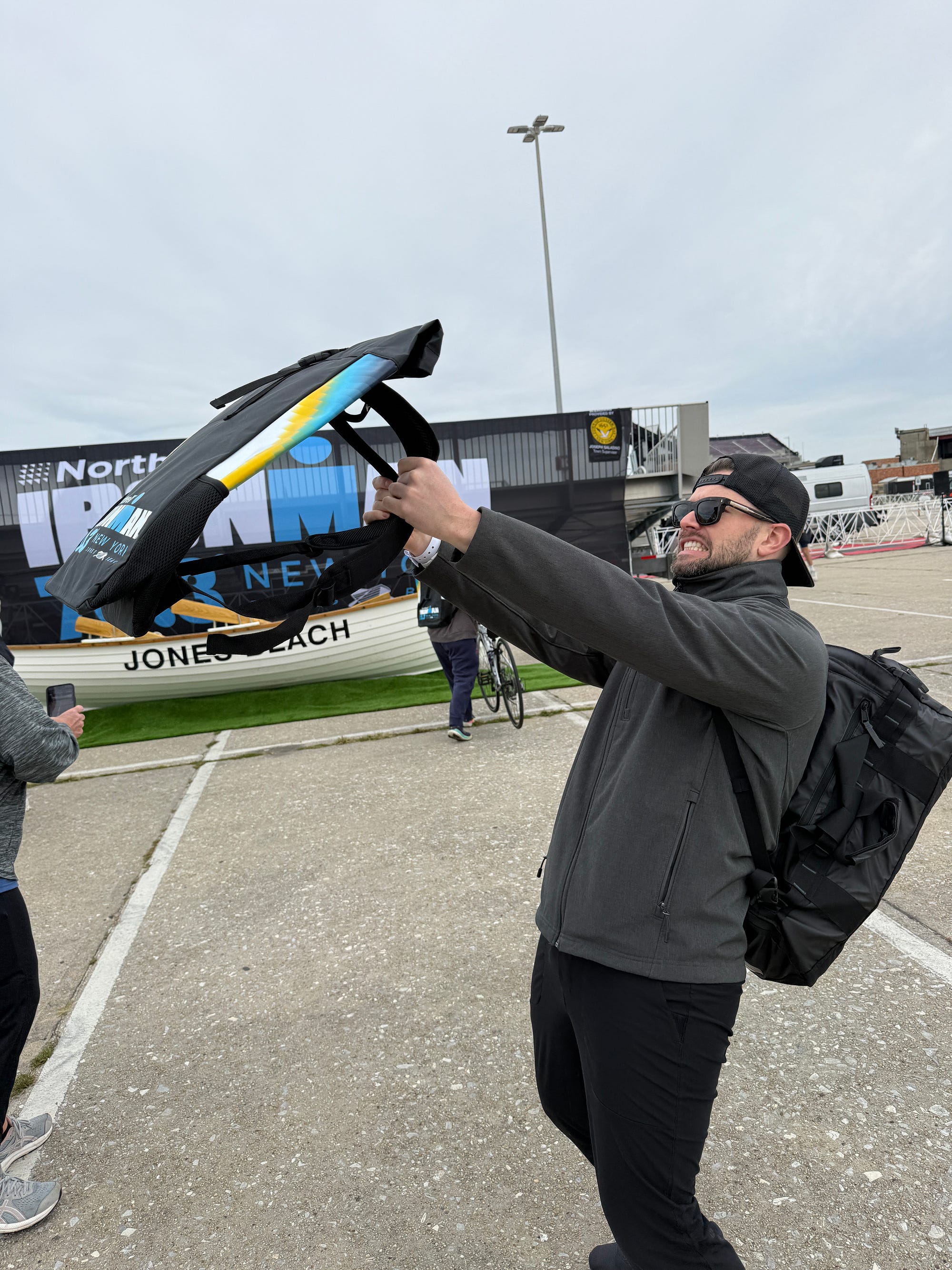
Still, I stood there for a minute looking at my bike on the rack, completely ready for a race that no longer existed. Partially disappointed in the event cancellation, partially in disbelief. So now what? I trained all this time for this race and it’s now not happening. I won’t have a medal, I won’t have an official finish time, and I won’t have a sweet FinisherPix to post on LinkedIn on Monday morning. But…I guess none of that was truly the point? The point all along was to be genuinely terrible at something new and to get better. The point was to tell people publicly I am doing a hard thing and keep my word. And if that was the point all along, then why wouldn’t I just do the race anyways?
Do It Anyways
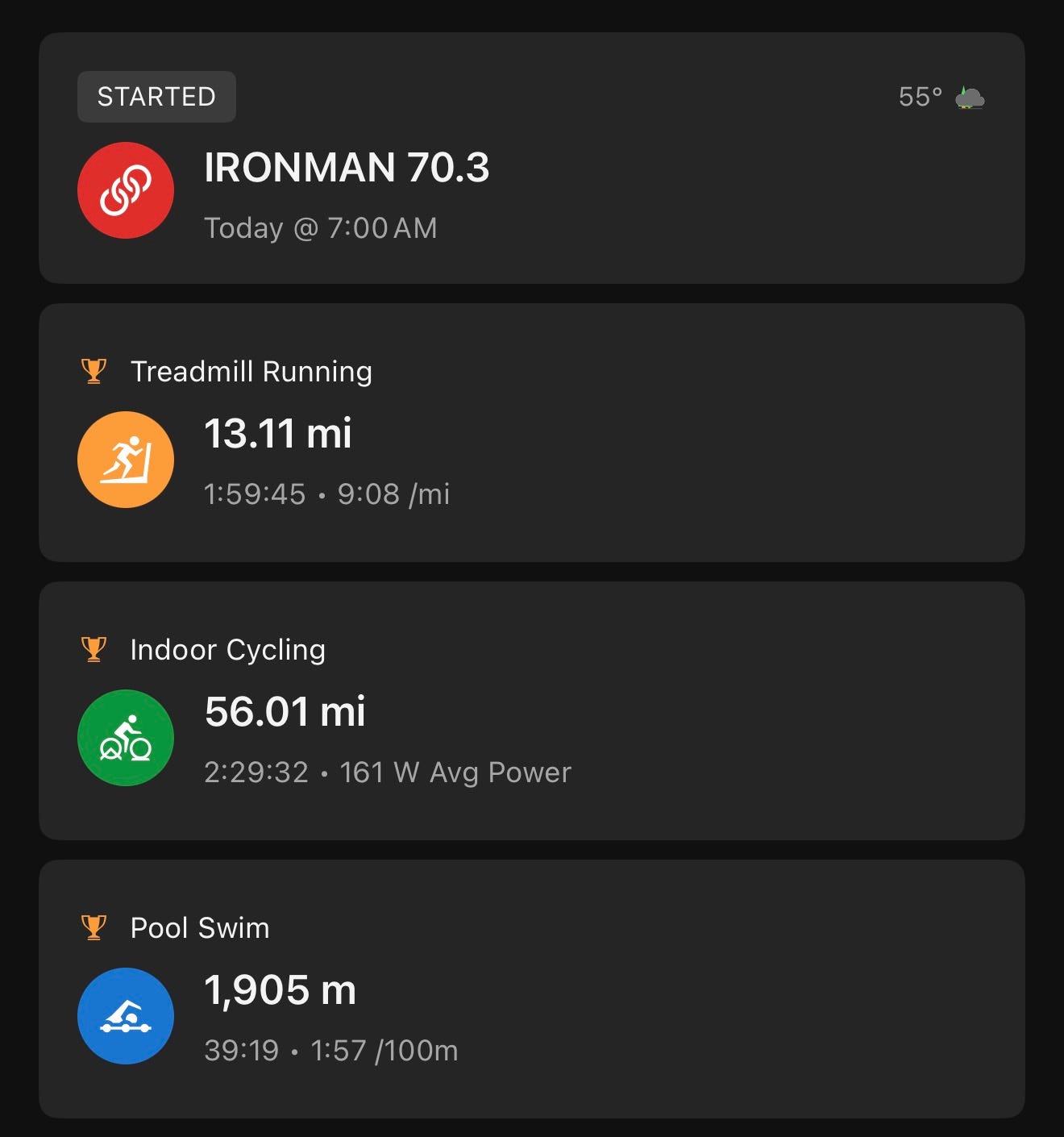
The next morning, while the storm was doing its thing to Long Island, I did the whole race indoors: pool, then the bike trainer, then the treadmill. It was the same distances, in the same order, on the same day.
Sure, it “doesn’t count” — but again, what are we counting? It was not the race I had pictured, paid for, or promised myself I would do. There was no crowd, no finish line and nobody handing me a medal. It was just me, a treadmill facing a wall, and a half marathon that felt about twice as long as a real one because there was nothing to look at.
Nobody asked me to do it, and nobody would have known if I hadn’t. That was kind of the point.
Who You Become Along the Way
The guy who signed up for this couldn’t swim and mostly wanted a bike (that’s me in case you aren’t following closely). The guy who finished it on a treadmill (also still me) gets up early without negotiating with himself about it first. He’s a bit less rattled when plans fall apart, because his plans fell apart every week for months and he kept going anyway. The race didn’t make me more consistent. The training did. The race was just supposed to be the photo.
It turns out that a canceled triathlon is a pretty low-stakes version of something most of us run into sooner or later, usually somewhere that matters more.
It’s the person who shows up early, stays late, does the job well year after year, and still gets passed over for the promotion. It’s the deal the whole team works on for months, with the late nights, the weekends and the tenth turn of the model, that falls apart at the finish line anyway. There’s no medal for the one that didn’t close.
In the moment, both of those feel like wasted work. I don’t think they are. The person who got passed over is still the one who kept showing up, and that doesn’t go away because someone else got the title. The deal that died makes you sharper for the next one and inevitably leads to another better opportunity, which is usually the one that closes. The outcome is and was never fully in anyone’s control. Who you become while you chased it was.
IRONMAN 2.0
If IRONMAN reschedules Jones Beach, I’ll be there. If not, I’ll find another race. I hear folks talking about Boise? Either way, I’m showing up as a different person than the one who signed up, which might be the better prize anyway.
If you’re working toward something right now and it gets canceled, delayed or just doesn’t happen the way you pictured, do it anyways. Do it tired, do it unprepared, do it anyways. Even if nobody’s watching. Especially when nobody’s watching.
P.S., is another race a sufficient excuse to buy yet another bike? :)
About Trevor Lunsford

Trevor Lunsford is a Director at Union Square Advisors with 9+ years of experience across both investing and advisory. Trevor specializes in the vertical and application SaaS ecosystems within GovTech, Public Safety, eCommerce, HCIT, MarTech, and EdTech markets. Here he shares his learnings over the last several years – writing about SaaS metrics, business durability, and the intersection of strategy and execution.
Follow Trevor on LinkedIn or subscribe for future articles on operational excellence and value creation.
About the Creator
Trevor Lunsford
Trevor is a Director at JEGI LEONIS in New York City. 9+ years advising leading vertical software investors—Insight, Genstar, Battery, Serent—on $5B+ in closed deals across CivicPlus, EveryAction, Optimizely, Diligent, and Bullhorn.
Enjoyed the story? Support the Creator.
Subscribe for free to receive all their stories in your feed.
Comments