
Indonesia Earthquake: Powerful 7.7-Magnitude Quake Strikes Flores, Triggering Tsunami Warning and Rescue Efforts
Powerful Earthquake Strikes Flores as Authorities Issue Tsunami Warning, Assess Damage, and Launch Rescue Operations
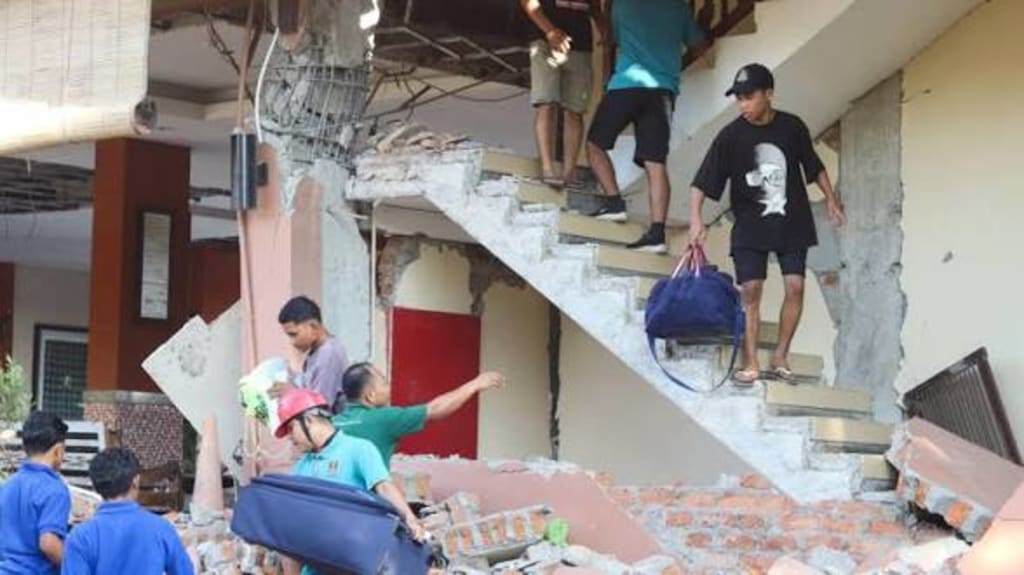
A powerful earthquake struck eastern Indonesia on August 15, 2026, shaking communities across the Flores region and triggering a temporary tsunami warning. The magnitude 7.7 earthquake occurred offshore near Nagekeo in East Nusa Tenggara, a region that is highly exposed to earthquakes because of Indonesia’s position along the seismically active Pacific Ring of Fire.
According to Indonesia’s Meteorology, Climatology, and Geophysical Agency (BMKG), the earthquake was initially reported at a lower magnitude before being updated to 7.7. The agency placed the epicenter about 30 kilometers northeast of Mbay, Nagekeo, at a depth of approximately 15 kilometers.
Powerful Earthquake Shakes Flores
The shallow depth of the earthquake contributed to strong shaking across parts of Flores and neighboring areas. Reports indicated that buildings were damaged or collapsed, while residents rushed outdoors as the ground began to move.
The earthquake was particularly disruptive in communities around Sikka, Nagekeo, Ende, and Manggarai. Emergency officials reported damage to homes and public infrastructure, while landslides created additional difficulties for people trying to move between affected areas.
Reuters reported that the disaster caused fatalities and injuries, with the death toll rising as rescue teams continued searching damaged buildings. Access to some locations was complicated by landslides, damaged roads, and communication problems.
Tsunami Warning Issued and Later Lifted
Because the earthquake occurred beneath the sea and was strong enough to potentially disturb the seafloor, Indonesian authorities issued a tsunami warning for vulnerable coastal communities.
Residents were urged to move away from beaches and coastal areas and seek higher ground. Such warnings are an important part of Indonesia’s disaster-management system because large offshore earthquakes can sometimes generate dangerous waves.
BMKG later confirmed that the tsunami potential had ended. Its monitoring system recorded small sea-level disturbances at several locations, but the warning was subsequently lifted.
The rapid evacuation demonstrated why tsunami preparedness remains essential in Indonesia. Even when a warning is eventually cancelled, residents are encouraged to follow official instructions rather than waiting for confirmation from social media or unofficial sources.
Rescue Operations Face Difficult Conditions
Emergency workers faced several challenges following the earthquake. Landslides affected transportation routes, while power outages and disrupted communications made it harder to assess damage in isolated communities.
In some areas, rescue teams searched collapsed structures for survivors. Hospitals also took precautionary measures, including moving patients outside buildings that could have been damaged or weakened by the shaking.
The full impact of an earthquake is often difficult to determine during the first few hours. Rescue teams must inspect damaged buildings carefully because aftershocks can cause unstable structures to collapse without warning.
Authorities also need to identify people who have been displaced, assess infrastructure damage, provide medical treatment, and establish temporary shelters.
Why Indonesia Experiences So Many Earthquakes
Indonesia is one of the world's most earthquake-prone countries. Its location along the Pacific Ring of Fire places it near several active tectonic boundaries.
The movement of tectonic plates beneath and around the Indonesian archipelago creates enormous geological pressure. When accumulated pressure is suddenly released along a fault, seismic energy travels through the Earth's crust, producing an earthquake.
Indonesia's geography increases the potential consequences of major earthquakes. Many communities are located near coastlines, while mountainous terrain can make landslides a serious secondary hazard.
The country's history includes several devastating earthquakes and tsunamis, making earthquake preparedness an important part of public safety.
Aftershocks Remain a Concern
A major earthquake is often followed by aftershocks. These smaller earthquakes can occur minutes, hours, days, or even longer after the main event.
Aftershocks can be dangerous because buildings that survived the initial earthquake may already be structurally weakened. People returning to damaged homes can therefore face additional risks.
Authorities typically advise residents to stay away from severely damaged structures and monitor official emergency announcements. BMKG also advises people to remain cautious about possible aftershocks following significant seismic events.
Lessons for Earthquake Preparedness
The Flores earthquake highlights the importance of preparation before disaster strikes. Families living in earthquake-prone areas can reduce risks by identifying safe locations inside and outside their homes, keeping emergency supplies available, and learning basic earthquake safety procedures.
During strong shaking, people should generally protect their head and neck, move away from windows and objects that could fall, and avoid rushing toward exits while buildings are moving.
Coastal communities also need to understand tsunami evacuation routes. If a major earthquake is strongly felt near the coast, residents should pay attention to official warnings and be prepared to move inland or to higher ground.
Preparedness is particularly important because earthquakes cannot currently be predicted precisely in the way weather events can be forecast.
The Human Impact
Beyond damaged buildings and disrupted roads, an earthquake creates a deep human impact. Families may lose homes, businesses can close temporarily, and communities may face shortages of electricity, clean water, transportation, and medical services.
The psychological impact can also last long after the physical shaking stops. Fear of aftershocks and uncertainty about damaged homes can create significant stress for survivors.
Recovery therefore requires more than emergency rescue. Communities need sustained support to rebuild homes, restore infrastructure, reopen schools and businesses, and help affected families return to normal life.
Conclusion
The powerful 7.7-magnitude earthquake near Flores is another reminder of Indonesia's exposure to major natural hazards. The earthquake caused deaths, injuries, structural damage, landslides, evacuations, and widespread disruption, while the temporary tsunami warning demonstrated the additional risks associated with powerful offshore earthquakes.
Although the tsunami warning was later lifted, rescue and damage-assessment operations continued. The disaster underscores the importance of reliable earthquake monitoring, rapid emergency communication, strong building standards, and community preparedness.
For people living in earthquake-prone regions, preparation can make a critical difference. Earthquakes cannot be prevented, but their human consequences can be reduced through better planning, safer construction, public education, and effective emergency response.
About the Creator
Enjoyed the story? Support the Creator.
Subscribe for free to receive all their stories in your feed.
Comments
There are no comments for this story
Be the first to respond and start the conversation.