
I Don’t Care If Hyrox Smells. I Care That It Creates Jobs.
A fitness race with sweat, vomit, and high fees still puts paychecks in ordinary pockets. Regulate the mess. Don’t kill the event.
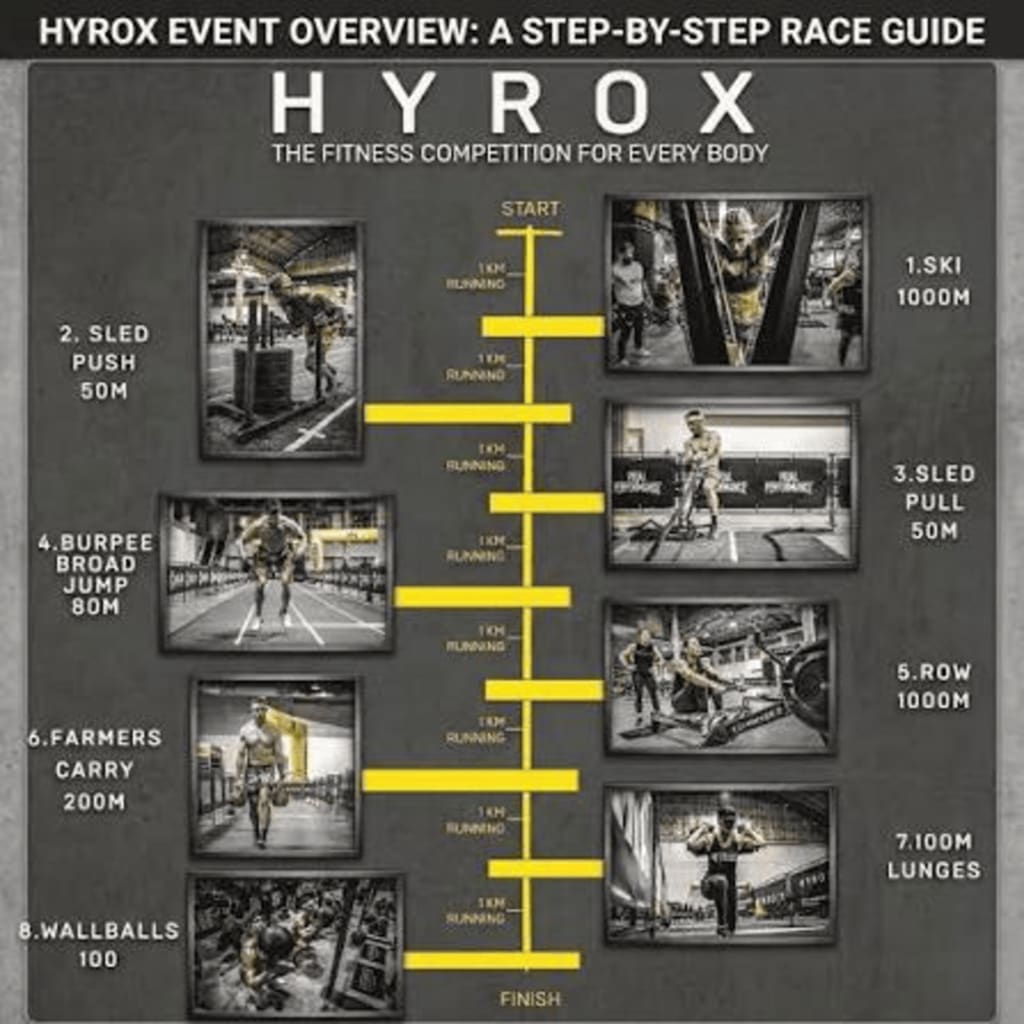
Inside the venue, the first thing you hear is the fans. SkiErg ropes hiss. Sled metal scrapes the rubber floor. Wall balls hit the wall with a dull thud. On the outer track, someone runs their second kilometer. Inside, someone waits for kettlebells. The air smells of sweat, chalk, disinfectant, and something harder to name. A line forms at the toilets. A cleaner drags a mop. A radio crackles: “Next station ready.” This is Hyrox.
The rules are simple. Run a kilometer. Enter a station. Finish the movement. Run another kilometer. Eight stations: SkiErg, Sled Push, Sled Pull, Burpee Broad Jump, Rowing, Farmers Carry, Sandbag Lunges, Wall Balls. Eight kilometers and eight movements. No performance. No tactics. Just capacity and rhythm.
People like it because it turns training into a result. Coaches bring athletes. Influencers shoot content. Gyms hang banners. Equipment brands set up booths. Cities get weekend foot traffic. Participants sweat. The supply chain gets paid. The job market gets roles. Check-in staff scan chips. Timing crews watch screens. Security guards check wristbands. Medics carry oxygen. Photographers crouch at the finish. Aid station volunteers cut bananas. Equipment managers push sleds back to the start. Cleaners mop the floor between waves. Guides point runners to the next station. Customer service answers emails. Insurance agents write policies. Drivers move gear. Cooks feed crews. Hotel staff make beds. These jobs do not require a top-tier university degree, a master’s, or coding. If you are presentable, healthy, can communicate, and are willing to work, you can do them. Some people work one day and take one day’s pay. Others work a season and save a little. A few work for years and build a small business in event photography, recovery stretching, equipment rental, referee training, or local community organizing. If you treat participants as the only beneficiaries, you conclude the race has nothing to do with ordinary people. Open the service chain and the conclusion flips.
Some call it a weekend game for people with money. Registration is not cheap. Gear costs money. Travel costs money. Photos get posted. The consumerist side exists. When a race lands, hotels, restaurants, transport, malls, print shops, and rental companies get a slice of traffic. Someone who cannot afford the entry fee can hand out bananas, scan chips, carry oxygen tanks, or push sleds. They do not have to compete to earn from the event. Only if you define participation as racing do you miss those jobs.
But supporting Hyrox cannot be argued with “no one is harmed.” Large events always impose costs on people outside the event. The venue gets occupied. Noise travels. Traffic backs up. Trash piles up. Toilet lines grow. Ventilation fails. Smell lingers. Medical teams get stretched. Insurance costs rise. Public resources get used. Volunteers give time and sometimes get little back. The smell at an indoor race does not disappear with one line about better ventilation. It involves flow design, cleaning frequency, odor control, waste sorting, vomit cleanup, participant density, and medical response. Nearby residents, cleaners, medics, and volunteers may absorb costs that organizers did not pay for. Saying no one is harmed is dishonest. The better position is that the benefits outweigh the costs, and the costs can be pushed down.
Physical loss of control should not be treated as a moral stain. In the 2005 London Marathon, Paula Radcliffe was leading the women’s race when, around mile 22, severe gastrointestinal distress forced her to stop at the roadside and defecate. The live broadcast captured it. She kept running and won in 2:17:42. She later said she had held it in for four or five miles. In the 1982 Hawaii Ironman, 23-year-old Moss was far ahead in the women’s field. In the final kilometers, severe dehydration and physical collapse made her fall repeatedly. She crawled toward the finish. Shortly before the line, Kathleen McCartney passed her. Moss later recalled that she also lost bowel control. She crawled across the finish and took second. ABC’s broadcast made that image one of the most famous in Ironman history. Ironman still lists it as a key moment. Those images are not dignified. They did not destroy marathon running. They did not destroy triathlon. Spectators can joke. They can make memes. They should not shame the athletes, and they should not use the moment to kill a sport.
What should be criticized is the organization. Physical loss of control should not be shamed. Organizers can add toilets. They can improve ventilation. They can clean more often. They can add medical points. They can write better emergency plans. They can train staff to handle vomit and feces. They can give participants clear health warnings. Tolerance is for the body. Professionalism is for the organizer. The two do not conflict.
Our society has a strange habit. It complains about weak consumption and hard job markets. Then something new appears. It looks for the undignified part and plans how to eliminate it. A race smells, so ban it. Someone loses bowel control, so scandal. Registration is expensive, so it is cutting the middle class. An accident happens, so shut it down. Football has sudden deaths. Marathons have hypothermia. Trail races have falls. Triathlons have drownings. We do not destroy those sports. We build rules, insurance, medical systems, and emergency response. Hyrox is the same. It needs regulation. Public scolding does not solve smell or first aid.
Regulation can be specific. Permits can be tiered. Safety plans can be required. Medical staffing can be scaled to participant count. Insurance can be mandatory. Environmental review can cover noise and waste. Traffic can be managed. Hygiene standards can be enforced. Labor protections can cover temporary workers. Volunteers can get clear roles and protections. Organizers must pay for the costs they create. They cannot leave the smell to the cleaners, the congestion to residents, the risk to volunteers, and the trash to the city. Whoever runs the race is responsible. Whoever benefits bears the cost. Temporary workers need hourly pay, insurance, training, and rest. Volunteers need clear roles and protections. Enthusiasm is not free labor. Toilets should be allocated by headcount. Ventilation should be calculated by venue volume. Cleaning should be scheduled by peak frequency. Medical points should follow the flow of the course. These are baselines.
Promotion can be broader. Fishing competitions. Off-road dune driving competitions. Cat and dog events. Spinning tops. Kite flying. Noodle pulling. Pancake flipping. Races draw attention. They are service industries. They are local tourism. They are community glue. They create work. But “everyone should hold events” does not mean “anything goes.” Dune driving needs environmental review. Pet events need animal welfare standards. Food events need food safety. Fishing events need water ecology. Fitness races need medical and emergency standards. Classify, permit broadly, regulate strictly. Whoever runs the event is responsible. Whoever benefits bears the cost. That is support, not hype.
Hyrox is not perfect. It smells. It has risk. It has commercialism. It has rough organization. Its benefits are specific: gym-goers get a goal, coaches get a stage, gyms get publicity, equipment brands get exposure, cities get spending, and ordinary people get jobs. The benefits outweigh the costs, and the event can be regulated better. Stop defending it with “no one is harmed.” That is too much. Stop dismissing it as “a rich people’s game.” That is too lazy. This is a good thing, but it has to be done well. Let people who want to sweat sweat. Let people who want to earn a living earn one. Let people who want to organize races organize. Let people who want to criticize criticize. After criticizing, offer improvements.
Inside the venue, a cleaner dries the floor. A medic hands out a salt tablet. A check-in volunteer calls “next.” A participant runs toward the next kilometer. The vents are open. The toilet paper is restocked. The insurance certificate is on the wall. The race continues. Next station: wall balls.
About the Creator
Jin
Writer of reamstories
https://reamstories.com/jin
Enjoyed the story? Support the Creator.
Subscribe for free to receive all their stories in your feed. You could also become a paid subscriber, letting them know you appreciate their work.
Comments
There are no comments for this story
Be the first to respond and start the conversation.