
How Revenue Cycle Management Improves Financial Performance
Revenue Cycle Management

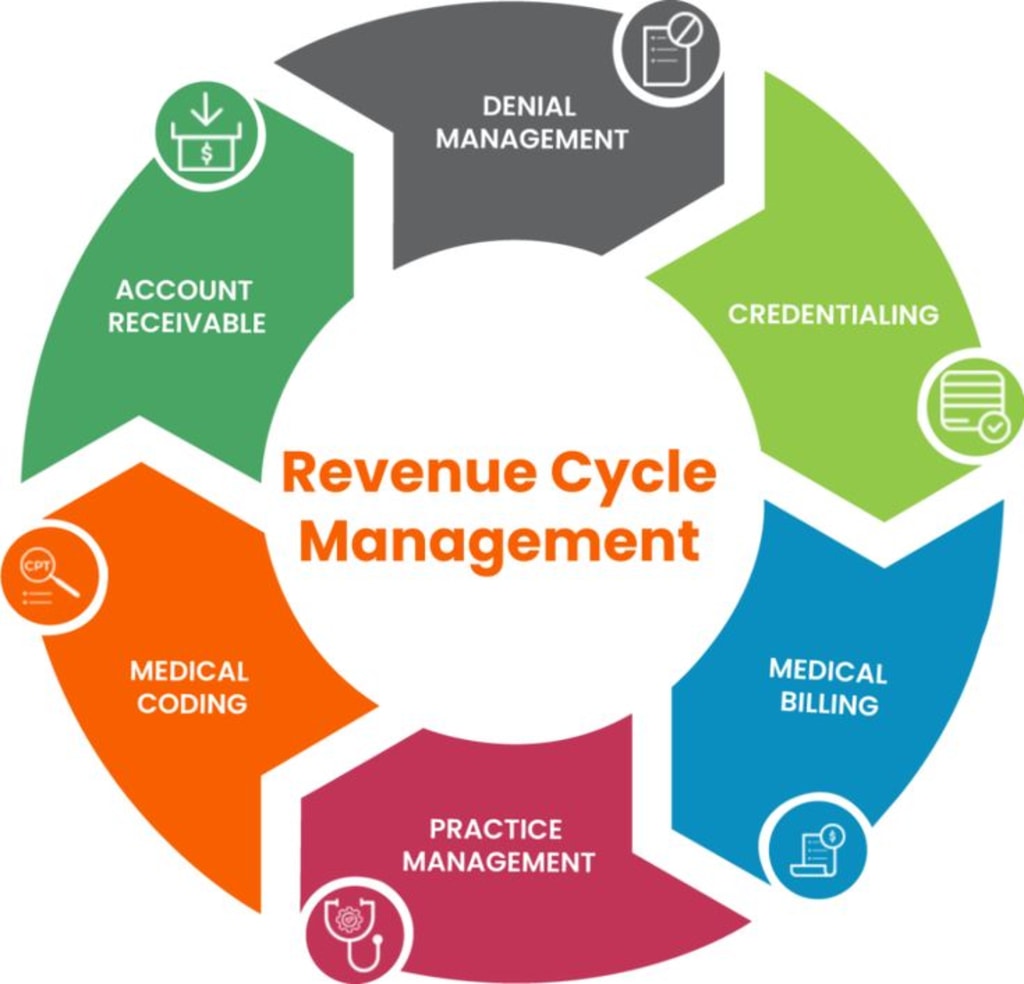
Revenue cycle management is one of the most important processes in any healthcare organization. It covers everything from patient registration to the final payment collection. When done right, it keeps cash flowing, reduces billing errors, and helps medical practices stay financially healthy.
If your practice is struggling with delayed payments, claim denials, or rising administrative costs, the problem often starts in the revenue cycle. Understanding how revenue cycle management works — and how to improve it — can completely change your financial outcomes.
What Is Revenue Cycle Management and Why Does It Matter
Revenue cycle management, commonly known as RCM, is the financial process healthcare providers use to track patient care from appointment scheduling to final payment. It includes insurance verification, medical coding, claim submission, payment posting, and denial management.
Every step in this process affects how much money your practice collects and how quickly you collect it.
When RCM is handled poorly, practices lose money they have already earned. Claims get denied, payments get delayed, and staff spend hours on rework instead of patient care. On the other hand, a well-managed revenue cycle means fewer errors, faster reimbursements, and a more stable financial foundation.
Key Ways Revenue Cycle Management Improves Financial Performance
Getting RCM right does more than just process payments. It directly impacts your bottom line in several meaningful ways.
Faster claim submissions mean quicker reimbursements from insurance companies
Accurate medical coding reduces the chance of claim denials and audits
Real-time eligibility checks prevent billing issues before they start
Proper follow-up on unpaid claims ensures no revenue is left on the table
Automated billing workflows cut down on manual errors and administrative overhead
These improvements add up quickly. Practices that invest in stronger RCM processes often see a measurable increase in collections within just a few months.
How Revenue Cycle Management Reduces Claim Denials
Claim denials are one of the biggest financial drains for medical practices. Studies show that a large portion of denied claims are never resubmitted, which means that money is simply lost.
A strong revenue cycle management system addresses denials at every stage. It starts with accurate patient data collection at registration. It continues with thorough insurance verification before the appointment. And it ends with a proper appeal process when claims do get rejected.
Common reasons claims get denied include:
Incorrect patient information or insurance details
Missing or mismatched diagnostic codes
Services not covered under the patient's plan
Late claim submissions past the payer's deadline
Lack of prior authorization for certain procedures
When your team knows what causes denials and has systems in place to prevent them, your clean claim rate improves and collections increase.
The Role of Technology in Modernizing Revenue Cycle Management
Technology has changed how healthcare practices approach RCM. Modern billing software, electronic health record integration, and AI-powered tools now handle tasks that used to take hours of manual work.
Automated eligibility verification checks insurance coverage in seconds. Coding assistance tools flag potential errors before claims are submitted. Analytics dashboards give practice managers a real-time view of where revenue is being lost and why.
But technology alone is not enough. The best results come when smart tools are paired with a trained billing team that understands payer requirements, compliance rules, and denial patterns.
Some practices choose to handle RCM in-house. Others outsource it to specialized billing companies. Both approaches can work, but the key is having consistent processes, reliable reporting, and a team that stays current with changing payer policies.
Common Mistakes That Hurt Revenue Cycle Performance
Even well-run practices make mistakes that quietly drain revenue over time. Recognizing these issues is the first step toward fixing them.
Skipping insurance verification is one of the most common problems. When eligibility is not confirmed before a visit, there is a high chance the claim will be denied afterward.
Using outdated billing codes is another issue. Medical coding changes every year, and using old codes leads to rejections that slow down payment cycles.
Neglecting patient collections is also a growing problem. With high-deductible health plans becoming more common, patient responsibility has increased. Practices that do not collect at the point of service or send timely statements often end up writing off balances they could have collected.
Finally, failing to analyze denial trends means repeating the same mistakes month after month. Tracking which claims get denied and why is essential for continuous improvement.
Practical Tips to Strengthen Your Revenue Cycle Management
You do not need a massive overhaul to start seeing better results. Small, consistent improvements across the revenue cycle can drive significant financial gains.
Start with front-end processes. Make sure your team verifies insurance coverage for every patient before the visit. Confirm patient demographics and collect copays upfront.
Train your coding staff regularly. Medical coding is complex and constantly evolving. Ongoing education reduces errors and keeps your team compliant with current guidelines.
Set up a denial management workflow. Every denied claim should be reviewed, categorized, and either corrected and resubmitted or appealed with supporting documentation.
Use data to guide decisions. Pull monthly reports on denial rates, days in accounts receivable, and collection percentages. These numbers tell you exactly where your revenue cycle needs attention.
Communicate clearly with patients about their financial responsibility. When patients understand what they owe and why, they are more likely to pay on time.
Frequently Asked Questions
What is the main goal of revenue cycle management?
The main goal is to ensure healthcare providers collect the full payment they are owed, as quickly as possible, with minimal errors and denials throughout the billing process.
How does revenue cycle management affect cash flow?
It directly impacts cash flow by speeding up claim submissions, reducing denials, and improving collections from both insurers and patients, leading to more predictable revenue.
What is a clean claim rate in RCM?
A clean claim rate refers to the percentage of claims submitted without errors that are accepted and paid on the first submission. A higher rate means better billing accuracy and faster payments.
Should small practices outsource revenue cycle management?
Many small practices benefit from outsourcing because it reduces overhead, brings in specialized expertise, and allows staff to focus on patient care rather than complex billing tasks.
How long does it take to see improvements after optimizing RCM?
Most practices begin to notice measurable improvements in collections and denial rates within 60 to 90 days of implementing stronger revenue cycle management processes and workflows.
About the Creator
Merit Badge - badge manufacturers uk
Merit Badge is a leading name among badge manufacturers in the UK, offering high-quality custom badges for a wide range of purposes.
Enjoyed the story? Support the Creator.
Subscribe for free to receive all their stories in your feed.
Comments
There are no comments for this story
Be the first to respond and start the conversation.