
Hashimoto's disease
The Silent Disruption of Identity
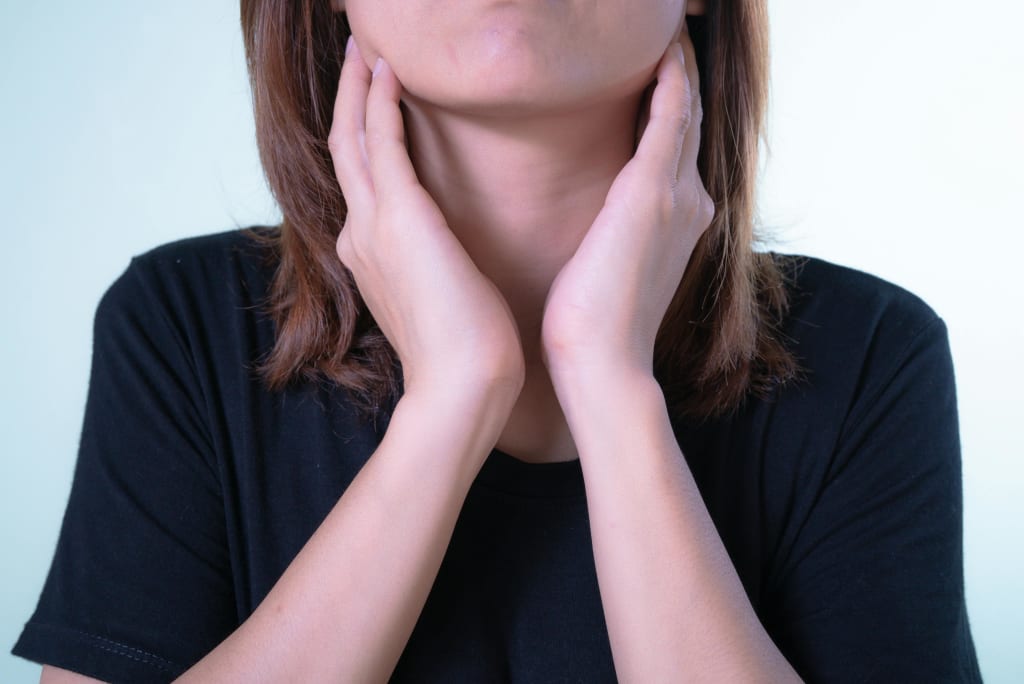
There’s something uniquely cruel about a condition that reshapes your entire body while you try to convince the world — and sometimes yourself — that you’re not exaggerating. Hashimoto’s disease, an autoimmune disorder targeting the thyroid gland, is often reduced to hormone imbalances and fatigue. But behind the sterile medical definitions is a quieter truth: Hashimoto’s changes the way you exist in the world.
Unlike sudden illnesses that demand immediate attention, Hashimoto’s creeps in gradually. A forgotten appointment here, a nap that turns into hours of lost time, unexplained weight changes, brittle hair, and moments where your mind feels suspended in fog. None of it feels dramatic enough to alarm others — until it becomes constant. The disease is patient, slow, and deliberate. It dismantles your baseline of what “normal” feels like, and you begin to mourn a version of yourself you can no longer access.
The fatigue is not just about being tired — it is systemic. It roots itself in your bones, making even small tasks feel monumental. The kind of tired where waking up is an accomplishment, not a beginning. When energy is this scarce, you start budgeting it like currency: conversations, movement, even joy — all become expenses. You learn to weigh the cost of social interaction against tomorrow’s crash.
Cognitively, Hashimoto’s leaves a more elusive scar. Brain fog becomes your unwelcome shadow. It’s not simply forgetfulness; it’s the inability to hold clarity when you need it most. You know the words, but they won’t come. You understand the task, but your mind detours. You feel present, yet untethered. This disconnection chips away at confidence, especially when you look fine to everyone else. And that’s the hardest part — appearing healthy while constantly managing internal chaos.
Medical appointments rarely offer relief. Bloodwork might come back “normal,” even when your body is shouting for help. Many doctors rely too heavily on TSH levels without considering antibodies, inflammation, or your actual symptoms. This disconnect between lab results and lived experience makes you question yourself. And if professionals don’t believe you, who will?
Diet becomes another battleground. It’s not about aesthetics — it’s about survival. Hashimoto’s turns eating into a strategy. Gluten might inflame your gut. Sugar might crash your energy. Soy may interfere with hormones. You read labels like a detective, experiment with elimination diets, and sometimes feel guilt after meals that used to bring comfort. The relationship with food becomes complicated — not out of choice, but out of necessity.
Emotionally, the shifts are subtle but unsettling. Hashimoto’s blurs the line between psychological and physiological. One day you’re fine. The next, you’re inexplicably overwhelmed, irritable, or numb. These aren’t mood swings born from external stress — they stem from internal instability. Hormones influence serotonin, dopamine, even cortisol. The result is a storm of feelings that don’t match the moment.
What few people realize is how isolating it becomes. Not just because it’s rare or invisible — but because it’s unpredictable. Plans get canceled. Routines collapse. Relationships strain. You miss out on things not because you don’t want them, but because your body refuses to cooperate. Over time, you become selective with your energy and your words. You learn to smile and say “I’m okay,” not because it’s true, but because explaining the truth takes too much effort.
Despite all this, Hashimoto’s isn’t the end of the story. With time, the condition forces you into a kind of radical awareness — of your body, your mind, and your limits. You become more intentional. You research. You advocate for yourself. You create systems that help you function. You begin to accept the ebb and flow of symptoms, not as failures, but as fluctuations. Healing is no longer linear — it becomes cyclical, lived in rhythms.
Living with Hashimoto’s means learning to rebuild yourself continuously — sometimes quietly, sometimes fiercely — with compassion. It’s learning that strength doesn’t always look like endurance. Sometimes, it’s choosing rest when the world demands motion. Sometimes, it’s asking for help, or saying no without guilt. The real resilience lies in adapting, not resisting.
Disclaimer:
This article was written with support from AI tools for formatting and clarity. All insights reflect authentic, human experience and original thought.
About the Creator
Fatima A. Binsumaidea
a passionate freelance writer who enjoys writing across various topics. Her work is always preceded by careful research, and she also specializes in text translation.
Enjoyed the story? Support the Creator.
Subscribe for free to receive all their stories in your feed.
Comments
There are no comments for this story
Be the first to respond and start the conversation.