
Firefighters battle to stop spread of New Forest wildfire
Fire crews are working to contain a fast-moving wildfire in the New Forest as hot, dry conditions increase the risk of further fire spread across fragile woodland and heathland.
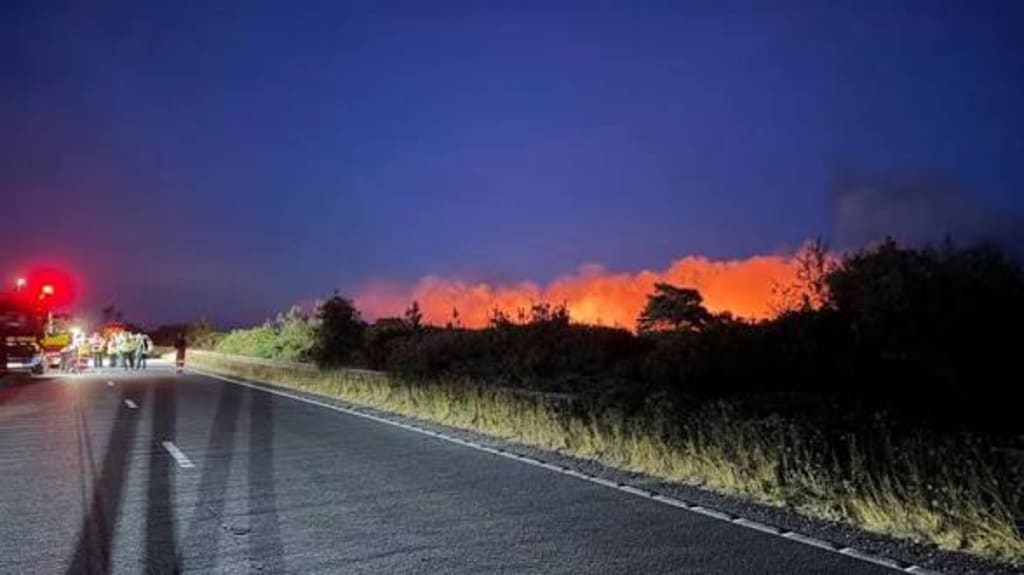
A major wildfire in the New Forest has placed firefighters on high alert as crews work to prevent flames from spreading through dry vegetation and environmentally sensitive areas. The incident highlights the growing difficulty of controlling wildfires during periods of prolonged heat, low rainfall and unusually dry ground conditions.
The New Forest is one of southern England’s most distinctive natural landscapes. Its combination of ancient woodland, open heath, grassland and dense vegetation provides a habitat for a wide variety of wildlife. However, the same landscape can become highly vulnerable when vegetation loses moisture during hot and dry weather.
For firefighters, the immediate priority is to prevent the blaze from developing into a larger and more difficult emergency.
Why the New Forest Is Vulnerable to Wildfires
Wildfires can spread rapidly when several environmental conditions occur at the same time. Dry grass, fallen leaves, dead vegetation and heathland plants can provide fuel for flames, particularly when strong winds are present.
Unlike a conventional building fire, a wildfire can move in several directions at once. Wind can carry burning embers ahead of the main fire front, creating new areas of combustion some distance away.
The New Forest's landscape presents additional challenges because firefighters may have to operate across uneven ground, narrow access routes and areas where large firefighting vehicles cannot easily travel.
Crews therefore need to combine traditional firefighting techniques with careful monitoring of the fire's direction and speed.
Firefighters Focus on Containment
When tackling a wildfire, firefighters do not necessarily attempt to extinguish every flame immediately. A crucial strategy is containment.
Crews may create or strengthen firebreaks, clear vegetation from potential routes of spread and use water or other firefighting methods to slow the fire.
The objective is to prevent the flames from reaching areas containing particularly dense or dry vegetation.
Firefighters also monitor changing weather conditions. A shift in wind direction can quickly change the behavior of a wildfire, making an area that appeared safe only minutes earlier potentially dangerous.
This makes wildfire operations highly dynamic.
The Hidden Threat of Embers
One of the biggest dangers during a wildfire is not always the visible wall of flames.
Burning embers can be carried by wind and land in dry vegetation ahead of the main fire. If conditions are suitable, those embers can start additional fires.
This process can create multiple fire fronts and make containment significantly more difficult.
For this reason, firefighters must look beyond the immediate flames. Crews monitor surrounding areas for signs of new ignition while simultaneously working on the primary fire.
The public may see smoke rising from one location, while firefighters could be dealing with several smaller hotspots nearby.
Protecting the New Forest Environment
The New Forest is not simply a collection of trees. It is a complex ecosystem supporting plants, insects, birds, mammals and other wildlife.
A wildfire can destroy vegetation and alter habitats, but the consequences can extend beyond the burned area. Soil, water systems and wildlife populations can also be affected.
Some heathland ecosystems are naturally adapted to periodic fire, but intense or uncontrolled wildfires can cause much greater ecological damage.
This means firefighting operations are also environmental protection efforts.
Crews must balance the need to stop the fire quickly with the challenges of operating safely in a protected and environmentally sensitive landscape.
Hot Weather Increases the Risk
The wildfire comes against a backdrop of increasing concern about extreme heat and dry conditions across parts of Europe.
When rainfall is limited for an extended period, vegetation becomes progressively drier. Even a relatively small ignition can then develop rapidly.
Human activity is an important factor in many wildfires. Discarded cigarettes, unattended barbecues, machinery, vehicles and deliberate fires can all create ignition sources.
In dry conditions, what might normally be a minor incident can become a major emergency.
Public Safety Remains Essential
Fire authorities routinely advise people to take extra care in areas affected by high wildfire risk.
Visitors to countryside and woodland areas should avoid lighting fires or using disposable barbecues where they are prohibited or unsafe. Cigarettes should never be discarded onto dry vegetation.
People should also follow official instructions if authorities close roads, restrict access or establish exclusion zones.
Wildfires can produce thick smoke that reduces visibility and creates breathing hazards. Members of the public should therefore avoid approaching fire scenes simply to observe or record them.
Keeping roads clear is particularly important because emergency vehicles need rapid access to affected areas.
Why Early Detection Matters
One of the most important lessons from major wildfires around the world is the value of early detection.
The sooner firefighters identify a fire, the greater the chance of controlling it before it becomes established across a large area.
Modern wildfire management increasingly involves aerial observation, satellite monitoring, weather data and other technologies that can help authorities identify changing conditions.
However, technology does not replace public responsibility.
A person who notices a fire or smoke in a rural area can provide valuable information by reporting it quickly and accurately through the appropriate emergency service.
A Warning Beyond the New Forest
The New Forest wildfire is a reminder that wildfire risk is no longer limited to traditionally fire-prone parts of the world.
Climate patterns, prolonged dry periods and extreme temperatures can increase the vulnerability of landscapes that historically experienced fewer serious fires.
For communities surrounded by woodland, heathland or grassland, preparation is becoming increasingly important.
Firefighters need appropriate equipment, training, access routes and reliable information about weather and vegetation conditions.
Authorities also need effective public-awareness campaigns to reduce preventable ignitions.
The Fight Is About More Than One Fire
For the firefighters working to contain the New Forest blaze, the immediate mission is straightforward: prevent the flames from spreading and protect people, property and the environment.
But the wider lesson is more complicated.
Wildfires are influenced by weather, vegetation, human behavior, land management and emergency preparedness. When several risk factors combine, even a familiar landscape can become extremely dangerous.
The New Forest remains one of Britain's most valuable natural environments. Protecting it requires more than firefighting after flames appear.
It requires prevention, responsible public behavior, careful land management and rapid emergency response.
As firefighters continue battling the wildfire, their efforts demonstrate how quickly dry conditions can transform a beautiful landscape into a major emergency—and why wildfire preparedness is becoming an increasingly important part of protecting Britain's countryside.
About the Creator
Enjoyed the story? Support the Creator.
Subscribe for free to receive all their stories in your feed.
Comments
There are no comments for this story
Be the first to respond and start the conversation.