
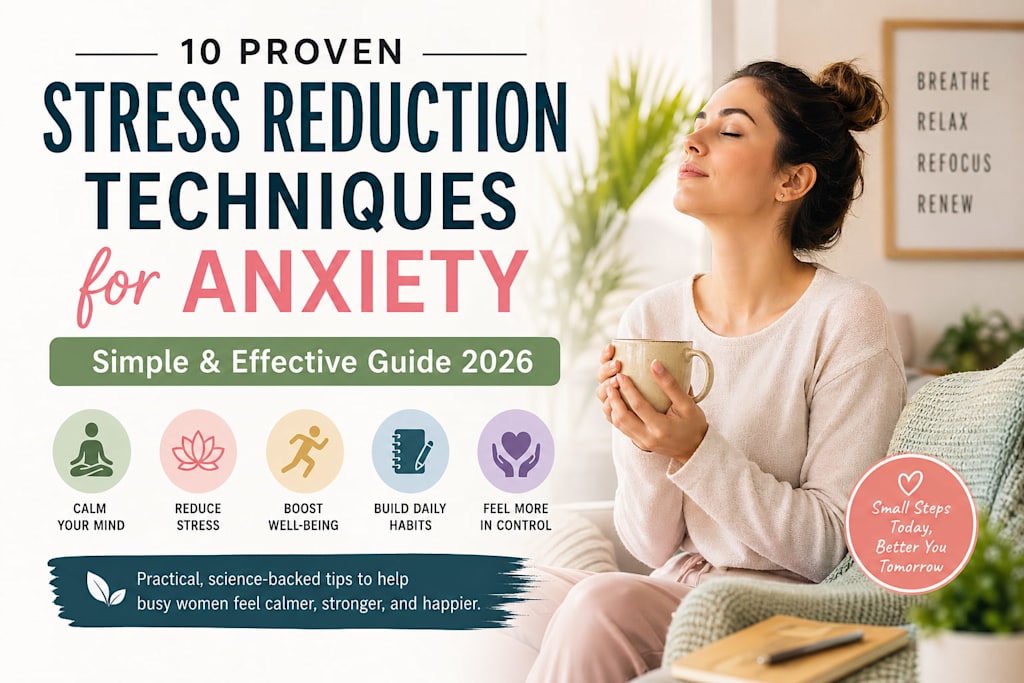
10 Proven Stress Reduction Techniques for Anxiety (Simple & Effective Guide 2026)
A practical, science-backed guide to help busy women feel calmer, stronger, and in control naturally
If you’re a busy woman juggling work, family, relationships, and personal goals, feeling overwhelmed isn’t unusual it’s almost expected. But when that stress turns into constant worry, racing thoughts, and emotional exhaustion, it can quickly develop into anxiety.
The truth is, anxiety doesn’t just affect your mind it impacts your sleep, your energy, your focus, and even your physical health. And for many women in the U.S., the pressure to “do it all” often makes stress feel unavoidable.
But here’s the good news: you don’t need extreme solutions or complicated routines to feel better. With the right approach, small daily habits can significantly reduce stress and calm your anxious mind.
In this guide, you’ll discover 10 proven stress reduction techniques for anxiety that are simple, effective, and easy to fit into your daily life. Whether you’re dealing with occasional stress or ongoing anxiety, these techniques will help you regain balance, improve your mental clarity, and feel more in control one step at a time.
What Is Anxiety and Why Does It Cause Stress?
Anxiety is your body’s natural response to perceived danger or pressure. It’s part of the built-in “fight-or-flight” response, a survival mechanism that prepares you to react quickly in stressful situations. In small doses, anxiety can actually be helpful it keeps you alert, focused, and motivated.
However, when anxiety becomes frequent or overwhelming, it stops being helpful and starts affecting your daily life.
For many women, anxiety isn’t always triggered by one big event. Instead, it often builds up from everyday pressures like work deadlines, family responsibilities, financial concerns, or even social expectations. Over time, this constant mental load keeps your body in a prolonged state of stress.
How Anxiety Triggers Stress in the Body
When you feel anxious, your brain signals your body to release stress hormones like cortisol and adrenaline. This leads to:
- Increased heart rate
- Rapid breathing
- Muscle tension
- Difficulty concentrating
- Trouble sleeping
If this response continues for a long time, your body doesn’t get the chance to relax and recover. That’s when chronic stress begins, making anxiety even worse in a cycle that feels hard to break.
Common Signs of Anxiety-Related Stress
You might be experiencing anxiety-driven stress if you notice:
- Constant overthinking or worrying
- Feeling restless or on edge
- Fatigue even after resting
- Irritability or mood swings
- Difficulty focusing on simple tasks
Understanding this connection between anxiety and stress is the first step toward taking control. Once you recognize what’s happening in your mind and body, it becomes much easier to apply the right techniques to calm both.
Why Managing Stress Is Important for Anxiety
Ignoring stress doesn’t make it disappear it quietly builds up and often makes anxiety worse over time. For many women, especially those balancing careers, family, and personal expectations, unmanaged stress can turn into a constant mental burden that affects every part of life.
Managing stress isn’t just about feeling better in the moment—it’s about protecting your long-term mental and physical health.
The Impact of Unmanaged Stress
When stress continues without relief, it can lead to serious effects such as:
- Chronic fatigue – feeling drained even after rest
- Sleep problems – difficulty falling or staying asleep
- Weakened immune system – getting sick more often
- Hormonal imbalance – affecting mood, weight, and energy
- Increased anxiety levels – making worry and fear harder to control
For women, stress can also be closely linked to emotional burnout, especially when constantly trying to meet multiple responsibilities without enough recovery time.
How Stress Fuels Anxiety
Stress and anxiety feed each other. The more stressed you feel, the more anxious your thoughts become and the more anxious you feel, the more your body stays in a stressed state.
This cycle can look like:
Stress → Overthinking → Anxiety → Physical tension → More stress
Breaking this cycle is essential, and it starts with learning how to calm your mind and body consistently.
Benefits of Managing Stress Effectively
The good news is that even small changes can create powerful results. When you actively manage stress, you can:
- Feel calmer and more emotionally balanced
- Improve focus and productivity
- Sleep better and wake up refreshed
- Reduce physical tension and headaches
- Build long-term resilience against anxiety
Most importantly, you begin to feel more in control of your life not controlled by your stress.
10 Best Stress Reduction Techniques for Anxiety
Finding the right stress reduction techniques for anxiety doesn’t have to be complicated. The most effective methods are often simple, practical, and easy to integrate into your daily routine especially for busy women balancing multiple responsibilities.
Below are 10 proven, science-backed techniques that can help you feel calmer, think clearer, and regain control of your mind and body.
1. Deep Breathing Exercises
One of the fastest and most effective ways to calm anxiety is through deep breathing. When you feel anxious, your breathing becomes shallow and rapid, which signals your brain that something is wrong. Deep breathing reverses this process and tells your body to relax.
A simple method you can try is the 4-4-6 technique:
- Inhale through your nose for 4 seconds
- Hold your breath for 4 seconds
- Exhale slowly through your mouth for 6 seconds
Repeat this cycle for 3–5 minutes. You’ll notice your heart rate slowing down and your mind becoming calmer.
This technique is especially helpful during stressful moments at work, before an important meeting, or when you feel overwhelmed at home.
2. Mindfulness Meditation
Mindfulness meditation helps you stay present instead of getting lost in anxious thoughts about the past or future. It trains your mind to observe thoughts without reacting to them.
You don’t need a long session to benefit. Even 5–10 minutes a day can make a difference.
Start by:
- Sitting in a quiet place
- Closing your eyes
- Focusing on your breath
Gently bringing your attention back whenever your mind wanders
Over time, this practice reduces overthinking and builds emotional stability something many women struggle with in high-pressure environments.
3. Regular Physical Exercise
Exercise is a powerful natural stress reliever. It releases endorphins, also known as “feel-good hormones,” which help reduce anxiety and improve mood.
You don’t need an intense workout routine. Simple activities like:
- Brisk walking
- Home workouts
- Yoga or stretching
Even 20–30 minutes a day can significantly reduce stress levels.
For busy women, combining fitness with daily routines—like a quick morning workout or an evening walk can be a sustainable way to manage anxiety.
4. Healthy Sleep Routine
Sleep and anxiety are deeply connected. When you don’t get enough quality sleep, your mind becomes more sensitive to stress, making anxiety feel stronger and harder to control.
For many women, late-night scrolling, work stress, or overthinking can disrupt sleep patterns. That’s why creating a consistent sleep routine is essential.
Simple ways to improve your sleep:
- Go to bed and wake up at the same time every day
- Avoid screens at least 30 minutes before bedtime
- Keep your bedroom calm, dark, and cool
- Try relaxing activities like reading or light stretching
Even improving your sleep by one hour can noticeably reduce stress and help your mind feel more stable the next day.
5. Limiting Caffeine Intake
Caffeine may give you a quick energy boost, but it can also increase anxiety especially if you’re already feeling stressed.
Too much caffeine can:
- Increase heart rate
- Trigger restlessness
- Make overthinking worse
- Disrupt sleep
For women who rely on coffee to get through busy days, the goal isn’t to eliminate it completely but to manage it wisely.
Try this approach:
- Limit coffee to 1–2 cups per day
- Avoid caffeine after 2 PM
- Replace evening drinks with herbal tea
Reducing caffeine gradually can help stabilize your mood and prevent unnecessary anxiety spikes.
6. Journaling Your Thoughts
When your mind feels cluttered with worries, journaling can act as a powerful mental release. Writing down your thoughts helps you process emotions instead of letting them build up internally.
You don’t need to be a great writer. Just be honest.
Try these simple journaling prompts:
- “What is currently stressing me out?”
- “What can I control right now?”
- “What am I grateful for today?”
Even 5–10 minutes of journaling daily can reduce overthinking and bring clarity to your emotions.
For many women, this becomes a safe space to express feelings without judgment something that’s often missing in a busy, demanding life.
7. Spending Time in Nature
Nature has a powerful calming effect on the mind. Stepping outside—even for a short time can reduce stress hormones and improve your mood almost instantly.
For busy women, this doesn’t mean planning long trips. Simple habits can make a big difference:
- Take a 10–15 minute walk in a park
- Sit outside with your morning coffee
- Get some sunlight during breaks
Fresh air, greenery, and natural light help reset your nervous system and reduce anxiety naturally.
8. Digital Detox
Constant notifications, social media comparison, and screen time overload can silently increase stress and anxiety.
Taking regular breaks from your phone and digital devices allows your mind to rest and recharge.
Try this:
Set “no-phone” time (e.g., before bed or during meals)
Turn off unnecessary notifications
Take a 1–2 hour break from screens daily
Even small digital boundaries can significantly improve your mental clarity and reduce overwhelm.
9. Talking to Someone You Trust
You don’t have to handle anxiety alone. Sharing your thoughts with someone you trust can immediately reduce emotional pressure.
This could be:
- A close friend
- A family member
- A supportive colleague
Talking helps you:
- Feel understood
- Gain a new perspective
- Release bottled-up emotions
For many women, simply being heard can be incredibly healing.
10. Seeking Professional Help
If anxiety feels constant or overwhelming, seeking professional support is a strong and positive step not a weakness.
A licensed therapist or counselor can help you:
- Understand the root cause of anxiety
- Learn personalized coping strategies
- Break negative thought patterns
Therapies like Cognitive Behavioral Therapy (CBT) are especially effective for anxiety management.
Getting help early can prevent long-term emotional burnout and improve your overall quality of life.
Daily Routine to Reduce Anxiety Naturally
Creating a simple daily routine can help you stay consistent with these stress reduction techniques.
Morning:
- Deep breathing (5 minutes)
- Light exercise or stretching
- Set a positive intention for the day
Afternoon:
- Take short breaks
- Limit caffeine intake
- Step outside for fresh air
Evening:
- Journaling (5–10 minutes)
- Reduce screen time
- Follow a calming bedtime routine
Small daily habits can create lasting emotional balance over time.
Quick Stress Relief Tips (Instant Calm)
When anxiety hits suddenly, try these quick techniques:
- Take 5 slow deep breaths
- Splash cold water on your face
- Use the 5-4-3-2-1 grounding technique
- Step away from the situation for a few minutes
- Listen to calming music
These simple actions can help you regain control within minutes.
When to Seek Professional Help
While self-help techniques are powerful, it’s important to recognize when you need additional support.
Consider professional help if you:
- Feel anxious most of the time
- Struggle with sleep regularly
- Avoid daily activities due to fear
- Experience panic attacks
Getting help is a sign of strength and self-awareness.
Conclusion
Managing anxiety doesn’t require drastic changes—it starts with small, consistent actions. By incorporating these stress reduction techniques for anxiety into your daily life, you can gradually calm your mind, reduce stress, and feel more in control.
Remember, progress doesn’t happen overnight. Start with one or two techniques, stay consistent, and be kind to yourself along the way.
You deserve to feel calm, confident, and balanced—no matter how busy life gets.
About the Creator
Core Well Fit
Empowering Your Core To Live Well and Fit 🌿
Your trusted guide to home workouts, nutrition tips, mental wellness, and smart fitness routines.
📍Targeting U.S. lifestyle | 💪 Fitness | 🥗 Diet | 🧠 Wellness
Enjoyed the story? Support the Creator.
Subscribe for free to receive all their stories in your feed.
Comments
There are no comments for this story
Be the first to respond and start the conversation.