
Vocal Is On Trend
Are You Willing to Ride the Wave?



If you are serious about becoming a better writer, follow Vocal’s lead. Better yet, if you hope to win challenges outside of Vocal or have your work accepted in a peer-reviewed publication, follow Vocal’s lead. Read the introductions to what led Vocal to choose the winners for past challenges. Delve into how winners worked within the prompt in expected or unexpected ways. But the most important part is looking at the trend of what Vocal chooses for challenges.
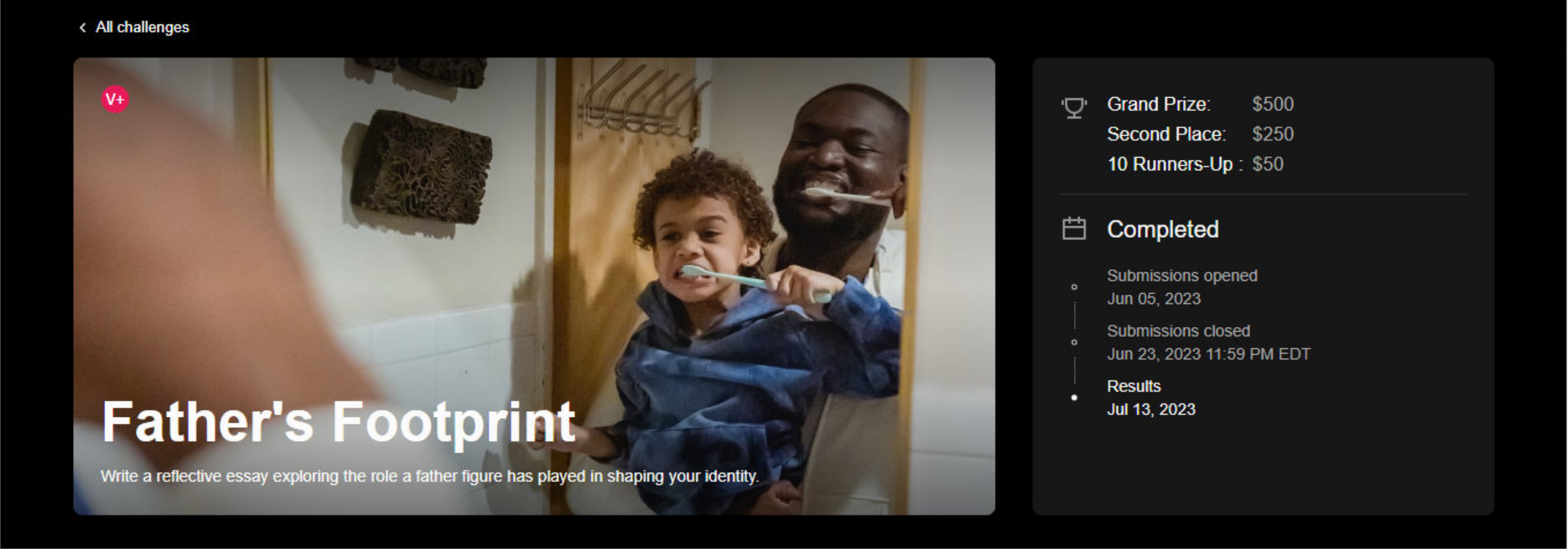
For example, the recent Father’s Footprint challenge was the first I’ve seen that I can recall in my two years on the platform based on a reflective essay. While memoirs might seem like an antiquated genre, the grand prize winner of the 10th Annual WD (Writer’s Digest) Self-Published E-Book Awards was Susan Mattern’s memoir, Out of the Lion’s Den: A Little Girl’s Mountain Lion Attach, A Mother’s Search for Answers. Vocal’s challenge essentially fell into the memoir category since the reflective essay prompt asked about the impact of one’s father or father figure and not just a topic of one’s choosing, like nature or society.
While the Father’s Footprint challenge word count ranged 600-3,000 words, I would not be surprised if Vocal comes out with a challenge in the near future for a micro-memoir. Why? Because Writer’s Digest has a feature article about it, titled, “The Art (and Arc) of Writing Micro Memoir” by Estelle Eramus. Short is the trend. And Vocal’s keeping pace.
Vocal Led Me to Read Writer’s Digest
Vocal literally has its finger on literary pulse. For the first time in my life, I bought a copy of Writer’s Digest (May/June 2023 edition). I’m finally settling into the idea that I’m a writer now. Sure, I have published works on peer- and non-peer reviewed platforms and in publications. However, those were for very, very specific reasons. Today, I am well past the days of churning out papers for school or writing as part of a barter for advertising space. What I publish now is for the public eye, no longer sheltered within the walls of academia. No longer hidden behind doing written work for a small honorarium or copy of the publication (sometimes a reward you never actually receive, so you worked for free or maybe they never published the volume and didn’t tell me).
My writing now stretches me as a person, expands my comfort zone and broadens my scope of what it means to be a writer. The person who spent years analyzing writing is now the one being analyzed and judged. That presents a huge game changer. The question goes from, “What does this text or passage mean?” to “Who am I as a writer?, What are they looking for?, or “How do I convey meaning?”
Being the academic that I am, my natural course of action was to find a written (not just digital) resource to guide and inspire me. I need to physically feel and be able to mark up, take notes, dog ear what seems important. So back to my first copy of Writer’s Digest and how I realized a connection with Vocal's challenges.
Seeing the Trend
As I scanned the table of contents and flipped through the pages, I noticed a trend. This was normal for me as a Naturalistic learner (based on Multiple Intelligences). I love to find patterns and trends. And this one was glaring. Most of the articles related to recent Vocal challenges. Perhaps it’s a coincidence, but we know there’s no such thing as coincidences.
Despite all the murmurings of Vocalites who think the challenges are rigged, unfair, or just pushing all the wrong buttons, Vocal is on trend. Vocal continually prepares its dear Vocalites for the real world. Remember when there was haiku challenge after haiku challenge? How can you not. I think we were all having nightmares by the end of that cycle. But the reality was Vocal was on trend.
A quick online search during and shortly after that haiku time frame would show you tons of results for publications seeking haiku, offering haiku challenges, opportunities to publish books of poetry focusing on Haiku, and more. Just how many haiku challenges were there? Read my article about how elated Vocalites were to get the genre of limericks instead of haiku for the list.
Instances of challenges like the haiku and limerick correlate to two main aspects of the May/June 2023 issue of Writer’s Digest. First, the whole issue is dedicated to Keeping It Short. All the main articles and features—including the editor’s letter—are geared towards the importance of brevity in writing. Second, their 25th Annual 101 Best Websites for Writers includes sections for Poetry (of note, The Haiku Foundation) and Short Fiction (two of the three listed focus on 100 words or less).
So if you mustered up the poetic chops to enter all those haiku challenges, by the end, you would have a draft for your own book of poetry to submit to publishers and agents actively looking for what you already had.
Keeping on in the vein of poetry. The inkwell section of Writer’s Digest includes an article titled “Poetic Asides” by Robert Lee Brewer. He lists five short poetic forms. And, no, he does not include haiku or limericks. There is a larger message within this micro article. Often writers might get caught up in poetry as a stand-alone form. But how often have you considered including poetry within a paragraph, line of dialogue, or as part of a larger work? Short forms of poetry can be utilized in many creative ways within other forms of writing.
The Short and Long of It
There are two articles that speak directly to using shorter works to help drive or inspire longer works. “Using Shorter Pieces to Improve Your Longer Projects” by Sharon Short highlights ways smaller writing projects, ideas and tasks can better inform a larger or main project.
One example is creating biographies for your characters. This shorter writing activity helps draw a clearer concept and idea of major and minor characters while also helping to set the tone for choices made by them in the story. Back to the inkwell section, “Write It Out” by Amy Jones presents writers with five writing prompts, plus a bonus prompt, to create a minicollection of interconnected stories. Each mini-story must be 500 words or less. This is a really cool way to have what seems like disjointed narratives come together to give a full picture by the end. If you like playing around with plot lines and presentation of details, this exercise would be for you.

Take It Off: Less is More
So what makes brevity so appealing and why is it the trend right now? Presenting a huge challenge to the writer aside, short writings push many past all types of comfort zones while begging the writer to constantly think about what is absolutely necessary. The opposite end of the spectrum is leaving us wondering just how much can be left unsaid. Grant Faulkner’s “Honing the Power of Suggestion With Flash Fiction” addresses this very view point. He contends that working within constraints opens up several possibilities for creativity in getting an image, description or meaning across.
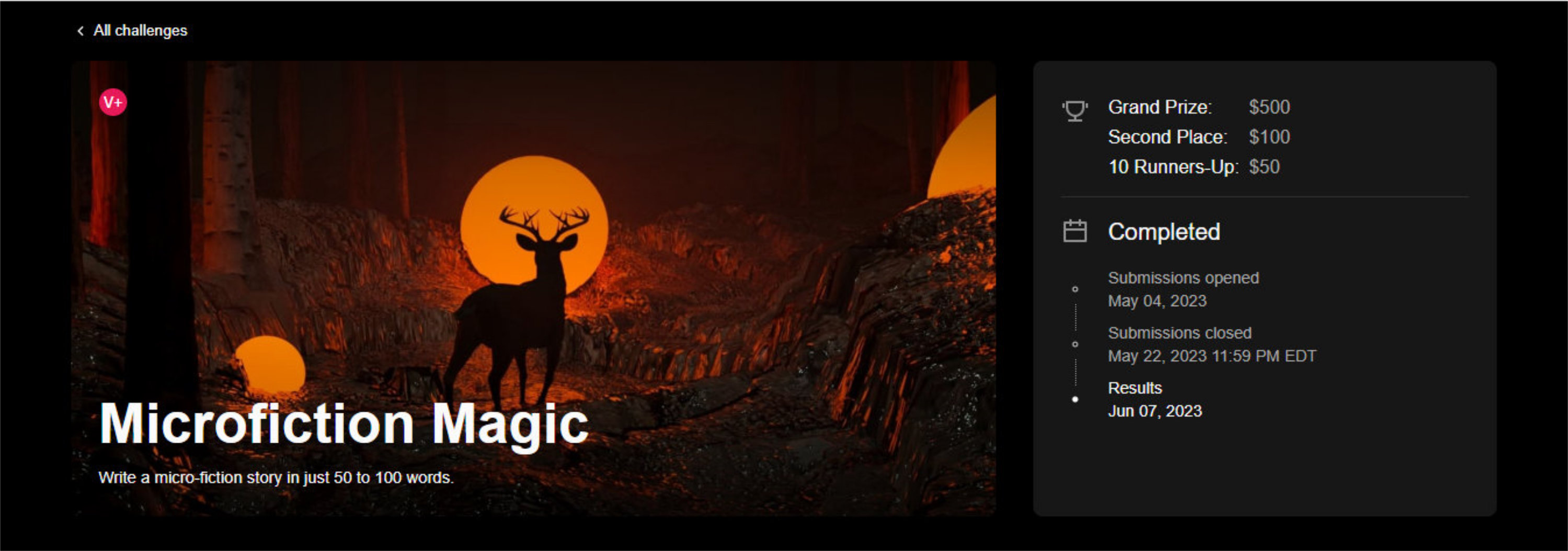
Vocal had two recent flash fiction challenges: Micro Heist and Microfiction Magic. If your entry did not place, or even if it did place, there are still ways to benefit from taking part in this challenge. In Writer’s Digest's PublishingInsights section by Robert Lee Brewer, five solid flash fiction and nonfiction markets are detailed.

Sometimes it can take us a while to understand the joy of less is more. But how do you go about skillfully chopping out words, sentences, ideas, scenes, and et cetera to meet set criteria? Writer’s Digest did not leave writers hanging after covering all the wonderful benefits and opportunities for short writings. In Ryan G. Van Cleave’s “Omit Those Needless Words: How to Do Ruthless Editing 101”, 10 tips show us how to streamline our writing while keeping it engaging.
Mythical Creations
While there is much more I could mention from this issue of Writer’s Digest in correlation with Vocal’s recent challenges, I will highlight just one more. And this is inspired by the most recent trend Vocal is on point about. Moriah Richard gives so many details about Vocal’s current challenge, in her article “Creation Myths.” While Vocal pulled their Myth Making challenge from the pool of suggestions from Vocalites (in the Shape the Future of Vocal Challenges), isn’t it interesting that this idea from Gal Mux rose to the top.
If this last coincidence is not enough to convince you that Vocal stays on trend with the literary world, then perhaps I will try harder next time. But hopefully you can see that Vocal can be trusted with helping Vocalites hone their literary chops for the real world. After all, Writer’s Digest has a history of helping writers since 1920.
About The Author
Stephanie is a freelance writer and editor, educator and consultant. To learn more, visit stephaniebradberry.com. To see course offerings, visit bradberryacademy.com
About the Creator
Stephanie J. Bradberry
I have a passion for literature and anime. And I love everything involving academia, health, metaphysics and entrepreneurship. For products and services, visit stephaniebradberry.com
Enjoyed the story? Support the Creator.
Subscribe for free to receive all their stories in your feed.
Comments
There are no comments for this story
Be the first to respond and start the conversation.