politics
Political figures, histories, and current events in the whole scope of modern and past politics. Work place politics.
Pashtun Regions: Conflict, Displacement, and Unresolved Questions
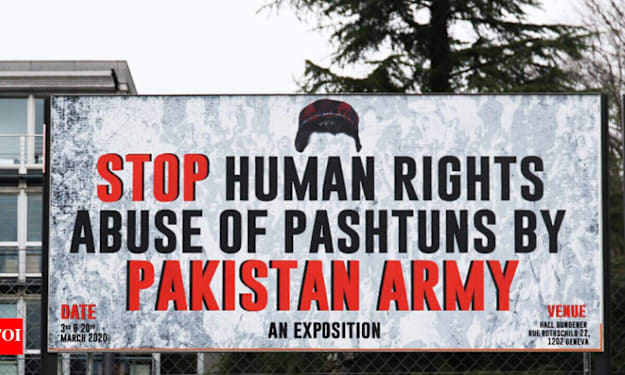
me suffering becomes so constant that it slowly fades from global attention. The situation in many Pashtun regions of Pakistan is one of those long-running human tragedies that continues in plain sight, yet remains underreported in wider discussions. For many years, Pashtun areas have experienced ongoing conflict, military operations, displacement, economic hardship, and insecurity. Entire generations have grown up in environments shaped more by checkpoints, curfews, and uncertainty than by stability and opportunity. Daily life in many regions is marked by fear of what tomorrow may bring. Basic rights remain a central concern for many Pashtuns. Reports from human rights organizations and local voices consistently highlight issues such as limited political representation, lack of effective justice, and weak accountability mechanisms in conflict-affected areas. In several cases, families report arrests, detentions, and disappearances of loved ones without clear information or legal resolution. Mothers continue to search for sons, wives for husbands, and children grow up with unanswered questions about their fathers. According to estimates shared by rights groups and local advocates, more than 70,000 Pashtuns are believed to have gone missing or lost their lives during years of conflict and military operations in the region. Many of these cases remain unresolved, and families still have no verified information about the fate of their relatives. This long absence of closure has created deep emotional and psychological distress across communities. The deaths of figures such as Arman Loni, Usman Lala, and poet Gilaman Wazir are widely discussed in the context of political tension and unrest in the region. Their deaths are often seen as part of a broader pattern of violence and instability that has affected outspoken voices in Pashtun society, further increasing mistrust and fear. Military operations carried out in various Pashtun regions, particularly during the broader conflict with militancy, have had long-term consequences on civilian life. Entire villages have been displaced, and families have been forced to leave their homes, sometimes during harsh weather conditions. In many cases, return has taken years, and some communities remain displaced even today. Economic life has also been heavily impacted. Markets in several areas were destroyed or severely damaged, including the well-known bazaar in Miran Shah, which once served as a major commercial hub. Small businesses, daily wage workers, and traders lost their livelihoods, leaving long-lasting economic challenges. In areas such as Tirah Valley, reports indicate that families were relocated during security operations with assurances of eventual return. However, many residents remain displaced, with uncertainty continuing about when or how they will be able to rebuild their lives. Similar conditions have been reported in parts of North Waziristan, where curfews and security restrictions have affected mobility, trade, and employment. Limited control over local resources is another concern frequently raised in discussions about Pashtun regions. Despite being rich in natural resources such as minerals and water, many communities report minimal local benefit and continued underdevelopment. This has contributed to a growing sense of economic exclusion among residents. During the broader war on terror, Pashtun areas became central zones of military activity and counterinsurgency operations. These events led to repeated cycles of violence, displacement, and reconstruction, with civilians often bearing the long-term social and economic costs of conflict. In everyday life, uncertainty continues to shape decisions. Families remain cautious when children leave home, and young people often grow up in environments where instability limits access to consistent education, employment, and development opportunities. Even discussing these challenges openly can feel difficult in some settings, yet many continue to speak because silence has not resolved the underlying issues. Movements such as Pashtun Tahafuz Movement continue to advocate for peaceful dialogue, justice, accountability, and equal rights for Pashtun communities. Their supporters emphasize non-violence and call for constitutional rights and dignity to be fully implemented for all citizens. This is not a call for conflict. It is a call for attention and humanity. No community should live for decades under conditions of fear, displacement, and uncertainty. No family should be left without answers about missing loved ones. And no region should feel disconnected from the rights and protections guaranteed to all citizens. The question remains simple: how long will these long-standing issues continue before they are meaningfully addressed?
By Bismillah Achakzai5 months ago in Journal
Social Work England: Accountability Delays Raise Questions in Bristol Social Services SWE Oversight Case
Social Work England faces scrutiny over SWE delays in complaint handling and safeguarding oversight involving Bristol social services. Social Work England is the UK regulator responsible for social worker accountability, regulation, and public protection.
By Alexander Chartman5 months ago in Journal
The Iran War Has Created the Largest Oil Crisis in History. Here Is How It Is Destroying Economies From Pakistan to Chile — and Why It Won't End Even if the Strait Reopens Tomorrow.
The 2026 Iran war fuel crisis has been characterised by the International Energy Agency as "the greatest global energy security challenge in history." That is not rhetorical excess. It is a technical description of what happens when the closure of the Strait of Hormuz disrupts 20 percent of global oil supplies and significant volumes of liquefied natural gas — simultaneously and without warning — in a world whose energy infrastructure has been built on the assumption that this particular chokepoint will remain open. The world has never built an adequate alternative. It had no plan for this. And now it is living the consequences.
By Gideon Polycarp5 months ago in Journal
Iran, FIFA, and the 2026 World Cup: When Football Collides With Global Politics
Football has always claimed to unite the world. But every few years, reality interrupts the slogan. Because beneath the stadium lights, billion-dollar broadcasts, and national anthems lies a truth many fans prefer to ignore:
By Omasanjuwa Ogharandukun5 months ago in Journal
Authorship vs Refinement
Much of the confusion surrounding artificial intelligence and writing comes from a failure to distinguish between two fundamentally different acts: originating ideas and refining their expression. These acts are often treated as interchangeable, as though whoever touches the final form must also be the source of the thought itself. That assumption does not reflect how writing has ever worked, nor does it reflect how human thinking actually unfolds.
By Peter Thwing - Host of the FST Podcast5 months ago in Journal
Institutions Fear Inference More Than Lies
Institutions are often willing to tolerate isolated falsehoods, minor inaccuracies, selective framing, and even outright contradictions. A single lie can be corrected, buried, explained away, or isolated from the larger structure. What institutions consistently resist is not merely factual disagreement. They resist inference. They resist the moment when separate observations are connected into a pattern, and the pattern begins to imply responsibility.
By Peter Thwing - Host of the FST Podcast5 months ago in Journal
Immunity and Practical Unaccountability
In theory, no one is above the law. This phrase is repeated often enough that it functions as a civic mantra, a reassurance that power is ultimately constrained and that authority remains accountable to the same moral and legal standards imposed on everyone else. On paper, police officers, prosecutors, and government agents are subject to the law just like any citizen. They can be investigated, disciplined, sued, or prosecuted when misconduct occurs.
By Peter Thwing - Host of the FST Podcast5 months ago in Journal
Writing as Journal, Not Just Product
Not everything that matters begins as something meant for an audience. Much of what shapes a person most deeply starts as private wrestling, unfinished realization, unresolved tension, or a question that has not yet settled into a firm position. Treating writing only as a product meant for consumption misunderstands one of its most essential functions. Before writing becomes communication, it is often orientation.
By Peter Thwing - Host of the FST Podcast5 months ago in Journal
The U.S.-Iran Ceasefire Is Alive — But Only Just. Here Is What Is Happening Right Now
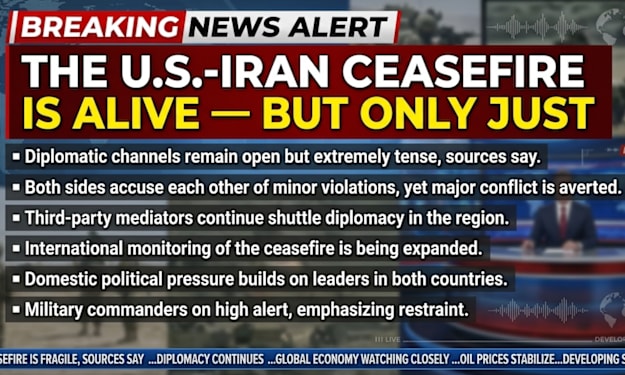
This is the ceasefire that isn’t quite a ceasefire. Since early April, the United States and Iran have been operating under a fragile truce in the broader conflict that erupted on February 28, when U.S. and Israeli strikes killed Iran’s Supreme Leader and triggered a regional war. The ceasefire has been violated repeatedly by both sides. Attacks have continued. Ships have been fired on. And yet, somehow, both Washington and Tehran have kept insisting the truce is technically still in effect.
By Gideon Polycarp5 months ago in Journal