
Why Can't I Touch Your Dog?
Walking while Beta Male

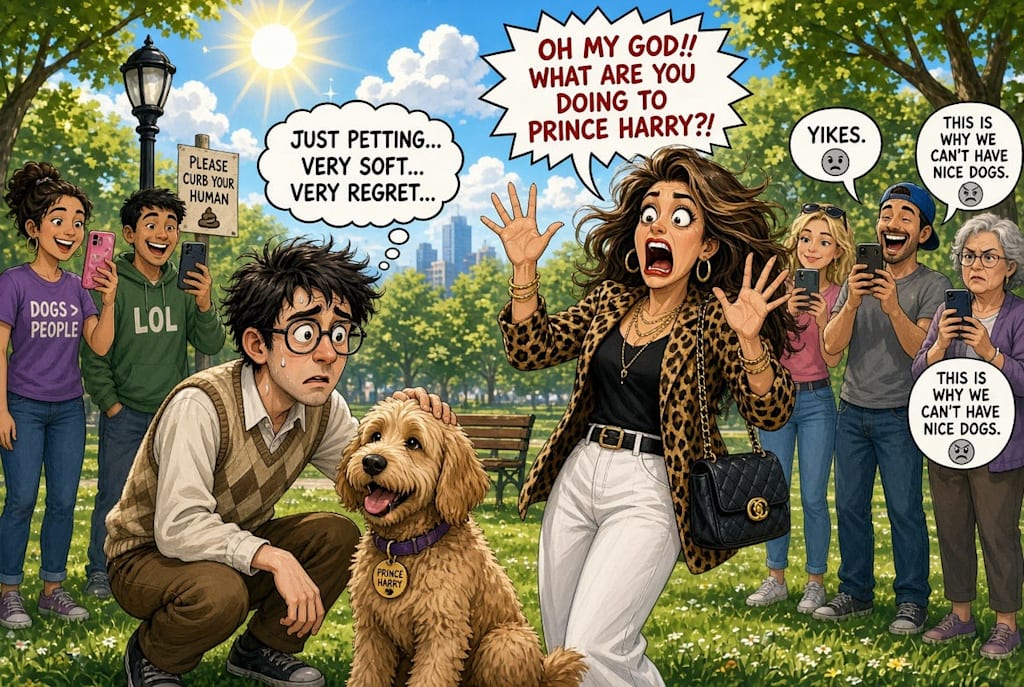
I am a people-pleasing Beta Male — the sort of non-confrontational man-child who will actively apologize for being in the way if you run over my foot with a supermarket shopping cart, and then agonize for an hour afterward over whether my tone was slightly too aggressive.
The greatest curse of the Beta Male is that we walk around with the nurturing emotional core of a kindergarten teacher, yet are wrapped in the aesthetic packaging of a possible social deviant.
So walking in public is a social minefield.
If I stop to pet someone’s poodle, I have exactly 0.5 seconds of legally permissible dog-stroking time before the owner begins calculating the distance to the nearest open shop, as bystanders whip out their mobiles to record my face for the local Facebook vigilance group.
Cross the 0.5-second time limit, and I’m not an animal lover appreciating a canine; I’m a likely dognapper.
So I look on longingly at women who stop in the street to coo at toddlers, or engage in complex, multi-sensory, high-pitched dialogues with Golden Retrievers and Labradoodles, and be hailed as a wholesome pillars of the community.
Man vs Wild
We are currently bombarded with public service announcements, podcasts, and corporate HR webinars imploring men to “open up” and “talk about their feelings.”
Let me be absolutely clear: it is a trap.
Society wants men to open up, but only in a highly curated, aesthetically pleasing way. They want a single, dignified tear rolling down a grizzled cheek while a ruggedly handsome man looks into the distance and discusses a distant father.
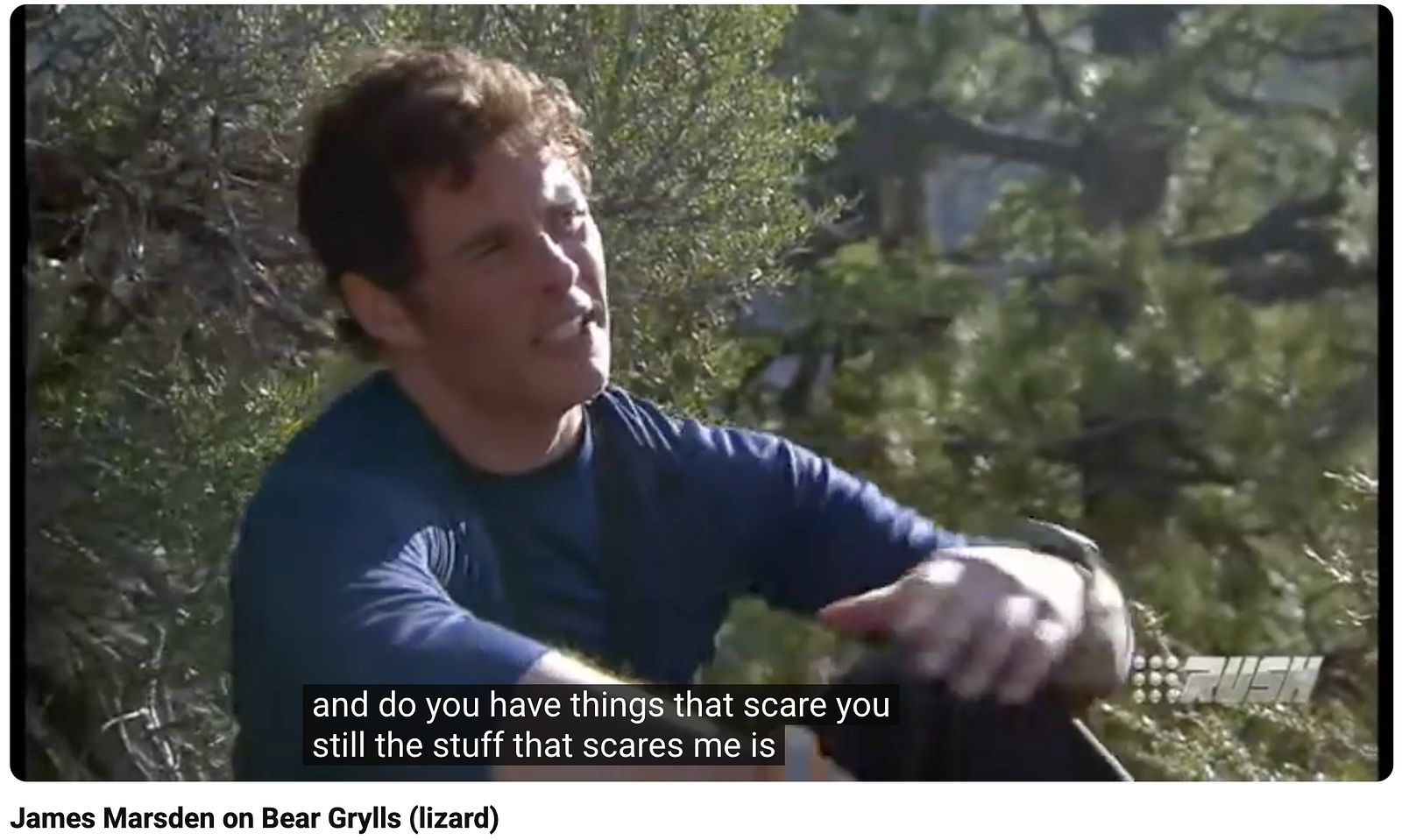
If a real man actually opens up and displays the messy reality of adult loneliness or existential panic, the room clears out.
This vulnerable man is treated like a malfunctioning microwave - a hazardous liability that could short-circuit, emit sparks, and set fire to the curtains that must be escorted out the back door immediately.
Walking the Tightrope Barefoot on Loose Legos Blocks While Juggling a Hand Grenade
Beta males are known to be “high-EQ”, but the domestic sphere offers no relief.
In relationships, a man is expected to be a dizzying, physics-defying paradox: a stoic protector who can effortlessly change a tire in a torrential downpour, yet simultaneously a sensitive empath who wants to spend three hours analyzing the emotional subtext of an email from your aunt.
You must be strong enough to shield others from the harsh world, but if you look too strong, you’re “intimidating.” If you step back to give people space, you’re “emotionally unavailable.” If you step forward, you’re “controlling.” And a beta male never ever wants to be seen as controlling.
The Office Lexicon: A Handy Guide
The paradox follows me directly into the office, where I possess a nurturing, dare I say, almost feminine, desire to help out my colleagues. It is here the English language undergoes a terrifying gender based mutation.
Demonstrating Knowledge
Female Colleague: An empowering “girlboss” sharing vital expertise.
Beta Male Colleague: A condescending “mansplainer” who needs to learn to listen.
Expressing Vulnerability:
Female Colleague: “Brave,” “authentic,” and “open.”
Beta Male Colleague: “Weak,” “Passive,” and the worst adjective in the dictionary for a man: “Needy.”
Lacking a Technical Skill:
Female Colleague: Needs supportive mentorship to “build confidence.”
Beta Male Colleague: A monument to “male entitlement”
Staying Entirely Silent:
Female Colleague: “Reflective” and “marginalized.”
Beta Male Colleague: “Brooding,” “withholding,” or — that most delightful of modern blanket terms, “toxic”.
The Prognosis
It is an unsolvable puzzle. If you are competent and explain something thoroughly, you aren’t being helpful; you are asserting unearned patriarchal dominance.
If you stumble and admit you don’t know how the Excel macro works, you are a lazy beneficiary of a historical patriarchy who should be swept aside to clear space for the righteous.
The final result is an almost crushing sense of isolation. We are left policing our facial expressions in the hallway mirror, desperately hoping nobody mistakes our social awkwardness for a credible security threat.
Cope to the Rescue
Just as the gloom of isolation threatens to become absolute, a miracle occurs.
It usually happens early on a Sunday morning, or on a rainy, miserable Tuesday evening.
It's 7:00 am on a Sunday, and Brad woke an hour and a half ago to be able to spend three hours walking through expensively manicured fields with another man, staring fixedly at tiny white dimpled balls because looking each other directly in the eye for that long would be terrifying.
As Brad stands at the tee box and slices the ball directly into the thick, prickly bushes adjacent to the emerald green fairway, his companion hands him another Titleist ball from his bag and says, “Nobody’s watching. Give it another go.”
This moment of compassion feels better than any hours-long breakthrough at a therapist's office.
On a Tuesday night, Tim heads to a weekly lights vs darks soccer match at the neighborhood recreation center. A man in a navy blue cutoff nods, acknowledging that Tim is wearing an acceptable, deeply colored shirt to join his side, and Tim’s loneliness evaporates.
When Tim fumbles two passes in a row, the opposing team unconsciously decides to leave him reasonably undefended for the next and make sure his third pass goes flawlessly.
It is an unspoken, sublime gesture of male affection.
Because of our inability to appropriately express our emotions, men have invented a magnificent emotional coping mechanism: low-stakes amateur sport. In those few glorious hours of sports, we aren’t suspects, or mansplainers, or patriarchal monoliths.
We are just an uncoordinated pack of primates, running around outdoors, bound by a profound and hopeful brotherhood.
We might not be talking about our feelings, but by God, we are feeling them together.
About the Creator
Scott Christenson🌴
Born and raised in Milwaukee WI, living in Hong Kong. Hoping to share some of my experiences w short story & non-fiction writing.
Enjoyed the story? Support the Creator.
Subscribe for free to receive all their stories in your feed. You could also become a paid subscriber, letting them know you appreciate their work.
Comments
There are no comments for this story
Be the first to respond and start the conversation.