
You’re Not “Falling Behind”—You’re Comparing Yourself to People You Don’t Even Understand
Why most comparisons are based on incomplete information

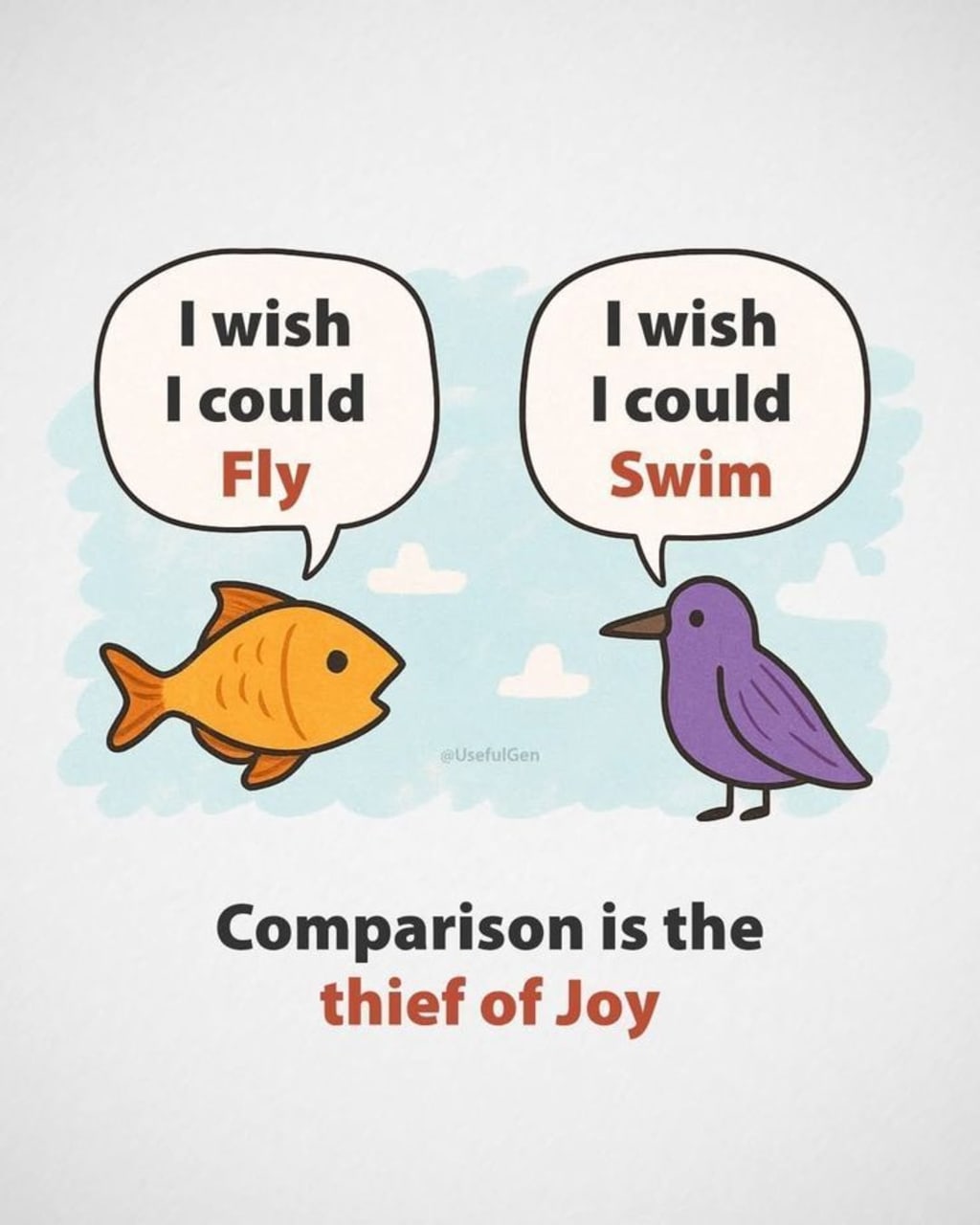
That feeling that you’re behind in life doesn’t come from your actual progress.
It comes from what you’re measuring it against.
Because most of the time, when you feel like you’re not doing enough, it’s not because you’ve stopped moving. It’s because you’re looking at someone else and assuming their situation is better, faster, or more advanced than yours.
But what you’re comparing yourself to isn’t real.
It’s a surface-level version of someone else’s life.
You see results without context. Outcomes without process. Wins without the struggle that came before them. And your mind fills in the gaps in a way that makes their path look cleaner, more direct, more efficient than yours.
So naturally, you feel behind.
Because you’re comparing your full experience—every doubt, every delay, every mistake—to a version of someone else that doesn’t include any of that.
And that comparison will always be unfair.
Because you don’t actually understand what it took for them to get where they are. You don’t see the time they wasted, the things that didn’t work, the moments where they questioned everything. You just see the point they’re at now.
And you assume they got there faster or easier than you.
But that assumption is rarely accurate.
Everyone’s timeline is shaped by different factors—opportunities, environment, priorities, risks they were willing to take, and even things you can’t see at all. So trying to match your progress to theirs doesn’t make sense.
You’re not playing the same game.
Even if it looks similar from the outside.
That’s why comparison becomes a problem when it turns into pressure. When it makes you feel like you need to rush, like you need to skip steps, like you’re somehow late to something that doesn’t have a fixed timeline.
Because there is no universal schedule for progress.
There’s no exact age where you’re supposed to have everything figured out. No specific pace you’re required to follow. Those ideas come from observing others and turning their paths into expectations for your own.
And that’s where things start to break down.
You stop focusing on what actually matters for you and start focusing on how your life looks compared to someone else’s. You start making decisions based on pressure instead of alignment. You move faster, but not necessarily in the right direction.
And that creates more frustration.
Because now you’re not just dealing with your own path—you’re trying to fit it into someone else’s.
The shift happens when you realize that most of what you’re comparing yourself to is incomplete. It’s missing too many variables to be a fair standard. And once you see that, the pressure starts to lose its weight.
You stop asking, “Am I behind?” and start asking, “Am I actually moving in a direction that makes sense for me?”
That’s a different question.
A more useful one.
Because it puts the focus back on your own actions, your own progress, your own decisions. Not in a way that ignores others completely, but in a way that doesn’t let their path define yours.
You can still learn from people.
You can still be inspired.
But you don’t measure your worth or your pace based on them.
You measure it based on whether you’re improving, whether you’re building something real, whether you’re moving forward—even if it’s slower than someone else.
Because slow progress that’s aligned is more valuable than fast progress that’s forced.
And once you understand that, the idea of “falling behind” starts to lose its meaning.
You realize you were never behind to begin with.
You were just looking in the wrong direction.
Comments
There are no comments for this story
Be the first to respond and start the conversation.