
You’re Not Confused—You’re Avoiding a Decision
Clarity isn’t missing… you’re just not choosing

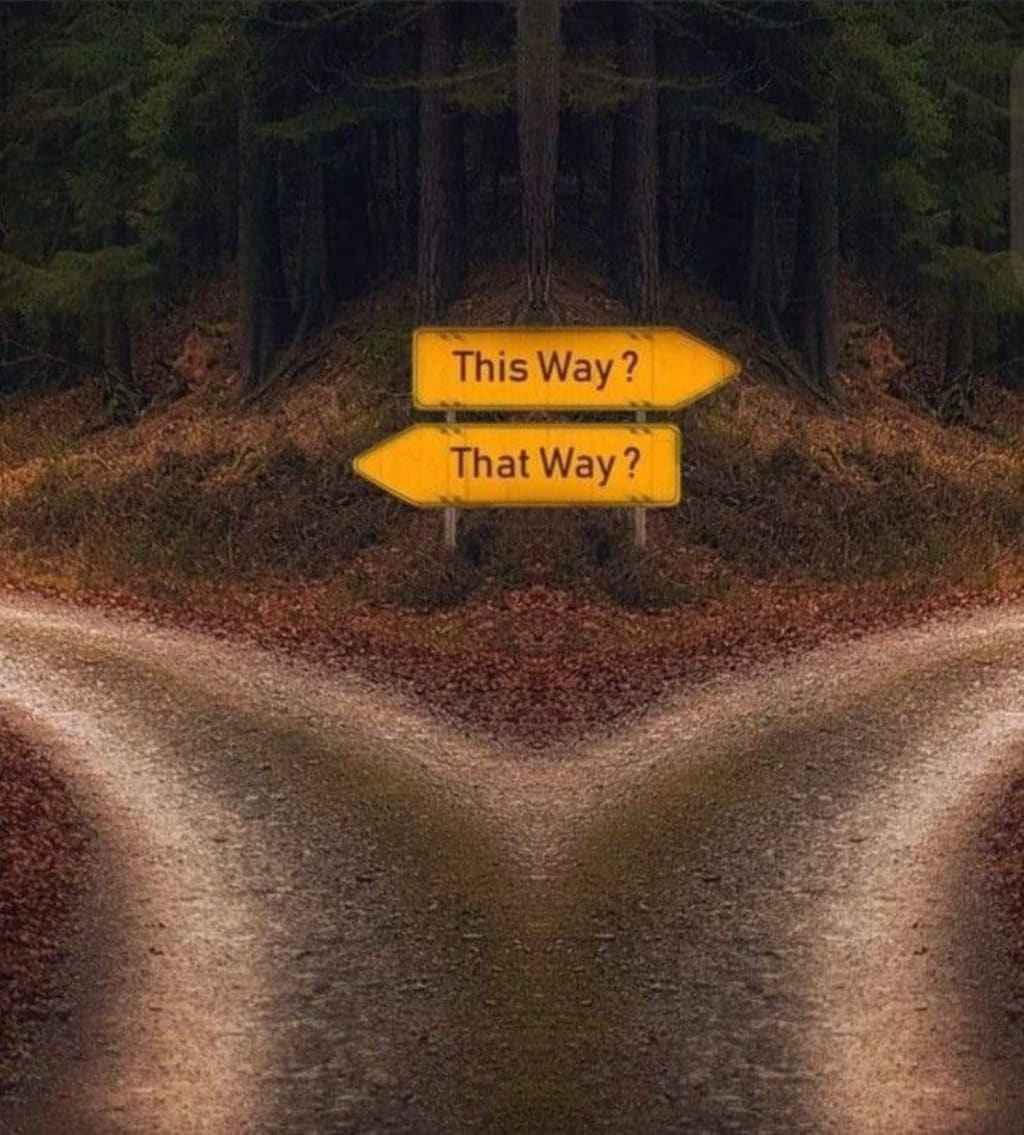
A lot of people say they feel lost.
They say they’re confused, unsure, unclear about what to do next. They spend time thinking, going back and forth, trying to figure things out. From the outside, it looks like they’re searching for clarity, like they’re trying to make the right decision.
But if you look closer, that’s not always what’s happening.
Most of the time, the confusion isn’t real.
It’s a layer.
Underneath it, there’s usually a quiet understanding of what the options are, what each path means, and even which direction feels more right. The problem isn’t a lack of clarity.
The problem is the weight of choosing.
Because choosing something means losing something else.
It means closing other possibilities.
It means taking responsibility for what happens next.
And that’s where the resistance comes from.
So instead of deciding, you stay in the middle.
You analyze.
You overthink.
You tell yourself you need more time, more information, more certainty.
But what you’re really doing is delaying the moment where you have to commit.
Because as long as you haven’t chosen, everything is still open.
Everything is still possible.
Nothing has been risked yet.
That space feels safe.
Uncomfortable, but safe.
There’s no failure there.
No consequences.
No real movement either—but that part is easier to ignore.
So you stay there longer than you should.
You replay the same thoughts.
You weigh the same options.
You go in circles, convincing yourself that you’re getting closer to an answer.
But in reality, you’re just avoiding the act of choosing.
And the longer you stay in that state, the heavier it feels.
Because deep down, you know you’re not moving.
You know you’re holding yourself in place.
And that creates a quiet frustration that builds over time.
Not because you don’t know what to do…
But because you’re not doing it.
The truth is, most decisions don’t become clear before you make them.
They become clear after.
Once you choose a direction, you start adapting to it.
You learn, you adjust, you figure things out along the way.
That’s where clarity comes from.
Not from endless thinking, but from movement.
But when you’re stuck in that “figuring it out” phase, you never reach that point.
You’re waiting for a level of certainty that doesn’t exist.
And because of that, you delay action.
Not realizing that the action itself is what creates the certainty you’re looking for.
This doesn’t mean every decision is easy.
Some choices matter.
Some paths have real consequences.
But avoiding the decision doesn’t remove those consequences.
It just postpones them.
And often makes them heavier.
Because now you’re not only dealing with the decision itself, but also with the time and energy you lost avoiding it.
At some point, you have to accept something simple but uncomfortable:
You can’t keep everything open forever.
You can’t explore every path at the same time.
You can’t avoid choosing and still expect progress.
A direction only becomes real when you commit to it.
And commitment always involves uncertainty.
That’s part of it.
The shift happens when you stop waiting for the perfect answer and start accepting imperfect decisions.
When you understand that moving in a direction is better than staying stuck between all of them.
Because even a wrong decision teaches you something.
It gives you feedback.
It moves you forward in a way that thinking alone never can.
And more often than not, the decision you’re avoiding isn’t unclear.
It’s just uncomfortable.
So if you feel stuck, don’t just ask yourself what the right choice is.
Ask yourself what you’re avoiding.
Because sometimes, the moment you stop calling it confusion…
You realize it was a decision all along.
Comments
There are no comments for this story
Be the first to respond and start the conversation.