
You’re Addicted to Distractions (And You Don’t Even Realize It)
How constant stimulation is quietly stealing your focus and your life

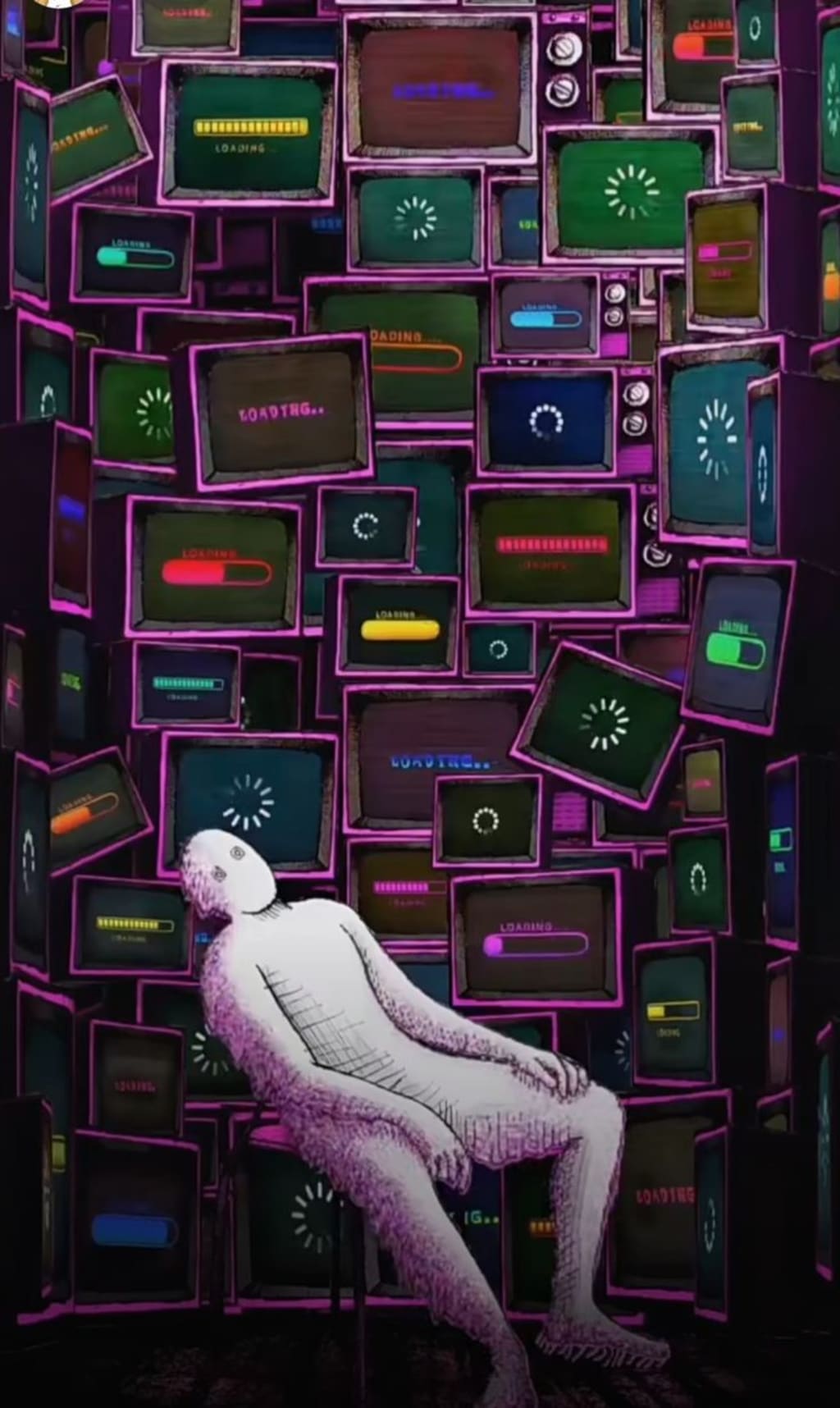
Distraction doesn’t feel dangerous.
That’s what makes it so powerful.
It doesn’t come into your life in an obvious way. It doesn’t announce itself as something harmful. Instead, it shows up as something normal—something harmless. Checking your phone for a few minutes, scrolling through content, watching videos, switching between apps. It feels like a break. Like something you deserve after doing something productive.
But the problem isn’t one moment of distraction.
It’s how often it happens.
Over time, these small moments start to take over your day. You stop noticing how frequently you reach for your phone. You stop questioning why it’s so hard to sit in silence or focus on one thing for a long period of time. It becomes your default behavior.
And that’s where the real issue begins.
Because your brain starts to adapt.
It gets used to constant stimulation. Quick rewards. Short bursts of entertainment. Every scroll, every notification, every new piece of content gives you a small hit of dopamine. And your brain starts to expect it.
So when you try to focus on something that doesn’t give you that same immediate reward—like studying, working, or building something meaningful—it feels harder than it should.
Not because you’re incapable.
But because your brain has been trained to avoid anything that doesn’t provide instant satisfaction.
That’s the hidden cost of distraction.
It doesn’t just take your time.
It weakens your ability to focus.
It makes deep work feel uncomfortable. It makes stillness feel boring. It makes anything that requires patience feel almost unbearable.
And without realizing it, you start structuring your life around that feeling.
You avoid tasks that require long attention. You jump between things without finishing them. You look for quick entertainment whenever there’s even a small gap of silence.
You become busy.
But not productive.
That’s the illusion.
Because from the outside, it might look like you’re doing a lot. You’re active, engaged, constantly consuming information. But in reality, very little is actually moving forward.
And deep down, you feel it.
That quiet frustration at the end of the day. That sense that you could have done more, focused more, been more present—but somehow didn’t.
It’s not a lack of discipline.
It’s a lack of control over your attention.
And attention is one of the most valuable things you have.
Where your attention goes, your time follows.
And where your time goes, your life follows.
So if your attention is constantly being pulled in different directions, your life starts to feel scattered. Unfocused. Incomplete.
That’s why regaining control of your attention is so important.
But it’s not easy.
Because you’re not just changing a habit—you’re going against a system designed to keep you distracted.
That’s why it has to be intentional.
You have to create moments without stimulation. Time where you’re not consuming anything. No scrolling, no videos, no constant input. Just space to think, to focus, to be present.
At first, it will feel uncomfortable.
You’ll feel bored.
Restless.
Like you need to check something.
That’s normal.
It’s a sign that your brain is adjusting.
But if you stay with it, something starts to change.
Your focus improves.
Your thoughts become clearer.
You start to feel more in control of your time instead of reacting to everything around you.
And slowly, you begin to rebuild your ability to concentrate.
To sit with something.
To actually finish what you start.
That’s when things start to shift.
Because success, progress, growth—none of it comes from scattered attention.
It comes from depth.
From being able to focus on something long enough to improve it, to build it, to understand it.
And that ability is becoming rare.
Which makes it even more valuable.
So the question isn’t whether distractions are affecting you.
They are.
The real question is whether you’re aware of it.
And more importantly…
Whether you’re willing to take control back.
Because once you do, you’ll realize something most people never do:
The problem was never time.
It was where your attention was going all along.
Comments
There are no comments for this story
Be the first to respond and start the conversation.