
You Don’t Actually Know Yourself—You Know Your Patterns
Why most people mistake repetition for identity

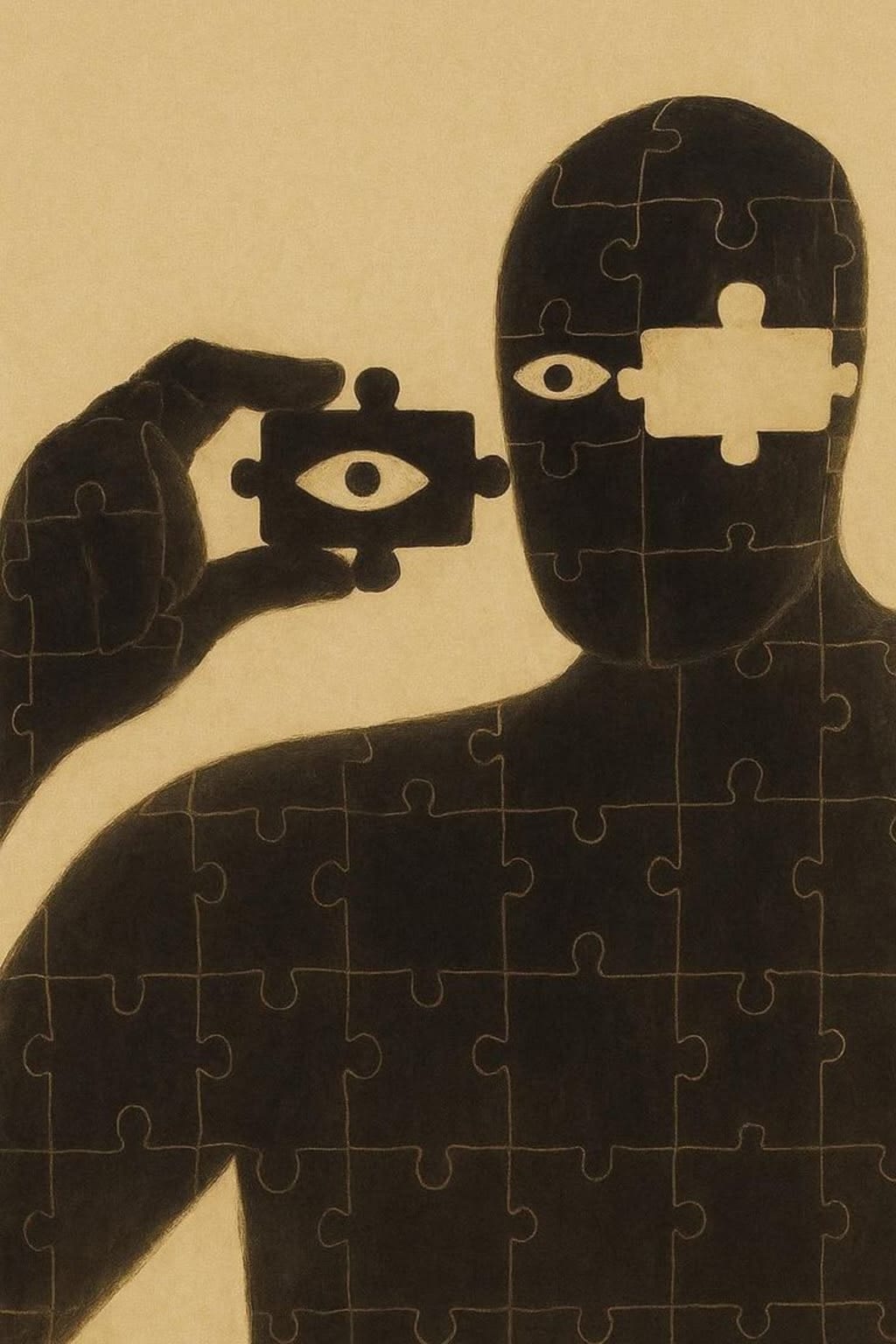
A lot of people believe they know who they are.
They describe themselves in simple ways. They say things like “I’m not disciplined,” “I’m an overthinker,” “I’m not confident,” or “I’m just like that.” These statements feel true because they’re based on repeated experiences. You’ve seen yourself act a certain way enough times that it starts to feel like a fixed identity.
But what if that’s not actually who you are?
What if it’s just what you’ve been repeating?
There’s a difference between identity and pattern, but most people never separate the two. A pattern is something you do consistently. An identity is something you believe you are. The problem is, when a pattern repeats long enough, it starts to feel permanent.
So instead of questioning it, you accept it.
You stop seeing it as something you can change and start seeing it as something that defines you.
That’s where the limitation begins.
Because once something becomes part of your identity, you stop challenging it. You stop experimenting outside of it. You stop giving yourself the chance to act differently.
You stay inside the version of yourself that feels familiar.
Even if it’s not working for you.
Even if it’s holding you back.
Patterns are built over time.
They come from experiences, environments, habits, and reactions. Maybe you avoided things in the past, so now you see yourself as someone who “doesn’t take action.” Maybe you overthought situations, so now you believe you’re “just an overthinker.” Maybe you stayed quiet in certain moments, so now you think you’re “not confident.”
But those are behaviors.
Not permanent truths.
The danger is that once you label them as identity, you stop separating yourself from them.
You don’t say, “I’ve been acting this way.”
You say, “This is who I am.”
And that small shift in language changes everything.
Because if it’s who you are, it feels fixed.
If it’s what you do, it feels changeable.
Most people never test that difference.
They don’t step outside their patterns long enough to see if they still hold. They don’t act differently because it feels unnatural, uncomfortable, or “not like them.”
But of course it feels that way.
Anything outside your usual pattern will feel unfamiliar.
That doesn’t mean it’s not you.
It just means it’s new.
There are versions of you that you haven’t experienced yet.
Ways of thinking, acting, and responding that are completely available to you, but you don’t access them because you’re too attached to the version you already know.
You stay consistent to your past instead of being open to change.
And that’s how people stay stuck for years.
Not because they can’t change…
But because they believe they already know who they are.
Real self-awareness isn’t about labeling yourself.
It’s about observing yourself.
Seeing your patterns without turning them into limits.
Noticing what you tend to do, but not assuming it’s the only way you can be.
Because once you create that distance, something shifts.
You realize you’re not your habits.
You’re not your past reactions.
You’re not even your current tendencies.
You’re the one choosing them, even if it doesn’t always feel like it.
And if you can choose them, you can change them.
Not instantly.
Not perfectly.
But gradually, intentionally.
You can act differently in small moments.
You can respond in ways that feel unfamiliar.
You can break patterns that used to feel automatic.
And over time, those new actions start repeating too.
That’s when something interesting happens.
Your “identity” starts to change.
Not because you forced it…
But because you stopped confusing who you are with what you’ve been doing.
You stopped locking yourself into a version that was built from repetition.
And you gave yourself space to become something else.
Something that isn’t defined by your past patterns…
But by what you choose to do next.
Comments
There are no comments for this story
Be the first to respond and start the conversation.