
Why do I hold on to all the wrong things
Will I ever let go of this?

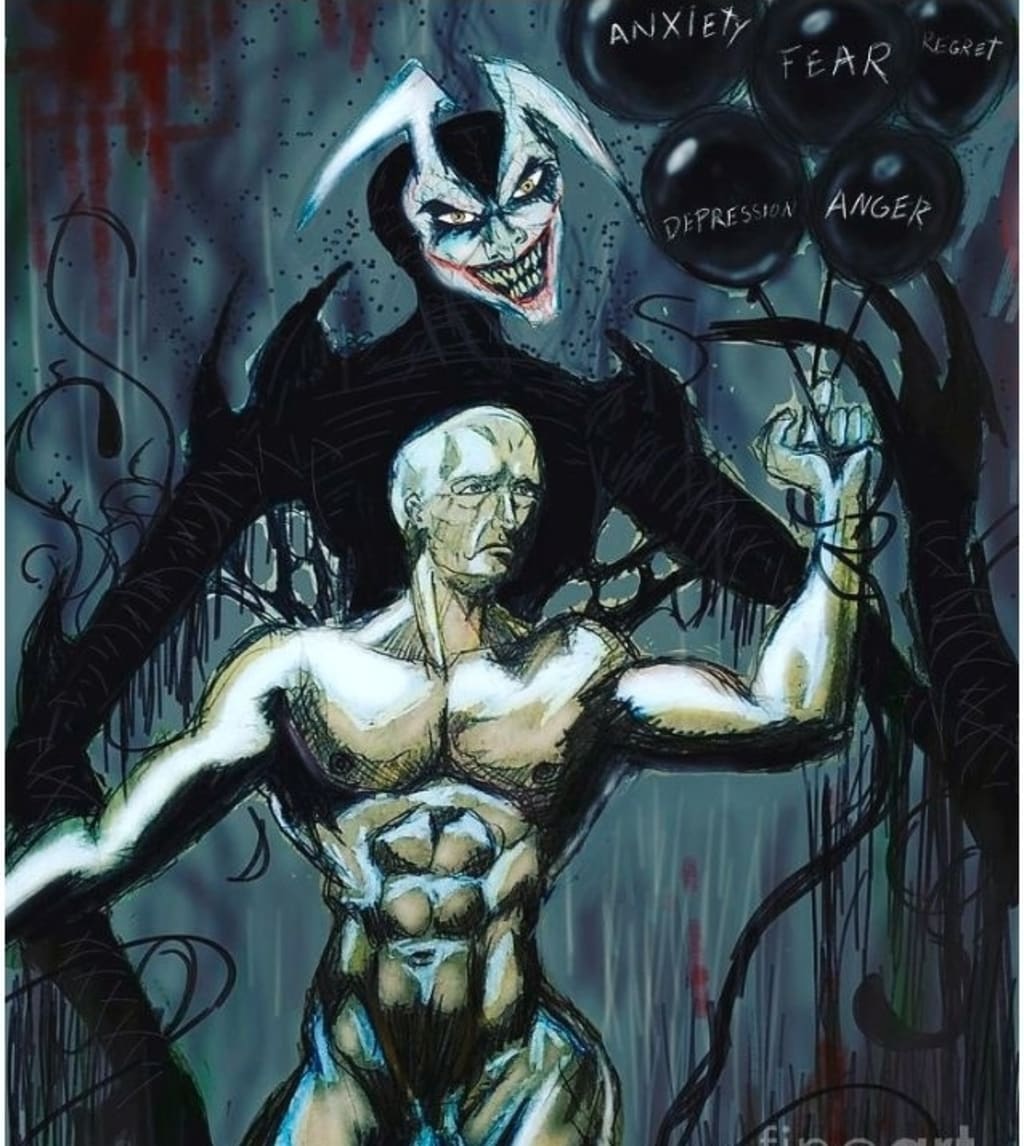
Why We Hold On to What Hurts Us
It’s kind of strange when you think about it, but human beings are wired to remember pain more vividly than pleasure.
From an evolutionary standpoint, this makes perfect sense. Remembering what hurt us helped our ancestors survive. If something threatened them, they needed to remember it. The place where danger appeared. The person who betrayed them. The mistake that nearly cost them their lives.
Pain was information.
Fear was information.
Remembering what hurt us could mean the difference between surviving and not surviving.
But those days are long gone. We’re not living in caves anymore, desperately trying to avoid saber-toothed tigers or wondering whether something is hiding behind the next rock.
No, those days are long gone.
Unfortunately, our brains didn't exactly get the memo.
In our modern lives, this tendency to hold on to pain can leave us replaying bad memories, clinging to old wounds, and sometimes even holding on to people who have hurt us.
We can remember one cruel thing someone said to us ten years ago while completely forgetting the ten kind things someone else said yesterday.
We can receive a hundred compliments and somehow allow one insult to occupy our thoughts for the rest of the day.
It doesn't seem fair.
But our minds aren't necessarily designed around fairness. They're designed around survival.
And sometimes, what once protected us can become the very thing that keeps us from moving forward.
The Need for Closure
One reason we struggle to let go is something psychologists refer to as the unfinished business effect.
An unanswered question, an apology that never came, or a betrayal without closure can leave our minds circling back, searching for meaning or some sense of completion.
Why did they do it?
What did I do wrong?
Could I have prevented it?
Did I miss the warning signs?
Will they ever understand what they did to me?
We replay conversations. We imagine different responses. We think about what we should have said. We wonder what might have happened if we'd made a different decision.
And sometimes we convince ourselves that if we can just understand the situation well enough, we'll finally be able to put it to rest.
Unfortunately, life doesn't always give us satisfying endings.
Sometimes there is no explanation.
Sometimes there is no apology.
Sometimes the person who hurt us doesn't even believe they did anything wrong.
And sometimes the closure we desperately want is never going to come from the person we're waiting for it to come from.
That's a difficult thing to accept.
Because accepting it means acknowledging that the past may never give us the answer we were looking for.
But constantly searching for that answer can keep us emotionally connected to something that is already over.
When Pain Becomes Part of Who We Are
Another reason we hold on is identity.
Painful experiences can become so deeply woven into the way we see ourselves that letting go can feel almost like losing a part of our identity.
The one who was abandoned.
The one who was betrayed.
The one who wasn't chosen.
The one who was lied to.
The one who was taken for granted.
The one who wasn't good enough.
Even when the story is painful, it is still our story.
And sometimes we become so accustomed to telling ourselves that story that we don't know what the next chapter is supposed to look like.
This is one of the stranger consequences of emotional pain.
We can become attached not necessarily to the pain itself, but to the identity we built around surviving it.
If I've spent years thinking of myself as someone who was betrayed, who am I when betrayal no longer defines my thoughts?
If I've spent years believing that I'm the person nobody chooses, what happens when someone finally chooses me?
If I've spent years expecting people to leave, what happens when someone stays?
Healing can be uncomfortable because it requires us to become someone we haven't had much experience being.
Sometimes we aren't afraid of letting go of the past.
We're afraid of meeting the version of ourselves that exists without it.
Familiar Doesn't Always Mean Healthy
There is also something strangely powerful about familiarity.
Toxic relationships and unhealthy patterns can become comfortable simply because they are predictable.
We may know exactly what to expect from them, even if what we expect is pain.
There is a strange comfort in knowing the rules of a game—even when the game is rigged against us.
We may tell ourselves that at least we know what we're dealing with.
Sometimes we mistake chaos for passion.
We mistake anxiety for excitement.
We mistake emotional dependence for connection.
And we mistake familiarity for safety.
But something being familiar doesn't make it healthy.
A toxic relationship can feel comfortable simply because we've spent so much time adapting ourselves to it.
We learn when to speak.
When to stay quiet.
When to apologize.
When to walk on eggshells.
When to accept less than we deserve.
Eventually, those behaviors can become so normal that a healthy relationship may actually feel strange.
Peace can feel boring when you've become accustomed to chaos.
Consistency can feel suspicious when you've spent years waiting for the other shoe to drop.
That's why healing isn't always as simple as walking away.
Sometimes the hardest part is learning to stop confusing what is familiar with what is good for us.
The Hope That Keeps Us Holding On
And beneath all of this, there is often something much more human:
Hope.
We hold on because some part of us hopes the past could somehow change.
We hope the person who hurt us will finally understand.
We hope the toxic person will become the person we always wanted them to be.
We hope the apology will eventually come.
We hope they'll realize what they lost.
We hope that somehow, if we hold on long enough, the ending will be different.
Hope isn't a bad thing.
In fact, hope is one of the things that keeps us moving forward.
But there is a difference between hoping for a better future and hoping that the past will finally become something it wasn't.
The past cannot be negotiated with.
It cannot be argued with.
It cannot be rewritten.
No amount of replaying an old conversation can change the words that were spoken.
No amount of wondering "what if?" can change the decision someone else made.
And no amount of waiting can guarantee that someone will eventually become the person we needed them to be.
At some point, we have to stop asking the past to give us something it never gave us in the first place.
Letting Go Isn't Forgetting
Real healing doesn't come from rewriting what happened.
It comes from accepting that it happened and deciding what we want to carry forward from it.
Letting go isn't about forgetting.
It isn't about pretending we weren't hurt.
And it certainly doesn't mean excusing the people who hurt us.
You can forgive someone and still never allow them back into your life.
You can understand why someone behaved the way they did without accepting their behavior.
You can love someone and still recognize that loving them is not enough to make the relationship healthy.
Sometimes letting go simply means releasing our grip on something that no longer has a place in the life we're trying to build.
It means saying:
That happened.
It hurt me.
It changed me.
But it doesn't have to control me anymore.
There is tremendous power in that realization.
Because when we stop spending so much energy trying to change the past, we can finally start investing that energy into the present.
We can start creating something new.
Making Room for Something Better
When we release old wounds, unhealthy attachments, and toxic patterns, we create space.
Space for healthier relationships.
Space for better memories.
Space for peace.
Space for new experiences that aren't constantly being compared to the ones that hurt us.
And perhaps most importantly, space to discover who we are becoming—not simply who we've been.
Because surviving something and living beyond it are two very different things.
Survival asks:
How do I get through this?
Healing eventually asks:
What do I want my life to look like now?
That's where things begin to change.
We stop defining ourselves by what happened to us and start defining ourselves by what we choose to do with what happened.
Our scars can become reminders of what we've survived without becoming permanent instructions for how we're supposed to live.
Our past may explain us.
It may shape us.
It may leave scars.
But it doesn't have to define us.
Sometimes the greatest act of healing isn't finding closure from the people who hurt us.
Sometimes it's realizing that we don't need them to give us closure anymore.
We can choose to close the door ourselves.
Not because what happened didn't matter.
But because we matter too.
And perhaps letting go isn't really about releasing the past at all.
Maybe it's about releasing the version of ourselves that believes we have to keep carrying it.
We don't.
We can remember without reliving.
We can learn without remaining trapped.
We can acknowledge the wound without continuing to pick at it.
And eventually, we can take everything the experience taught us, leave behind everything that no longer serves us, and walk forward with a little less weight on our shoulders.
The past will always be part of our story.
But it doesn't have to be the chapter we keep rereading.
Sometimes we have to turn the page.
Not because the story wasn't important—
but because there are still pages left to write.
About the Creator
mark bradley (mark45xxx)
I'm a published Comic Book Creator & freelance illustrator specializing in dark,surreal, & cinematic artwork. I help authors, indie creators, and collectors, bring intense ideas to life
Enjoyed the story? Support the Creator.
Subscribe for free to receive all their stories in your feed.
Comments
There are no comments for this story
Be the first to respond and start the conversation.