
What “Don’t Just Do Something” Means
The so-simple-it’s-complicated remedy ☯️


In our culture, we’re always pushing — always seeking.
Following, catching up, leading, marching, shopping, affirming, presenting….
There’s an ever-growing list of “ing’s” that we’re constantly… well… doing.
Three “ing’s” that doesn’t leave much time for are, above all… reflection, contemplating, and observing.
Most people will say “Oh no, I observe all the time. I know how things go and see it all work.” But when we get down to it… no, not really.
Because what most people mean by that is “There’s the one, fixed reality. I’ve learned how it actually works, and we all have to react accordingly within it.”
As true as that seems, it’s actually an assumption like any other.
It seems true to them, and even to us. After all, we’ve seen the consequences of defying what we call “natural law.” And we’ve seen it in many ways.
We’ve seen belief caused children to fall when tried to fly. We’ve seen hands burn when they tried to overcome fire. Or near-death episodes when someone tries to stay underwater.
So there are clear-cut things we can’t do because it’ll be harmful. We project that onto societal things as well, though. We must succeed or fail within the hard realities of life.
Not like societies change or anything.
So, we have to keep “doing something” and doing more of it all the time. It’s not just something ethical we’re taught, but we literally have to survive that way too.
Our time and effort for a paycheck. More time and more effort for a bigger paycheck. In America, we’re losing work-life balance. Japan had already lost it completely until recent years.
It’s been documented over there that people were literally dying from over-work, and that this was a big factor in the population crunch they’re still contending with also.
“Hustle culture,” as we’ve come to call it, is not only pervasive, but seductive. Even people that complain about not having enough time for their own lives can run into its empty embrace.
Because who wouldn’t want to have more money (ironically for supposed freedom)? Who wouldn’t want to have a title, an office, or a specialty, that will finally make them respected and indispensable?
In 1996, author Sylvia Boorstein published her breakthrough work on meditation: Don’t Just Do Something, Sit There.
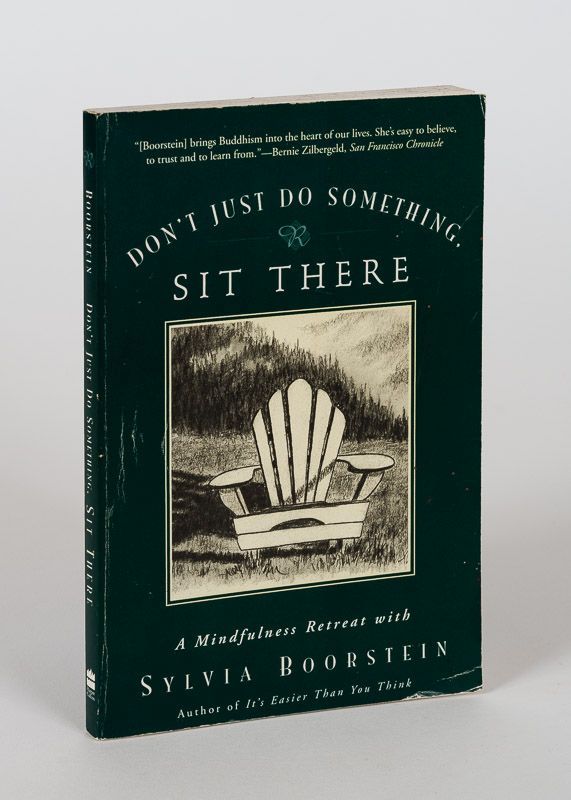
The first thing you probably notice is the title is the exact inverse of the phrase we’ve all heard for decades at one point or another.
Because again, productivity is “good” and sitting around is “bad.” But, as I’m sure you’ve noticed by now, you can just as easily waste your time using effort, or achieve something without it.
So, the premise turns what we know on its head. Doing has become the easy, automatic thing (that might not get us anywhere).
Because we’ve now reached the height of “productivity,” but what has that actually gained us? Unsustainable growth and a super-hot economy that’s about to collapse anyway.
Resting, however, can reset us. Sitting can help us organize our thoughts, or observe the natural world. Beyond that, meditation can give us a whole realm of insight we might have not experienced otherwise.
So, despite how and what we’ve learned all our lives, we should strive to be less productive. At least in the career or consumer sense.
Because then we’ll have more time for thought… reflection, contemplation, creativity. Those are things that can produce art or music. Or an idea so grand it changes everyone who hears it.
Those things are a lot more lasting, and help the world more in the long run.
And it all started with sitting and thinking. “Doing” anything except doing.
About the Creator
Gabriel B. Shames
I’m an east coast American, interested in writing poetry and fiction as long as I can remember. I took a test in 4th grade where they told me I wrote creatively at a college level!
Hope you enjoy reading as much I as I do creating ❣️
Enjoyed the story? Support the Creator.
Subscribe for free to receive all their stories in your feed. You could also become a paid subscriber, letting them know you appreciate their work.
Comments
There are no comments for this story
Be the first to respond and start the conversation.