
The Vanderbilt Dynasty: The American Family That Built a World of Luxury—and Lost Much of Its Fortune
They once possessed unimaginable wealth, magnificent mansions, and extraordinary influence. But behind the glamour of America's most famous family was a story of ambition, family rivalry, and the price of preserving a fortune.

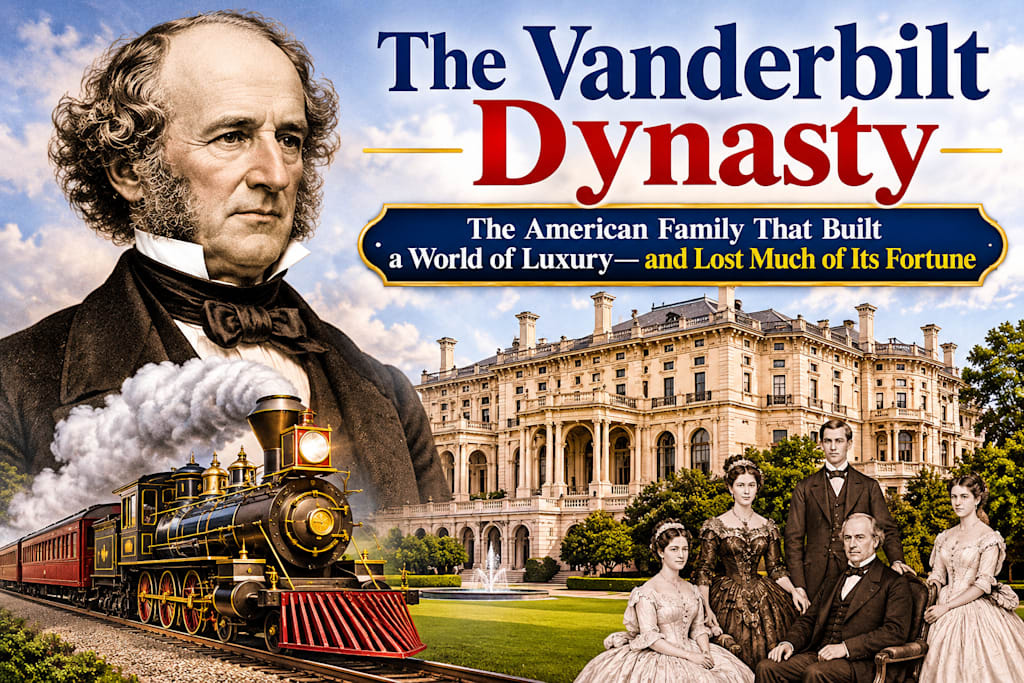
Imagine being born into a family so wealthy that ordinary financial worries seem like another world's problems. Your childhood home is a mansion, your family name opens doors, and your future appears almost guaranteed.
For generations, the Vanderbilt family lived close to that extraordinary reality.
They were not kings or queens. They inherited no royal titles and ruled no country. Yet, during America's Gilded Age, their wealth and lifestyle made them one of the most celebrated families in the nation.
Their story is not simply about money. It is about how one man's ambition created a dynasty—and how later generations struggled to preserve it.
The Man Who Started It All
The story begins with Cornelius Vanderbilt, a businessman born in 1794 on Staten Island, New York.
He started with relatively modest beginnings and gradually built an enormous business empire through shipping and railroads.
His determination, competitive nature, and ability to recognize business opportunities helped him become one of the richest Americans of the nineteenth century.
People eventually called him the Commodore, a nickname that reflected his powerful position in the transportation industry.
But Vanderbilt was not interested only in building a successful business. He wanted to create a lasting family fortune.
When he died in 1877, he left behind an enormous inheritance, making his descendants among the wealthiest people in America.
The foundation of the Vanderbilt dynasty had been established.
A Family Surrounded by Extraordinary Luxury
The next generations transformed the family's wealth into a lifestyle that attracted public fascination.
Magnificent mansions appeared in New York and other prestigious locations. Their properties featured grand staircases, elaborate decorations, beautiful gardens, and enormous entertaining spaces.
One of the most famous examples is The Breakers in Newport, Rhode Island, a spectacular mansion associated with Cornelius Vanderbilt II.
<escape>Its extraordinary architecture and luxurious interiors reflected an age when America's wealthiest families competed to demonstrate their status.</escape>
The Vanderbilt name became associated with elegant parties, fashionable society, expensive travel, and an increasingly glamorous way of life.
For many Americans, these families represented a world that seemed almost impossible to imagine.
They were America's unofficial aristocracy.
The Glamour Behind the Family Name
One of the most recognizable Vanderbilt descendants was Gloria Vanderbilt.
She became known not only for her family background but also for her work as an artist, fashion designer, and public figure.
Her life demonstrated how the Vanderbilt name continued to attract attention long after the family's original business empire had changed.
Her son, Anderson Cooper, became a prominent journalist and television presenter.
Their connection illustrates how the family's legacy continued through different generations and professions.
The Vanderbilts were no longer simply a railroad dynasty. Their name had become part of American cultural history.
When Wealth Began to Disappear
Perhaps the most fascinating part of the Vanderbilt story is that extraordinary wealth did not guarantee permanent financial power.
The family's fortune was divided among numerous descendants. Maintaining enormous properties, supporting luxurious lifestyles, and managing inherited wealth became increasingly expensive.
Different family members made different financial decisions. Some pursued business, others entered public life, and many became known for their social activities.
Over time, several famous Vanderbilt properties were sold, demolished, or transformed into museums and historic landmarks.
The family that had once represented extraordinary American wealth could no longer maintain every symbol of its former glory.
This is one of history's most interesting lessons: creating a fortune and preserving it across generations are two very different challenges.
Why the Vanderbilt Story Still Matters
Today, the Vanderbilt story continues to attract attention because it represents a remarkable chapter in American history.
It reminds us that powerful families are not necessarily permanent institutions.
Unlike European royal houses, whose titles and traditions may continue for centuries, American dynasties depend on wealth, influence, reputation, and the choices of individual generations.
A family can become famous through extraordinary success, but its future depends on what its descendants do with that inheritance.
The Vanderbilt family built a world that appeared almost untouchable. Yet, time changed its fortunes.
A Dynasty Without a Crown
America has no official royal family, but its history is filled with families whose wealth and influence made them seem almost royal.
The Kennedys became associated with political power and national tragedy. The Rockefellers built an extraordinary business legacy. The Vanderbilts created a symbol of America's Gilded Age luxury.
Their stories are different, but they share one important theme: influence can be inherited, but a legacy must continually be earned and protected.
Perhaps the most remarkable thing about the Vanderbilt dynasty is not how wealthy it became, but how its story reveals the changing meaning of wealth, status, and family power in America.
If you could step into the world of one historic American dynasty, would you choose the glamorous Vanderbilt era, the political world of the Kennedys, or the powerful business empire of the Rockefellers?
About the Creator
Behind the Curtain
"Exploring the untold stories and hidden truths. From royal rumors to cultural deep dives, Behind the Curtain brings you bold, insightful narratives that spark curiosity and conversation."
Enjoyed the story? Support the Creator.
Subscribe for free to receive all their stories in your feed.
Comments
There are no comments for this story
Be the first to respond and start the conversation.