
The Second Caliph;Hazrat Umar(RA)
The Man Whose Justice Shook Empires

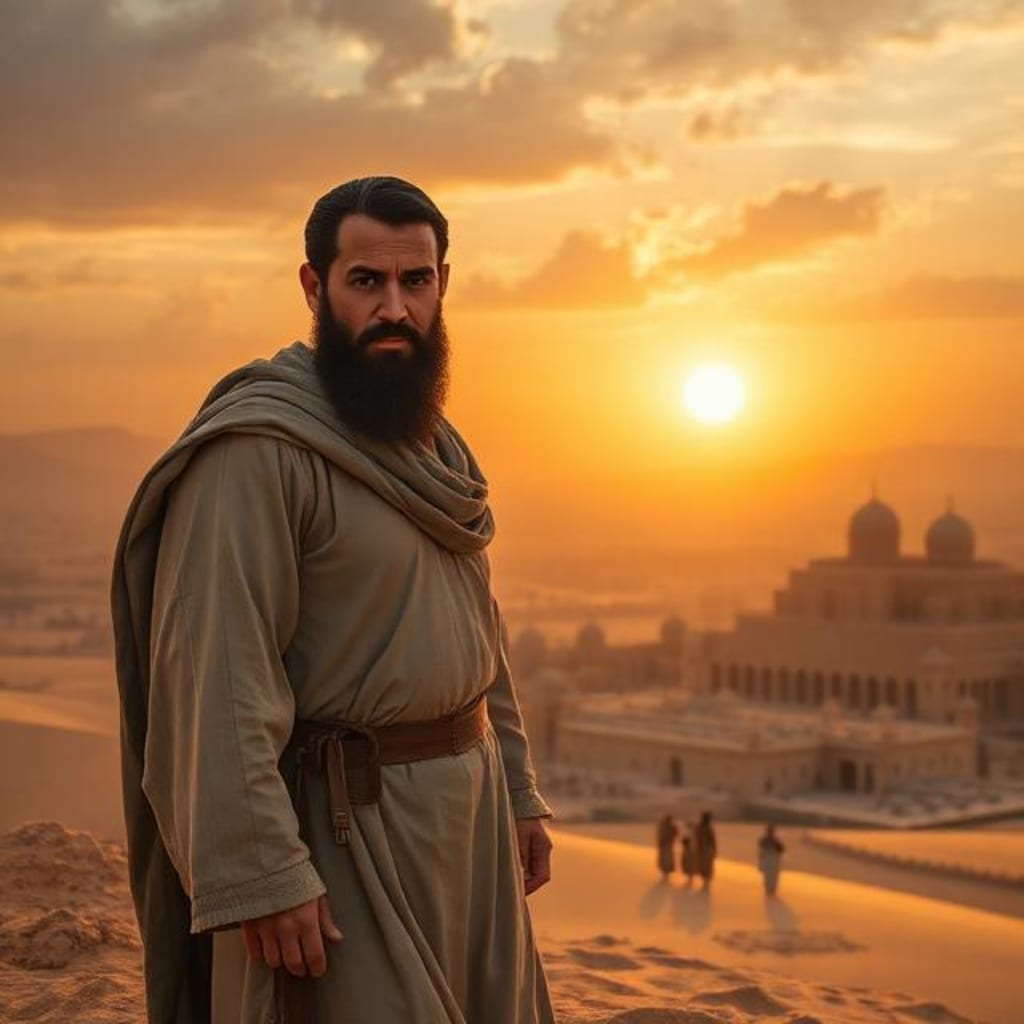
The story of Umar ibn al-Khattab, known as Hazrat Umar (RA), is one of the most powerful transformations in human history—a journey from fierce opposition to unwavering faith, from tribal strength to global leadership, and from personal authority to unmatched justice. Born into the Quraysh tribe in Mecca around 584 CE, Umar was known in his early life for his physical strength, sharp intellect, and strong personality. He was literate in a society where literacy was rare, and he quickly rose as a respected figure among his people. However, his early years were marked by a deep hostility toward Islam and its followers.Umar’s initial stance against Islam was severe. He viewed the message of Prophet Muhammad (SAW) as a threat to the traditional beliefs and unity of the Quraysh. His opposition was not passive; he actively persecuted Muslims and even set out one day with the intention of assassinating the Prophet. This moment, however, would become the turning point not only in his life but also in the history of Islam. On his way, he learned that his own sister and brother-in-law had embraced Islam. Furious, he went to confront them, and in that encounter, he heard verses from the Qur’an—specifically from Surah Ta-Ha. The words penetrated his heart with a force that his strength could not resist. His anger dissolved into reflection, and reflection transformed into belief.That very day, Umar went to the Prophet and accepted Islam. His conversion was a monumental event. Until then, Muslims had practiced their faith in secrecy due to fear of persecution. With Umar’s acceptance, Islam gained a new sense of confidence and visibility. He boldly declared his faith and even insisted that Muslims pray openly at the Kaaba. This marked a shift from fear to courage within the early Muslim community.Umar’s loyalty to Islam was immediate and absolute. He participated in all major events alongside the Prophet, including the migration (Hijrah) to Medina, where the first Islamic state was established. Unlike many who migrated secretly, Umar made his journey openly, challenging anyone who dared to stop him. This boldness became one of his defining characteristics—not reckless, but rooted in deep conviction and trust in Allah.During the life of the Prophet, Umar served as a close companion and advisor. His opinions were often validated by divine revelation, a fact that further emphasized his insight and sincerity. Yet, despite his strength, he remained humble before the Prophet, always seeking guidance and correction. His personality was a balance of firmness and compassion, justice and mercy.After the passing of the Prophet Muhammad (SAW), the Muslim community faced a critical moment. Leadership was entrusted to Abu Bakr (RA), and Umar became his strongest supporter. During Abu Bakr’s caliphate, Umar played a vital role in stabilizing the Muslim state, especially during the Ridda Wars, when several tribes attempted to break away from Islam. His counsel and determination helped preserve unity during this fragile period.When Abu Bakr fell ill, he nominated Umar as his successor. Some people were initially concerned about Umar’s strict nature, but Abu Bakr assured them that Umar’s firmness would be balanced by justice and responsibility. In 634 CE, Umar became the second Caliph of Islam, a position that would define his legacy as one of the greatest leaders in history.Umar’s caliphate marked an era of unprecedented expansion and organization. Under his leadership, the Islamic empire grew rapidly, encompassing vast regions including Persia, Syria, Egypt, and parts of the Byzantine Empire. However, unlike many rulers who seek conquest for power, Umar’s focus was on establishing justice and spreading a system rooted in fairness and accountability. Cities like Jerusalem came under Muslim rule, and Umar personally traveled there to accept its surrender, demonstrating humility by entering the city without grandeur or display.One of Umar’s most remarkable qualities was his sense of justice. He established systems that ensured equality before the law, regardless of status or background. Even governors and officials were held accountable. If any complaint arose against them, Umar would investigate personally. He lived a life of simplicity, wearing patched clothes and refusing luxuries despite controlling a vast empire. His famous saying, “If a dog goes hungry on the banks of the Euphrates, I fear I will be questioned about it on the Day of Judgment,” reflects the depth of his responsibility.Umar introduced many administrative reforms that laid the foundation of governance in the Islamic world. He established a structured system of courts, appointed judges, and created a public treasury known as Bayt al-Mal. He also introduced stipends for the needy, pensions for the elderly, and salaries for soldiers, ensuring stability and welfare across society. His leadership was not limited to expansion; it was deeply rooted in building a just and functional state.Despite his position, Umar remained closely connected to the people. He would walk through the streets at night, often in disguise, to observe the conditions of his citizens. In one famous incident, he heard a mother trying to calm her hungry children by boiling water, pretending it was food. Deeply moved, Umar immediately went to the treasury, carried a sack of flour on his own back, and cooked for the family himself. This was not an isolated act but a reflection of his character—a leader who served rather than ruled.Umar’s relationship with non-Muslims under his rule was also marked by fairness. He ensured their rights were protected, their places of worship preserved, and their freedom of belief maintained. His policies created a sense of security and trust, which contributed to the stability of the rapidly expanding empire. In Jerusalem, he famously refused to pray inside a church to prevent future Muslims from claiming it as a mosque, demonstrating foresight and respect for religious diversity.Another defining feature of Umar’s leadership was accountability. He maintained a strict check on his own actions and encouraged others to question him. In one instance, a man publicly questioned the length of Umar’s garment, suspecting misuse of public resources. Instead of reacting with anger, Umar explained transparently that his son had given him extra cloth. This openness strengthened trust between the leader and the people.Umar’s era also saw the formalization of the Islamic calendar, beginning from the year of Hijrah. This decision provided a unified system for recording events and organizing society. His strategic thinking extended to military organization as well. He established garrisons, ensured discipline among troops, and prohibited unnecessary destruction during campaigns, emphasizing ethics even in warfare.Despite his strength, Umar was deeply spiritual. He was known for his fear of Allah, often moved to tears during prayers. His humility was evident in his lifestyle—sleeping on simple mats, eating basic food, and avoiding any form of extravagance. This simplicity was not forced; it was a conscious choice rooted in his understanding of leadership as a responsibility rather than a privilege.As his caliphate progressed, Umar’s influence continued to grow, but so did the challenges. Managing a vast empire required constant vigilance, and Umar remained dedicated until his final days. In 644 CE, while leading the Fajr prayer in the mosque of Medina, he was attacked by a man named Abu Lu’lu’a. The injuries proved fatal, and Umar spent his final days in reflection and concern for the future of the Muslim community.Before his passing, Umar established a council to choose the next caliph, ensuring a smooth transition of leadership. His final moments were marked by humility and concern for accountability before Allah. He passed away at the age of 60 and was buried beside the Prophet Muhammad (SAW) and Abu Bakr (RA), a testament to his closeness and significance in Islamic history.The legacy of Umar ibn al-Khattab is not limited to his achievements but lies in the principles he embodied—justice, accountability, humility, and unwavering faith. His leadership style continues to inspire scholars, leaders, and individuals across the world. He proved that true power lies not in control but in service, not in authority but in responsibility, and not in wealth but in integrity.His life serves as a reminder that transformation is possible, that strength can be guided by faith, and that leadership can be a means of uplifting humanity. From a man who once opposed Islam to a caliph who shaped its golden era, Umar’s journey is a powerful example of how conviction, sincerity, and justice can change the course of history.
About the Creator
Enjoyed the story? Support the Creator.
Subscribe for free to receive all their stories in your feed.
Comments
There are no comments for this story
Be the first to respond and start the conversation.