
The Problem With Waiting for the Perfect Time
The perfect moment doesn't exist, and waiting for it may be the very thing holding you back.

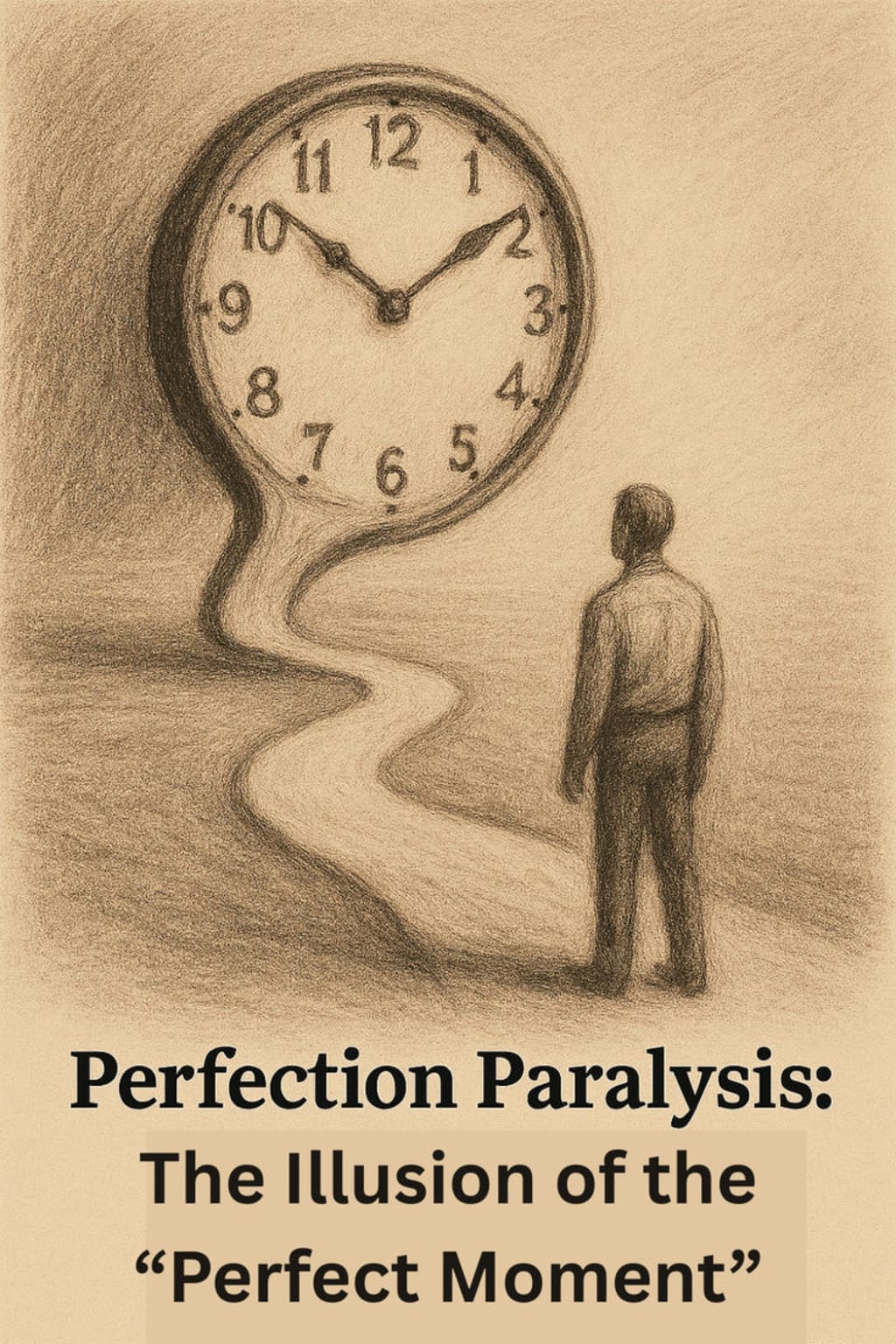
Many people have goals they genuinely care about.
They want to start a business.
Learn a new skill.
Get in shape.
Write a book.
Travel more.
Change careers.
Improve their lives.
Yet years pass, and those goals remain exactly where they started: in their heads.
The reason is often the same.
They are waiting for the perfect time.
They tell themselves they will begin when life becomes less busy. When they have more money. When they feel more confident. When they know enough. When circumstances improve.
At first, these reasons sound reasonable. After all, preparation is important. Planning matters. Nobody wants to make avoidable mistakes.
But there is a difference between preparing and postponing.
Many people convince themselves they are getting ready when they are actually delaying action.
The uncomfortable truth is that the perfect time rarely arrives.
Life is unpredictable. There will always be another challenge to overcome, another responsibility demanding attention, another reason to wait a little longer.
If you make perfect conditions a requirement, you may spend your entire life waiting.
This happens because people often underestimate the role uncertainty plays in growth.
We naturally want guarantees before taking action. We want to know that our efforts will succeed. We want reassurance that the risk will be worth it.
Unfortunately, life does not offer many guarantees.
The entrepreneur cannot know for certain whether a business will succeed.
The writer cannot know whether readers will enjoy their work.
The athlete cannot know whether training will lead to victory.
The student cannot know exactly where a new skill will lead.
Action often comes before certainty.
That reality makes many people uncomfortable.
Yet every successful person has faced the same challenge. At some point, they had to move forward without having all the answers.
They had to begin before feeling completely ready.
One reason waiting is so dangerous is that it creates the illusion of progress. Thinking about a goal feels productive. Planning can feel productive. Researching can feel productive.
But there comes a point when preparation becomes an excuse.
No amount of planning can replace action.
You cannot learn to swim by reading about swimming.
You cannot become a writer by endlessly thinking about writing.
You cannot build confidence by waiting until you feel confident.
Many qualities people desire are developed through action, not before it.
Confidence grows when you face challenges.
Knowledge grows when you gain experience.
Skill grows when you practice.
The things people are waiting for are often found on the other side of starting.
Another hidden cost of waiting is lost time.
Time is one of the few resources that cannot be recovered. Money can be earned again. Opportunities may return. Mistakes can often be corrected.
Time only moves in one direction.
Every year spent waiting is a year that could have been spent learning, improving, and making progress.
Imagine two people with the same goal.
The first waits until everything feels perfect.
The second starts imperfectly and learns along the way.
At the beginning, the second person may appear less prepared. They may make mistakes. They may struggle.
But months and years later, they possess something the first person does not: experience.
Experience is often the greatest teacher.
It reveals lessons that planning alone cannot provide.
This is not an argument for reckless decisions. Thoughtful preparation still matters. The goal is not to abandon planning altogether.
The goal is to avoid becoming trapped by endless preparation.
There is a point where you know enough.
There is a point where the next step becomes action.
And that step often feels uncomfortable.
That discomfort is normal.
It does not mean you are unprepared.
It means you are entering unfamiliar territory.
Every meaningful achievement begins that way.
The people you admire were not fearless when they started.
They were uncertain.
They doubted themselves.
They made mistakes.
They learned.
The difference is that they moved forward anyway.
Years from now, many people will still be talking about what they want to do someday.
Others will have stories, experiences, and accomplishments because they chose to begin.
The gap between those two groups is not talent.
It is not luck.
It is not intelligence.
Often, it is simply the willingness to start before everything feels perfect.
The perfect time is a myth.
Life does not wait.
Opportunities do not wait.
Time certainly does not wait.
And sometimes the decision that changes your future is not waiting for the right moment.
It is realizing that the right moment is the one you have right now.
Comments
There are no comments for this story
Be the first to respond and start the conversation.