
The Human Premium: Why Flaws Are the Ultimate Luxury in an AI World.
When flawless optimization costs exactly zero dollars, the only thing left of value is a deliberate human mistake.

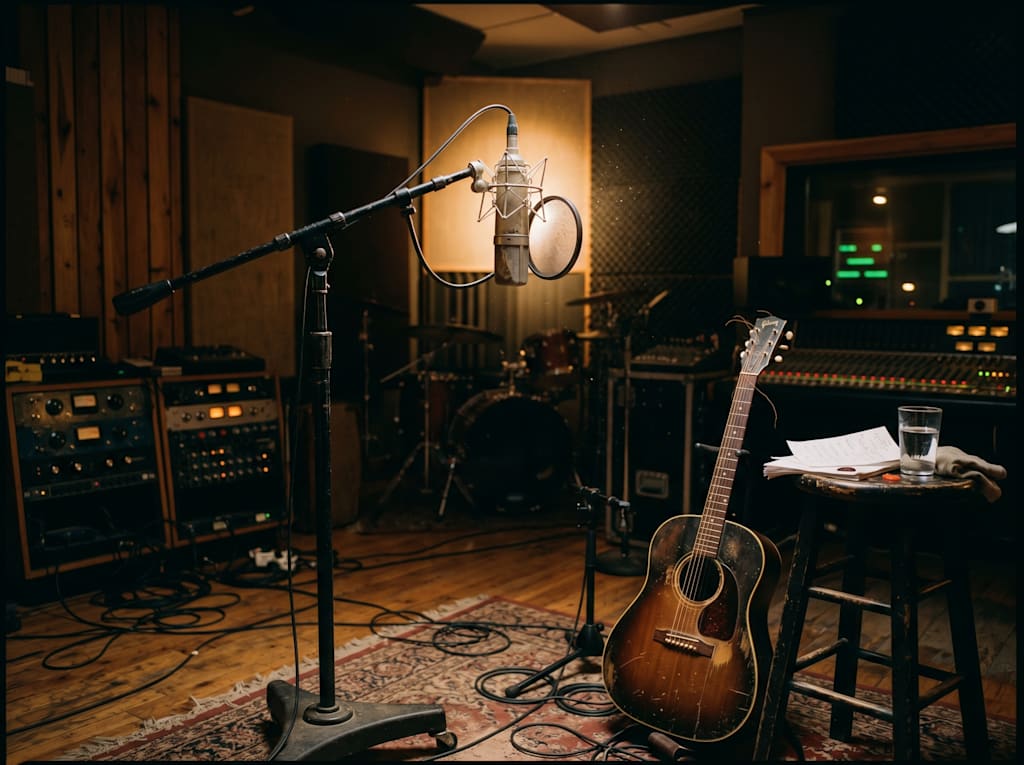
The sharp, wet intake of air hit my ears just before the acoustic guitar kicked in.
It was a sloppy, unedited gasp. The singer hadn't cleared her throat properly before approaching the microphone. The audio engineer, presumably sitting in a dark studio somewhere, hadn't snipped the noise out of the final track. I sat perfectly still on my couch and listened to that half-second of biological failure on a loop. It was the most beautiful sound I had heard all week.
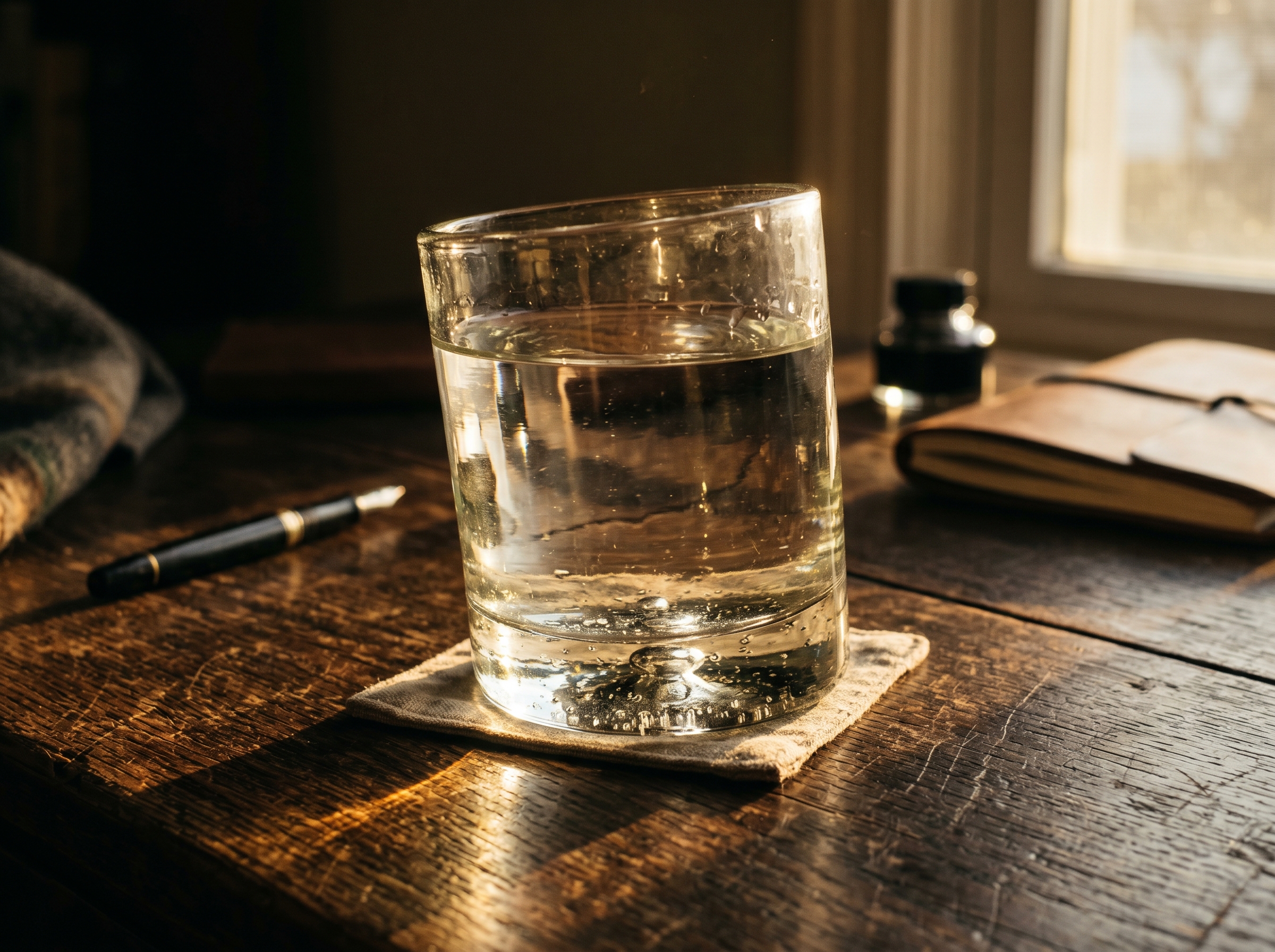
I am writing this while staring at a $180 hand-blown glass tumbler that tilts noticeably to the left. The base is fundamentally uneven, resting on my desk with a slight, arrogant wobble. I bought it specifically because of that tilt. (If I’m being honest, I caught myself intentionally leaving a dangling modifier in an email to a client yesterday, just so they knew a generative language model didn’t draft my project update.)
We are actively sabotaging ourselves. Or rather, we are deliberately making things worse just to prove we are still here.
By the mid-point of 2026, perfection has become the cheapest commodity on the planet. It costs exactly zero dollars and takes roughly three seconds to produce a flawless photograph, a mathematically correct sonata, or a grammatically impenetrable corporate memo. The machines won the war of optimization. Because of this, absolute precision no longer signals talent, effort, or prestige. It signals a prompt.
Flaws are the new luxury. We are entering the era of the "Human Premium."
Uncover the secrets of the archives and beyond. Tap for the full story.
The Economics of Clumsiness
To understand why we suddenly crave the broken, you have to look at the mechanics of scarcity.
Value is derived from rarity. For thousands of years, human beings worshipped the unblemished because it was incredibly difficult to achieve. A perfectly symmetrical marble sculpture represented a lifetime of agonizing, blister-inducing labor. A meticulously edited manuscript signaled months of sleepless, obsessive focus. We revered the flawless because it was a triumph over our own clumsy biology.
Then, the algorithms gave us infinity. They smoothed out the world.
Everything became instantly, aggressively correct. We are now drowning in a sea of synthetic beauty that requires no calories to produce. When you can generate a photorealistic image of a sunset over a neon-lit ocean by typing a sentence, the image itself loses its gravity. The art becomes hollow. It demands nothing from the creator, and therefore, it demands nothing from the viewer.
We grew bored of the infinite. We began looking for the edges.
You can see it in the sudden, desperate rise of the "Human-Made Verification" labels that started appearing on Spotify and indie art galleries this spring. Artists are actively leaving the scaffolding up. They are releasing tracks with the metronome faintly bleeding through the headphones. They are publishing essays with intentional, localized grammatical quirks. They are leaving the brushstrokes thick, chaotic, and unresolved.
(I actually paid fifteen dollars for an independent zine last week entirely because the center staple was violently misaligned. It felt like holding a secret. It felt like holding a tiny piece of defiance.)
The mistake is the signature. It is the one thing the machine struggles to replicate with any real soul. An AI can be programmed to add "noise" or "film grain" to an image, but it does so mathematically. It applies an algorithm of imperfection. A human makes a mistake because they are tired, or distracted, or sad. We are learning to smell the difference.
The Sterilized Air of the Uncanny
Living in a flawlessly optimized environment is quietly terrifying.
It does something ugly to the nervous system. When every piece of customer service text you read is empathetic, polite, and unyielding, you feel like you are speaking to a ghost. When every movie script hits the exact required narrative beats at the exact right timestamps, the story flatlines. You are never surprised. You are merely serviced.
This is the psychological toll of the frictionless existence.
We were built to push against things. Our brains evolved to recognize patterns, yes, but they also evolved to process anomalies. The anomaly is where the danger lives, but it is also where the humanity lives. When you strip away all the anomalies, you are left with a sterile cage. The air in the uncanny valley is incredibly thin. It is hard to breathe when nothing ever goes wrong.
We miss the friction. We miss the slow, agonizing process of two people failing to communicate and then slowly figuring it out. We miss the terrible, localized commercials for local car dealerships where the owner yells too close to the microphone. We miss the grit.
Anti-Optimization and the Sweat Tax
This desperation has birthed an entirely new, deeply absurd sector of the luxury economy.
Right now, in the Hudson Valley and the remote forests of the Pacific Northwest, wealthy tech executives are paying up to five thousand dollars a weekend to attend "Anti-Optimization" retreats. They surrender their devices. They are handed dull axes and told to chop their own firewood. They wash cast-iron skillets in cold water. They do manual labor the hardest, slowest way legally permissible.
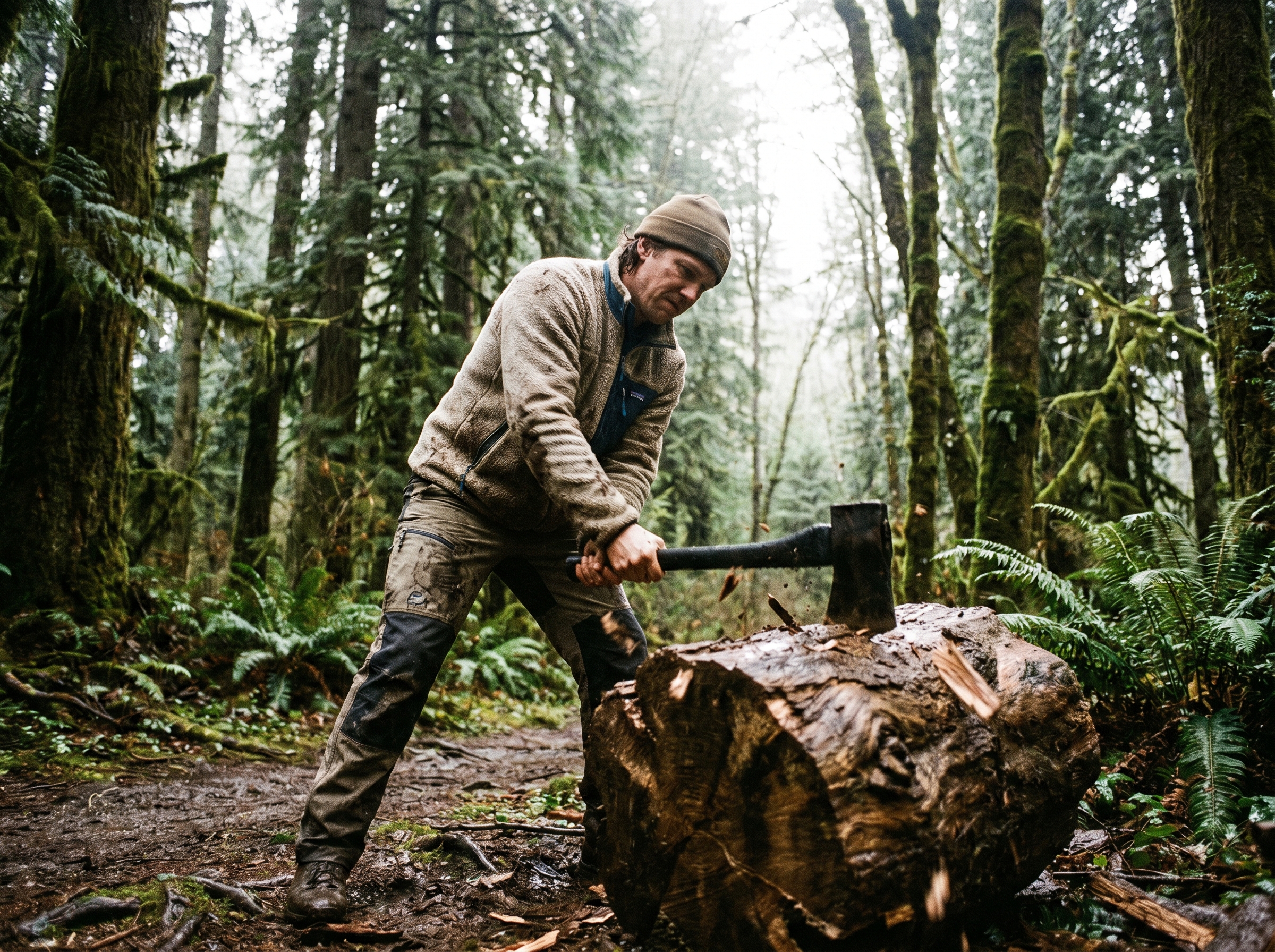
They are paying a massive premium for the privilege of inconvenience.
Ten years ago, the ultimate flex was having a smart home that anticipated your body temperature and adjusted the thermostat before you even shivered. Now, the flex is having calluses. The flex is a manufactured hardship. It is a deeply privileged, somewhat ridiculous response to a genuine psychological crisis. When your entire professional life consists of moving digital blocks around a glowing screen with zero physical resistance, you start to feel like an apparition.
(If I’m being honest, I deeply miss the days when a bad movie was just an honest, spectacular failure, born of a director's deranged vision, rather than a mathematically engineered piece of corporate mediocrity designed to safely hijack my dopamine receptors.)
We want to sweat. We want to burn the toast. We want to spend three hours fixing a leaky faucet with a wrench, getting oil under our fingernails, because the physical frustration is a biological anchor. It tethers us to the earth. The machines cannot stub their toes. They cannot bleed. Therefore, bleeding has become a sacred act.
Uncover the secrets of the archives and beyond. Tap for the full story.
The Jagged Edges of Intimacy
The Human Premium is fundamentally altering how we communicate with the people we love.
There was a brief, horrifying window around 2024 where people started using large language models to draft texts to their partners. They were outsourcing their apologies. They were automating their affection. The resulting messages were polite, emotionally intelligent, and entirely horrifying. They read like hostage negotiations drafted by a therapist.
We recoiled. We instituted a massive cultural overcorrection.
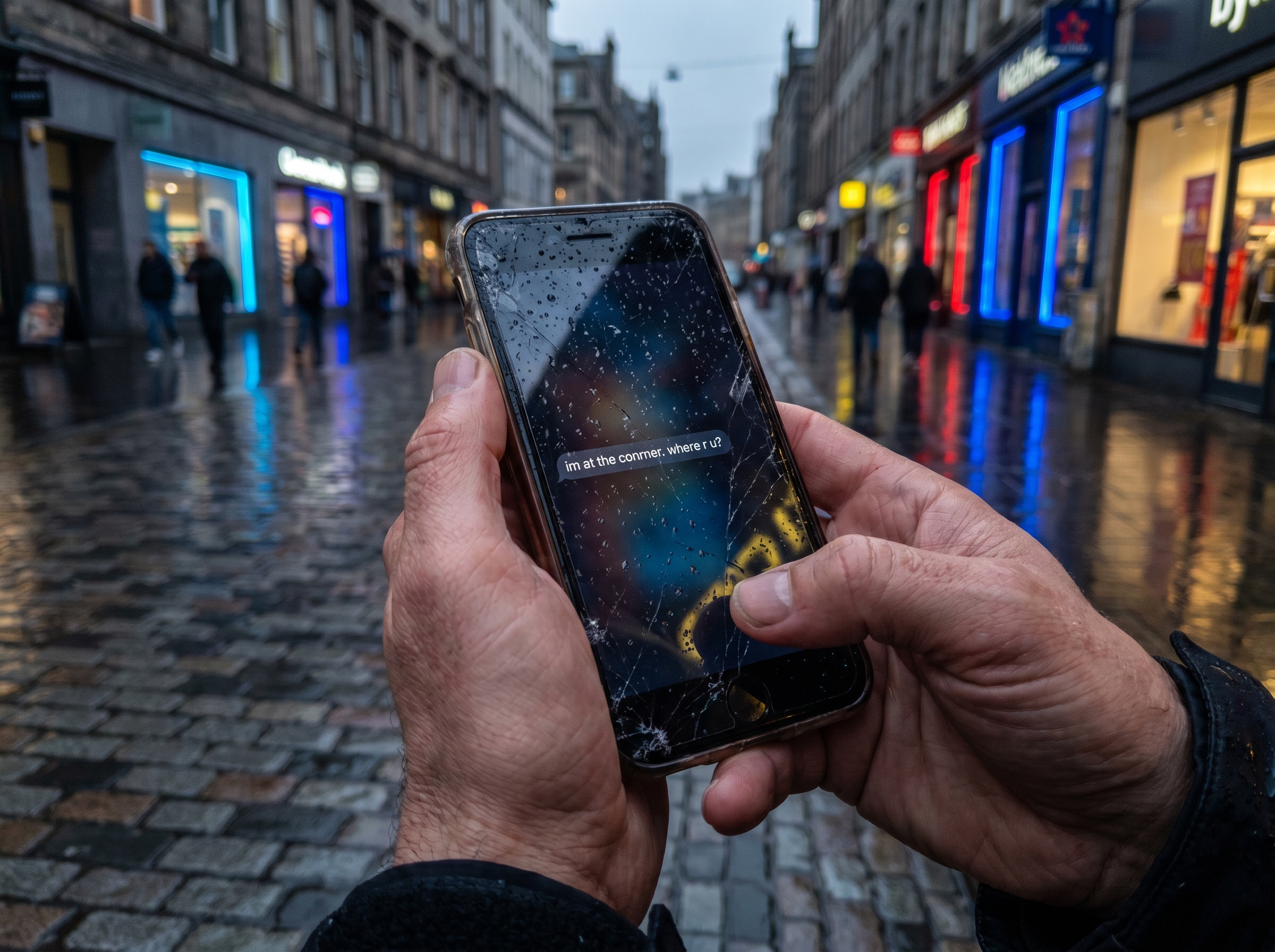
Now, the typo is an act of intimacy. If you send me an email with perfect syntax, bullet points, and an overly gracious sign-off, my immediate assumption is that you did not write it. I assume you fed my previous message into a prompt box and let the engine handle the emotional labor of acknowledging my existence. But if you send me a text that is entirely lowercase, missing two vowels, and cuts off mid-thought?
I know it is you. I know you were walking to the subway, holding a coffee, frantically typing with one cold thumb. The jagged nature of the text is proof of life.
We are embracing the feral, unedited version of ourselves because it is the only currency the machines haven't inflated into uselessness. We are refusing to run our thoughts through grammar checkers. We are speaking in fragmented, chaotic bursts. We are actively choosing to be misunderstood, occasionally, rather than universally, artificially comprehended.
The Museum of the Broken
We are building a museum out of our own bloated inefficiencies.
The things we used to hide—the awkward pauses, the uneven brushstrokes, the terrible handwriting, the slow, meandering conversations that fail to reach a satisfying point—are now the artifacts we treasure most. They are the fingerprints left on the glass.
I look back at the wobbly, $180 glass tumbler on my desk. I reach out and tap the rim with my index finger. It rocks back and forth, a clumsy, precarious little dance. A machine could have pressed a million of these cups in a factory, every single one of them perfectly straight, perfectly balanced, completely identical.
But a person made this one. A person breathed into a pipe, shaped the molten sand, and got tired. A person misjudged the angle, or got distracted, or simply decided it was good enough. The glass holds water perfectly well. But more importantly, it holds a mistake.
The perfection era is over. Long live the flaw.
About the Creator
The Chaos Cabinet
A collection of fragments—stories, essays, and ideas stitched together like constellations. A little of everything, for the curious mind.
Enjoyed the story? Support the Creator.
Subscribe for free to receive all their stories in your feed.
Comments
There are no comments for this story
Be the first to respond and start the conversation.