
The Hidden Cost of Overthinking: How It Steals Your Time and Energy
Why thinking too much can hold you back—and how to break free from the cycle

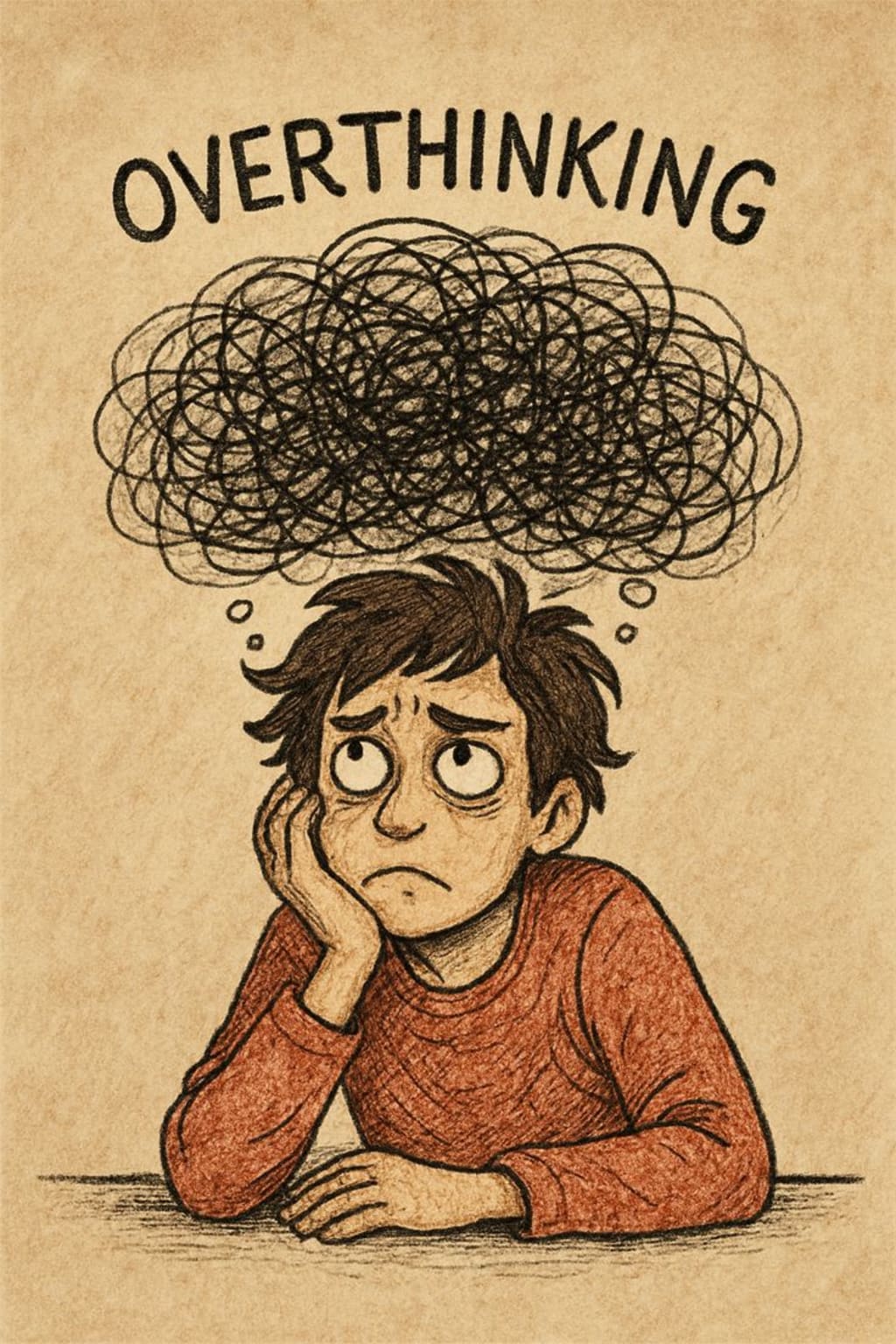
Overthinking is something almost everyone experiences, yet few people truly understand how much it affects their daily lives. At first, it can feel like you’re being productive—analyzing situations, considering every possible outcome, and trying to make the “perfect” decision. But in reality, overthinking often does the opposite. It drains your energy, delays action, and creates unnecessary stress.
The real danger of overthinking is that it disguises itself as problem-solving. You convince yourself that you’re making progress, when in fact you’re stuck in a loop.
When Thinking Becomes a Trap
Thinking is essential. It helps you plan, learn, and make decisions. But overthinking happens when your thoughts stop being useful and start becoming repetitive.
You replay conversations in your head. You imagine worst-case scenarios. You question decisions you’ve already made. Instead of moving forward, you stay stuck in place.
This mental loop creates a sense of paralysis. You feel busy, but nothing actually gets done.
The Illusion of Control
One of the main reasons people overthink is the desire for control. By analyzing every detail, you feel like you’re reducing uncertainty. But the truth is, not everything can be predicted or controlled.
Life is full of unknowns. No amount of thinking can guarantee a perfect outcome.
In fact, overthinking often increases anxiety rather than reducing it. The more scenarios you imagine, the more problems you create in your mind—even if they never happen.
How Overthinking Drains Your Energy
Your brain uses energy just like your body. When you constantly think without taking action, you exhaust yourself mentally.
This can lead to:
- Difficulty focusing
- Increased stress and anxiety
- Trouble making decisions
- Feeling overwhelmed by simple tasks
Over time, this mental fatigue can affect your productivity and overall well-being.
The Link Between Overthinking and Fear
At its core, overthinking is often driven by fear—fear of failure, fear of making mistakes, or fear of being judged.
Instead of taking action and risking a possible mistake, your mind tries to “protect” you by analyzing every possible outcome. But this protection comes at a cost: it keeps you from growing.
Mistakes are a natural part of learning. Avoiding them entirely is impossible.
Breaking the Cycle
The good news is that overthinking is a habit—and like any habit, it can be changed.
The first step is awareness. Notice when your thoughts become repetitive or unproductive. Ask yourself: “Is this helping me move forward, or am I just going in circles?”
Another powerful strategy is to set limits. Give yourself a specific amount of time to think about a problem, then make a decision and act on it.
Action is the antidote to overthinking. Even small steps can break the cycle and create momentum.
Embracing Imperfection
One of the most effective ways to stop overthinking is to accept that perfection doesn’t exist.
There is no perfect decision, no perfect timing, and no perfect outcome. Waiting for everything to be “just right” often leads to missed opportunities.
Instead, focus on progress. Making a decision—even if it’s not perfect—is better than staying stuck.
Training Your Mind to Let Go
Letting go doesn’t mean you stop caring. It means you stop trying to control everything.
Practices like journaling, mindfulness, or simply taking a walk can help clear your mind. They create space between you and your thoughts, making it easier to see things more clearly.
Over time, you learn to observe your thoughts without getting trapped in them.
The Power of Action
At some point, thinking has to lead to doing.
Action creates clarity. It gives you real feedback, real results, and real progress. You learn far more from doing something imperfectly than from thinking about doing it perfectly.
The more you act, the less power overthinking has.
Final Thoughts
Overthinking may feel safe, but it often holds you back from living fully. It keeps you stuck in your head instead of experiencing life.
By recognizing the pattern, setting limits, and taking action, you can break free from the cycle. You don’t need to have everything figured out to move forward.
Sometimes, the best decision is simply to start.
Comments
There are no comments for this story
Be the first to respond and start the conversation.