Stream of Consciousness
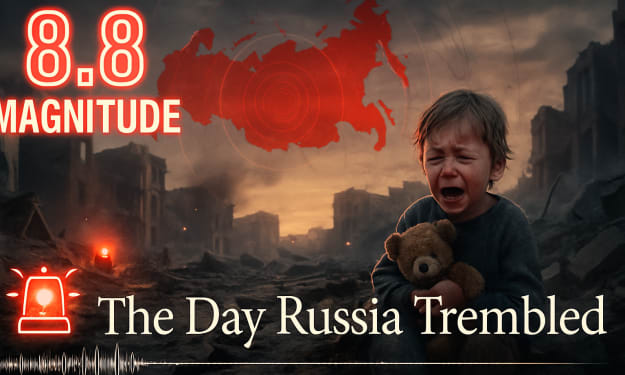
8.8 Magnitude: The Day Russia Trembled
I. The Morning That Started Like Any Other It was the kind of morning that gives no warning. Birds stirred in the Kamchatka trees. Fishermen readied their boats along the Pacific coast. Children tied shoelaces and packed lunches. In the eastern Russian town of Petropavlovsk-Kamchatsky, nestled on a peninsula surrounded by volcanoes, life was moving at its usual slow pace. Until it wasn't. At 6:42 AM local time on August 1st, 2025, the earth beneath the Kamchatka Peninsula began to shake. But this wasn’t a tremor. This was the kind of earthquake seismologists have nightmares about. 8.8 on the Richter scale. One of the most powerful quakes in Russian history. And perhaps one of the most catastrophic natural disasters of the decade. In less than a minute, over 11,000 lives were lost. Hundreds of thousands displaced. The land cracked open. Roads twisted into impossible shapes. Coastal towns were swallowed by water. Entire villages erased. II. A Fault Line Awakens Russia’s Far East sits on the edge of the Pacific Ring of Fire — a volatile zone where tectonic plates collide and pressure builds for decades before releasing in waves of raw destruction. This time, it was the Okhotsk Plate shifting beneath the Pacific Plate, just offshore from the Kamchatka Peninsula. Scientists later described it as a “mega-thrust event.” The sea floor lifted by 8 meters, displacing water and sending tsunamis hurtling toward the coast at terrifying speed. But no one had time to prepare. In the first 15 seconds, all phone towers in Kamchatka collapsed. In 20 seconds, power across the region vanished. By 30 seconds, buildings were falling. By 46 seconds, entire neighborhoods were reduced to dust. III. The Collapse In the city of Yelizovo, just 30 kilometers from the epicenter, local resident Mikhail Karpov, 37, was brushing his daughter’s hair when the wall behind them cracked open. “I heard this loud groaning, like the building was breathing,” he said later in a hospital interview. “Then it just started collapsing floor by floor.” He grabbed his daughter, barely managing to shield her as their five-story apartment block crumbled. He woke up hours later, trapped under a refrigerator and two layers of concrete. His daughter, Alina, was alive — cradled beneath his body, saved by his instinct. In Ust-Kamchatsk, near the coast, water rushed into streets like an angry tide. A tsunami, triggered by the earthquake, struck the town 23 minutes later, carrying boats, cars, animals, and homes with it. A drone video, now viral on social media, showed an entire wooden village being lifted from the ground and carried inland, as if floating on a sea of destruction. IV. The Rescue Begins Within hours, emergency declarations were signed in Moscow. The Russian Ministry of Emergency Situations dispatched 43,000 personnel, including search dogs, drone teams, field medics, and international assistance units from China, Turkey, France, and Japan. But they were racing against time — and nature. Aftershocks above 6.0 magnitude continued for days, shaking the ground beneath already unstable structures. Helicopters struggled to land. Roads were gone. Mountains had shifted. Survivors began digging with bare hands. In a small village near Klyuchi, locals used cooking pots to dig children from under a collapsed school. It took 17 hours, but 12 students and a teacher were rescued. One of those children, 9-year-old Sofia Morozov, would later tell Russian TV, “We sang songs in the dark, so we wouldn’t cry.” V. Heroes Without Headlines Tragedy often brings out the worst — but also the very best — in humanity. Anastasia Volkova, a 41-year-old schoolteacher, pulled 32 children into a basement moments before their classroom fell. She broke her leg in the collapse but refused rescue until all her students were safe. Sergi Ivanov, a firefighter from Petropavlovsk, worked for 27 hours non-stop, pulling people from a ruined supermarket. He only stopped after finding his own brother’s body. Rashid Karimov, a local imam, opened his mosque to shelter over 200 people — feeding them from a community kitchen and organizing volunteers to search nearby homes. Social media flooded with the hashtag: #KamchatkaRises. VI. International Response and Global Mourning As news of the quake spread, the world responded. #PrayForRussia trended worldwide. UNICEF, Red Cross, and Médecins Sans Frontières launched emergency appeals. NASA reported the quake shifted the Earth's axis by 2.6 centimeters. Satellite images showed entire green zones turned grey, where towns had once stood. From Pakistan to Poland, people held vigils. Mosques and churches rang with prayers. Even countries with tense diplomatic ties to Russia sent aid. In a touching gesture, Ukrainian citizens set up donation booths for Russian survivors. One placard read: “Politics is human-made. Pain is universal.” VII. The Numbers and the Names In the first 72 hours: 11,380 confirmed dead Over 45,000 injured 3,200 missing 200+ children orphaned 17 coastal towns uninhabitable Damage estimate: $38.6 billion USD But these are not just numbers. They are the stories of Anya, a 7-year-old girl who lost her whole family but clung to her teddy bear through the chaos. Or Egor, a high school student who used his gaming headset’s mic to radio for help to a search-and-rescue drone — saving his grandmother and two neighbors. VIII. The Rebuilding Process As days turn to weeks, the long process of rebuilding begins. Temporary shelters and tent cities are now home to tens of thousands. Doctors battle fatigue. Aid workers work in shifts. Psychologists counsel children with night terrors. Russian President Vladimir Orlov addressed the nation on August 3rd: “We have suffered a wound that will take generations to heal. But we will not break. We will rise — stronger, kinder, and united.” In Moscow, St. Basil’s Cathedral held a national memorial. Bells rang 11 times — one for each thousand lost. IX. When the Dust Settles When an earthquake ends, the world doesn’t go quiet. Instead, it hums with the sound of rebuilding — hammers on wood, tears in silence, children laughing for the first time in days. In a refugee camp on the outskirts of Vilyuchinsk, a wedding took place. Two survivors — Katya and Maksim — stood beneath a tarp, surrounded by candles made from jars and lighters. They had met during the rescue mission, helping injured elders. They fell in love over trauma, grief, and hope. Their vow was simple: “We will never let the earth shake our love.” X. Final Reflections What do we learn when the earth shakes? We learn that life is fragile, time is precious, and tomorrow is never promised. We learn that nations may be divided by politics but united by pain. We learn that in the darkest hour, the light within people shines brightest. If you're reading this... Take a moment. Breathe. And never take the ground beneath your feet for granted. Because for the people of Kamchatka, the earth changed — forever.
By Muhammad Abbas khanabout a year ago in Humans
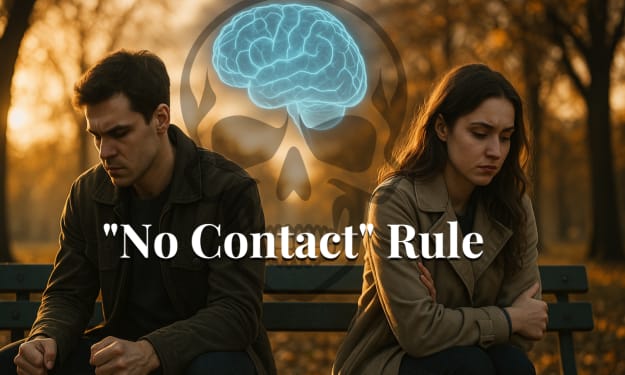
The “No Contact” Rule: What It Really Does to Their Brain
There’s something terrifyingly powerful about silence. When you decide to cut off all communication after a breakup — no texts, no calls, no “checking in” just to be nice — it sends a signal. Not just to them, but to their brain. And whether you were the one left behind or the one walking away, the “No Contact” rule doesn’t just sit quietly. It rewires emotional circuits, sparks curiosity, and messes with memory in ways most people don’t expect.
By Liam Osuosabout a year ago in Humans
"She Sold Her Silence to a Monster—But Found Redemption in the Eyes She Once Mocked"
I was just sixteen when it happened—when the world, once soft and full of color, cracked into a thousand sharp pieces. His name was Adam. He had that dangerous kind of charm, the kind that makes you forget to think. I met him behind the gym, under the flickering light, and I still remember the way he smiled—like he already knew how to break me. At first, it felt like love. He called me “his light,” made me feel seen, chosen. I was a lonely girl with too many secrets and not enough arms to hold them. He made me feel less alone.
By Heartbeat of Inkabout a year ago in Humans
"When Dreams Betrayed Us: A Love Story Colliding with the Mirror of Reality"
He was just a simple young man—quiet, hardworking, and honest. His job barely paid enough to cover rent and a few meals, but his heart had already chosen its home: in her. She wasn’t wealthy either. Just a schoolteacher with kind eyes and a smile that somehow made him believe that everything would be okay. Their love wasn't loud, but it was deep. And when they looked at each other, the rest of the world faded away.
By Heartbeat of Inkabout a year ago in Humans
Mastering Emotional Stability at Work: The Calm Power Behind Success.
Introduction In today's fast-paced, high-pressure work environments, technical skills and expertise can't help you achieve your goals. What distinguishes truly successful professionals is often not what they know, but how they handle themselves especially under pressure. Emotional stability, or the ability to remain calm and focused in challenging situations, is increasingly recognized as one of the most powerful attributes in the modern workplace.
By Sayed Zewayedabout a year ago in Humans
The Moment I Realized I Was the Villain in My Own Story
It started with a coffee cup. Not the kind you sip casually while scrolling through your phone, but the kind that sits cold on your desk, a silent witness to a life unraveling. I was 32, a mid-level manager at a tech firm, the kind of person who prided myself on efficiency, ambition, and a no-nonsense attitude. To my colleagues, I was the guy who got things done. To my friends, I was the one who always had a plan. But to my family—well, that’s where the story gets messy.
By Hewad Mohammadiabout a year ago in Humans