Stream of Consciousness
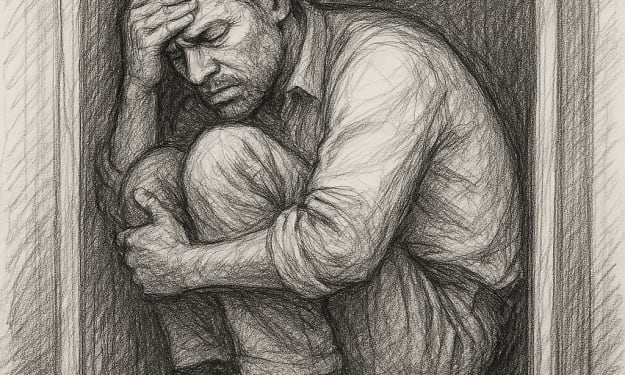
Burnout Isn’t Laziness—It’s Emotional Exhaustion in Disguise
We often mistake burnout for laziness. We call ourselves unmotivated, undisciplined, or just “bad at adulting”—especially when we’re too tired to keep up with life. But what if what you're feeling isn’t failure... but a quiet form of emotional collapse?
By Leigh Cala-orabout a year ago in Humans
Overthinking: The Mind’s Never-Ending Loop
Sophia was known among her friends as the thinker—someone who carefully analyzed every detail before making decisions. She prided herself on being thorough, cautious, and prepared. But recently, her mind had become a relentless maze of questions, doubts, and “what ifs” that left her feeling stuck, anxious, and exhausted.
By Najeeb Scholerabout a year ago in Humans
I FOUND A FROG
Even though I’m now a grandparent, the memory still feels as fresh as yesterday. I can still see myself as that small, curious six-year-old coming home from school, tossing my backpack to the floor, and racing into my room — only to freeze in my tracks and shout:
By Junaid Shahid about a year ago in Humans
All My Exes Hate Me Part 5 - The One Who Changed Everything
Sometimes I wish I was “normal” so we could've worked out. Spoiler: We wouldn’t have. I would’ve felt so lonely. Not because he’s a bad person. Not because he didn’t love me. But because even though I was a mess, he wasn’t able to give me the type of love I crave. Instead of avoiding and shutting down my feelings, I need communication and to be heard. If not, I WILL go to the internet. Just kidding.
By Gail Fredricksabout a year ago in Humans
Dark Psychology and Manipulation: The Hidden Games of the Human Mind
Introduction: The Shadow Side of the Mind We like to think we are in control—of our choices, our opinions, our lives. But what if that’s not entirely true? Beneath the surface of everyday interactions lies a web of invisible threads—crafted by words, tones, and behaviors—that can subtly steer us in directions we never consciously chose. This is the world of dark psychology—the art and science of manipulation, persuasion, and emotional control. It’s not magic. It’s human behavior, weaponized.
By Emad Iqbalabout a year ago in Humans
Sleepwalkers Who Never Came Back: The Bizarre Cases That Still Haunt Us
Unsolved Stories of People Who Vanished While Sleepwalking Sleepwalking has always been a strange phenomenon. People move, talk, and sometimes even cook — all while being completely unconscious.
By Leya kirsan official about a year ago in Humans
Your Brain Can’t Feel Pain — So Why Do Headaches Hurt?
The Brain Doesn’t Feel Pain – But Why Do We? 🤯🧠 Have you ever bumped your head so hard that it made you dizzy? Or felt a throbbing headache that made you want to crawl into bed and hide from the world? Now, imagine this: The very thing that seems to hurt — your brain — actually can’t feel pain. Yes, you read that right. Your brain, the command center of your entire body, has no pain receptors. That shocking fact has left scientists, doctors, and curious minds wondering for decades: If the brain can’t feel pain, then where is all that pain coming from? Let’s dive deep into this strange reality — and explore how pain works, what it means for us, and why this fact may just change the way you think forever. 💡 --- Your Brain: A Numb Genius The brain is made up of billions of neurons, synapses, and networks that control every movement, thought, and feeling you experience. It interprets sounds, processes images, and remembers your first heartbreak. But strangely, it can’t sense pain itself. That’s because the brain has no nociceptors, the specialized nerves responsible for detecting pain. So even during brain surgery — when a doctor literally opens up your skull — a patient can be awake and not feel pain inside the brain. (Sounds like science fiction, right? But it’s 100% real.) --- So Why Do Headaches Hurt So Much? 😖 If the brain can’t feel pain, what about migraines and tension headaches? Those are caused not by the brain tissue, but by other structures surrounding it. Things like: Blood vessels Muscles of the scalp and neck The meninges (the protective layers around the brain) When these areas get irritated or inflamed, the brain receives signals that something’s wrong — and interprets it as pain. But again, the origin isn’t inside the brain itself. It’s like the brain is sitting in a control room, watching alarm lights go off — but not feeling the fire directly. 🔥 --- Pain Is a Perception, Not a Location Here’s something even more mind-bending: Pain doesn’t live in the body — it lives in the mind. For example, if you stub your toe, it feels like the pain is coming from your foot. But in reality, the nerves in your toe send signals to your brain, and the brain creates the feeling of pain. This is why people with amputated limbs can still feel pain in a limb that’s no longer there. It’s called phantom limb pain, and it’s more proof that pain is a brain-based experience. --- What About Emotional Pain? 💔 Now, let’s stretch our thinking even further. Emotional pain — like heartbreak, grief, or betrayal — also activates some of the same areas of the brain that physical pain does. That’s why being left out or losing a loved one can physically hurt. The brain doesn’t distinguish much between a broken bone and a broken heart — it reacts to both with signals of distress, discomfort, and sometimes even tears. --- Why This Matters Understanding that the brain doesn’t feel pain helps doctors treat patients better. It’s why open brain surgery can happen with a patient wide awake — the doctors use local anesthesia for the scalp and skull, and the brain itself stays silent. It also opens up powerful conversations about how we experience pain — physically, emotionally, and even socially. Pain isn’t just about injury — it’s about how the brain interprets signals from the body and the world. And once we realize this, we can begin to understand our own experiences more clearly. --- Final Thought: Your Brain Is a Mystery and a Miracle 🧠✨ The fact that the brain can’t feel pain — yet is the very place where all pain is processed — is one of the most fascinating truths of human biology. It’s both strange and beautiful. And it reminds us that we are walking, breathing mysteries — shaped by the organ that knows us better than we know ourselves. So next time you get a headache, just remember: Your brain is working hard — even though it has no idea what pain actually feels like. 😅💭 --- 💧 Stay curious. Stay kind. And hydrate your brain — even if it can't feel the refreshment. 😊
By Leya kirsan official about a year ago in Humans