science
The Science Behind Relationships; Humans Media explores the basis of our attraction, contempt, why we do what we do and to whom we do it.
"Rising Cybersecurity Threats in the IoT Era: Safeguarding Your Connected World from Hidden Dangers"
Introduction From smart home devices to industrial automation, the Internet of Things (IoT) has completely changed the way we live and work. As we adopt more technology into our lives, millions more devices create a range of problems with security. There are billions of devices connected to the internet; some hackers have more opportunities than ever to exploit them.
By zobairuddin Zobairabout a year ago in Humans
New Hope for Hard-to-Treat Depression: Ketamine Spray Subsidised. AI-Generated.
Australia to Subsidize Ketamine Nasal Spray for People With Hard-to-Treat Depression The Australian government will begin paying for a ketamine-based nasal spray to treat people with treatment-resistant depression, marking a significant advance in mental health care. The drug, which is sold under the brand name Spravato (esketamine), will be covered by the Pharmaceutical Benefits Scheme (PBS) starting in the middle of 2025, which will significantly lower the price for patients who are eligible for it. This move is being praised by psychiatrists and mental health advocates, who say it could be life-changing for thousands of Australians who have struggled for years without relief from conventional treatments.
By Mahir Faysalabout a year ago in Humans
Psychology
The Complex World of Psychology: Understanding the Human Mind Psychology is the scientific study of the human mind and behavior. It explores various aspects of mental processes, emotions, cognition, and social interactions. From understanding how people think and feel to examining the impact of social influences, psychology plays a crucial role in comprehending the complexities of human nature. This article delves into key areas of psychology, including cognitive psychology, behavioral psychology, mental health, and psychological therapy.
By Jeno Treshan about a year ago in Humans
Silence of the Minds
In the year 2147, humanity achieved the zenith of technological progress, a period characterized by the seamless integration of Artificial Intelligence and robotics into all aspects of daily life. This transformation unfolded gradually, commencing several decades prior with the introduction of basic smartphones and culminating in sophisticated AI systems that oversaw everything from individual affairs to global governance. The advent of the Neurolink, a groundbreaking innovation facilitating direct communication between humans and machines, represented a pivotal moment. With merely a thought, individuals could retrieve information, transmit messages, and manipulate their surroundings. As the Neurolink gained widespread acceptance, it emerged as a beacon of advancement, celebrated as the quintessential instrument for human connectivity. Paradoxically, it would also herald the onset of decline.
By Imon Mridhaabout a year ago in Humans
The Science of Music's Power to Move Us
Music has a special way of affecting our emotions. It can make us happy, nostalgic, relaxed, or even make us cry. But why does music have such a strong impact on us? Scientists have spent years studying this question, and their research shows that music affects both our brains and emotions in deep and fascinating ways.
By Chistopherabout a year ago in Humans
The Tale of the Headache. AI-Generated.
Rimi lives in a small village surrounded by lush green paddy fields and the gentle murmur of a nearby river. She’s a nineteen-year-old college student, and her days are usually filled with books, chats with friends, and helping her mother in the kitchen. But for the past few weeks, Rimi has been troubled by something—a persistent headache. Sometimes it’s a dull ache on one side of her head, and other times it feels like her entire head is throbbing. This story is about why Rimi’s headaches started and how she found a way to overcome them.
By Ayatul Islamabout a year ago in Humans
"Can AI Outsmart Cancer? New Blood Test Says Yes"
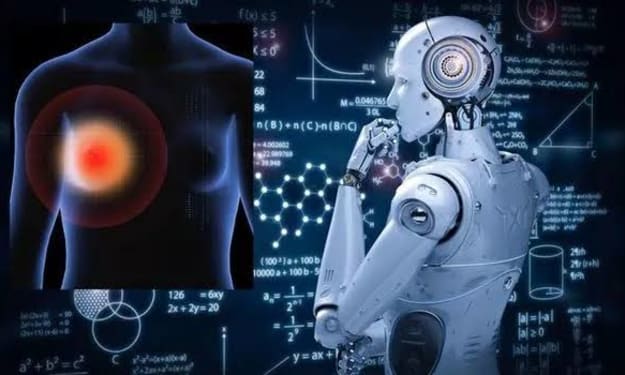
Cancer remains one of the leading causes of death worldwide, claiming millions of lives each year. Early detection is crucial, yet traditional diagnostic methods often rely on invasive procedures, expensive imaging, and may still miss early-stage cancers. In 2025, a groundbreaking development is reshaping the landscape of cancer diagnosis — AI-powered blood tests.
By Explore Everything With Basheerabout a year ago in Humans
The Mysterious Death of Bruce Lee: What Really Happened?
Legend Gone Too Soon: Bruce Lee, the greatest martial artist in history, died mysteriously at just 32 years old. Strange Circumstances: His death was sudden shocking and surrounded by unanswered questions. Theories & Speculation: From poisoning to hidden illnesses, experts still debate what really killed him. Bruce Lee was more than just a martial artist—he was a global icon. His movies philosophy and fighting skills changed the world. But his sudden death in 1973 left fans heartbroken and confused. Even today no one knows for sure what happened. Let’s dive into Bruce Lee’s incredible life his shocking death, and the theories that keep this mystery alive. Bruce Lee’s Early Life and Rise to Fame Bruce Lee was born in San Francisco on November 27, 1940 while his father a Chinese opera singer was touring the U.S. As a baby he moved back to Hong Kong where he grew up and even worked as a child actor. At 13 he started learning martial arts to defend himself after getting into street fights. He trained in Wing Chun under the famous master Yip Man. But Bruce wasn’t just a fighter—he was a thinker. He studied philosophy and later developed his own martial art called Jeet Kune Do which means "The Way of the Intercepting Fist." In his 20s Bruce moved back to America where he opened martial arts schools and taught celebrities like Steve McQueen. But his big break came when Hollywood noticed him. Movies like "Enter the Dragon" made him a superstar and suddenly the whole world knew his name. The Shocking Day Bruce Lee Died On July 20, 1973, Bruce Lee was in Hong Kong working on his next movie. That afternoon he met with a film producer to discuss a project. Later he complained of a headache so he took a painkiller and lay down to rest. He never woke up. At just 32 years old Bruce Lee was pronounced dead. The news sent shockwaves across the world. How could a man in perfect shape a martial arts master die so suddenly? The Official Cause of Death – But Was It the Truth? Doctors ruled his death as "death by misadventure" caused by a bad reaction to a painkiller called **Equagesic**. They said his brain swelled, leading to a coma and death. But fans and experts weren’t convinced. Bruce Lee was healthy strong, and had no known life-threatening conditions. So why did he die? The Top Theories About Bruce Lee’s Death Over the years many theories have tried to explain Bruce Lee’s mysterious death. Some make sense while others sound like wild rumors. Here are the most popular ones: 1. Allergic Reaction to Medication The official report says Bruce was sensitive to an ingredient in the painkiller he took. Some believe this was the real cause—just an unfortunate accident. 2. Heatstroke & Overexertion Bruce trained extremely hard, often pushing his body to the limit. Some experts think heatstroke or extreme exhaustion may have played a role. 3. Poisoning by Rivals Martial arts was (and still is) a competitive world. Some believe rivals poisoned Bruce to stop his growing fame. 4. A Hidden Illness Bruce had collapsed once before from a seizure. Some doctors think he may have had an undiagnosed brain condition that led to his death. 5. The Curse of the Lee Family This one is more of a superstition. Bruce’s son Brandon Lee also died young (in a freak accident on a movie set). Some people believe the Lee family was cursed. Why the Mystery Still Haunts Us Today Even after 50 years Bruce Lee’s death remains unsolved. No one knows for sure what really happened. Was it an accident? A hidden health issue? Or something more sinister? Bruce Lee’s legacy lives on. His movies still inspire new generations and his philosophy on life and martial arts continues to motivate millions. But the mystery of his death may never be fully answered. Final Thoughts: A Legend Remembered Bruce Lee was more than just a fighter—he was a teacher a philosopher and a cultural icon. His sudden death left the world in shock and the unanswered questions keep his story alive. What do *you* think happened to Bruce Lee? Was it just bad luck, or was there something more behind his death? One things for sure—his legend will never die.
By Muhammad Waseem khanabout a year ago in Humans
Dr. Ponraj: The Best Medical Oncologist in Palakkad for Comprehensive Cancer Care
When it comes to cancer care, choosing the right oncologist is crucial for a patient's health and well-being. In Palakkad, Kerala, Dr. Ponraj stands as a beacon of hope for individuals battling cancer. As the best medical oncologist in Palakkad, Dr. Ponraj brings years of expertise, dedication, and a compassionate approach to cancer treatment. He has earned the trust of his patients and their families, helping them navigate through some of the most difficult times of their lives.
By Salma D plus connectabout a year ago in Humans
Whispers of the Deep: The Bermuda Triangle’s Forgotten Echoes
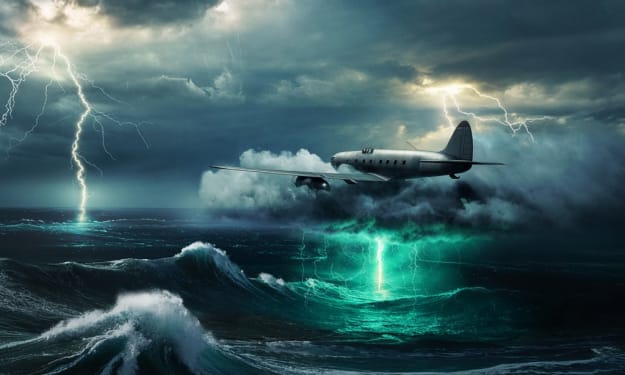
There’s a corner of the world where the sea seems to breathe, and in every breath, it takes something with it. They call it the Bermuda Triangle—a vast stretch of the Atlantic Ocean bordered by Miami, Bermuda, and Puerto Rico. It's not marked on any official map. No red flags flutter in warning. But to those who sail the seas and command the skies, it’s a place wrapped in superstition, draped in mystery, and feared with reason.
By Enayatullah Omariabout a year ago in Humans
Can AI Be an Artist? The Battle Between Code and Creativity
In a world increasingly shaped by artificial intelligence, the boundaries between machine-generated and human-made art grow blurrier each day. AI tools like Midjourney, DALL·E, ChatGPT, and Suno have unlocked astonishing new ways to generate images, music, and writing—often in just seconds. What once required hours of inspiration and effort can now be mimicked with just a few prompts. This remarkable leap in creative ability has sparked a vibrant and often contentious debate. Artists, technologists, and consumers alike are asking: Is artificial intelligence killing creativity, or are we witnessing a powerful redefinition of what it means to be creative in the modern era? --- The New Age of Creation To truly understand this debate, we first need to look at what AI actually does. AI doesn’t “create” in the human sense. It doesn’t feel, dream, or interpret the world with emotions. Instead, it analyzes massive datasets of human-made content—art, music, writing—and learns patterns to synthesize something new. For example, AI art tools trained on thousands of paintings can generate fresh pieces that appear unique, but are essentially blends of learned styles. This technology has revolutionized the creative workflow. Designers now use AI to brainstorm visual styles in seconds. Musicians experiment with AI-generated loops and melodies. Writers turn to AI tools for inspiration, outlines, or to break through creative blocks. In many ways, AI has become a powerful assistant, helping creators work faster and explore ideas more freely. --- Redefining Creativity Supporters of AI in the arts argue that creativity has always evolved alongside technology. The invention of photography didn’t kill painting—it pushed artists toward new forms like Impressionism and abstraction. The synthesizer didn’t ruin music—it gave birth to entirely new genres like electronic, synth-pop, and techno. From this perspective, AI is just the next tool in an ever-expanding creative toolbox. In fact, AI has the power to democratize artistic expression. You don’t need years of training to create stunning images with Midjourney or produce catchy beats with Suno. This opens the door to individuals who may not have traditional artistic skills but have a clear creative vision. Rather than replacing artists, AI has the potential to lower barriers to entry and empower more people to create. Many creators are also beginning to use AI as a collaborator. An artist might use it to draft ideas, sketch out visuals, or explore new aesthetic directions before refining the results with their personal touch. In this light, the artist becomes a curator or director, shaping the output with human intuition and purpose. --- The Fear of Losing the Human Touch Despite its potential, AI also raises significant concerns—especially among artists. One of the most common criticisms is that AI-generated art lacks intention. A painting by a human being conveys emotion, memory, culture, and lived experience. AI, no matter how technically impressive, doesn’t suffer, hope, or feel joy. For many, this absence of a soul makes AI art feel hollow or inauthentic. Plagiarism is another serious issue. Many AI tools are trained on content scraped from the internet—art, writing, and music created by real people. This has led to mounting frustration and even lawsuits from artists whose work may have been used without their consent. If an AI mimics the style of a well-known illustrator, does that constitute theft? Should the original creator be credited or compensated? These ethical questions remain largely unresolved. There’s also the fear of job displacement. In industries like advertising, journalism, game design, and entertainment, AI is beginning to take on roles traditionally held by human creators. Even if the quality isn't always perfect, AI is fast, cost-effective, and endlessly scalable. For many professionals, this raises an unsettling question: Will companies continue to pay people when machines can generate content for free? --- Co-Creation: A Possible Middle Ground As with most technological revolutions, the truth lies somewhere between fear and optimism. AI is unlikely to fully replace the depth and nuance of human creativity—but it’s also not going away. The challenge now is learning how to coexist with it in ways that benefit, rather than harm, creative expression. Many artists are already embracing what’s being called “co-creation.” Instead of viewing AI as a threat, they see it as a tool for enhancing their own ideas. A poet might use it to brainstorm metaphors. A digital artist might explore color palettes. A songwriter might feed in a concept and refine the AI’s lyrical suggestions into something deeply personal. In each case, the human artist remains in control—guiding and shaping the machine’s output with their own voice and vision. --- Where Do We Go from Here? The debate around AI and creativity is just beginning. As the technology becomes more sophisticated, the ethical and cultural questions will only grow more complex. How do we define authorship in a world where machines can mimic genius? How do we protect, credit, and fairly compensate original artists? Most importantly, how do we preserve the human spirit in an increasingly automated world? Perhaps the solution lies not in resisting the rise of AI but in learning to work with it. Like any tool, AI can be misused or misunderstood. But it can also be harnessed to push the boundaries of what’s possible in art, music, literature, and beyond. Rather than fearing the death of creativity, maybe it’s time we explore its next great evolution.
By Miftahul Islam Shiamabout a year ago in Humans