science
The Science Behind Relationships; Humans Media explores the basis of our attraction, contempt, why we do what we do and to whom we do it.
“Hindu religious superstitions and inhuman customs in India”
The religious structure of Indian society has always been a complex and multidimensional reality. However, some deep problems are intertwined in this complexity in a way that directly conflicts with humanity on the one hand and intellectual consciousness on the other. The superstitions, fears and inhuman customs that are woven into the layers of Hinduism still control the lives of millions of people today—especially the lower classes of society, women and children. These customs are not only prevalent in the name of religion, but in many cases are nurtured, established as justified and accepted without question by the state and society. As a result, the development of human and rational consciousness is hindered, and society is stuck in an un-Aryan blindness.
By Abdul Barik2 years ago in Humans
5 Tips to Lose Weight at Home
--- 5 Tips to Lose Weight at Home Losing weight doesn’t always require an expensive gym membership or strict meal plans that are hard to maintain. In fact, with the right strategies, you can achieve your fitness goals right from the comfort of your home. Whether you're a stay-at-home parent, working remotely, or simply prefer your personal space for wellness activities, here are five practical and effective tips to help you lose weight at home.
By Mr Haris Khan2 years ago in Humans
Star Wars series 'Andor' back for final season
If 'Andor' -- which returns from Tuesday for its second and final season -- has been received as one of the very best 'Star Wars' TV series that is largely thanks to the grittier, more adult approach taken by its creator Tony Gilroy.
By Md kamrul Islam2 years ago in Humans
Gene-editing therapy shows early success in fighting advanced gastrointestinal cancers
**Gene Editing Therapy Shows Early Success in Combating Stage IV Gastrointestinal Cancer** Early clinical trials of a gene-editing therapy have demonstrated promising results in combating advanced gastrointestinal (GI) cancers, a significant advancement in cancer treatment. Using the revolutionary gene editing tool CRISPR-Cas9, this novel strategy alters a patient's immune cells to improve their ability to recognize and combat cancerous tumors. Although the treatment is still in its infancy, it has given patients hope who had few treatment options before because GI cancers are aggressive and frequently resistant to treatment. ### The Challenge and Understanding of GI Cancers Colorectal, pancreatic, stomach, liver, and esophageal cancers are just a few types of cancers that fall under the category of "gastrointestinal cancer." When they are first discovered, these cancers are notoriously difficult to treat. Once the cancer has spread beyond its original site, conventional treatments like chemotherapy, radiation, and surgery frequently have limited success. Furthermore, tumors frequently develop mechanisms to evade immune detection, which makes it difficult for the immune system to identify and combat these cancers. Immunotherapies and, more recently, gene-editing strategies have emerged as a result of scientists looking into ways to empower the immune system to fight tumors more effectively. ### The Promise of CRISPR and T-Cell Engineering
By Praloy Rakshit2 years ago in Humans
The sound that shapes us
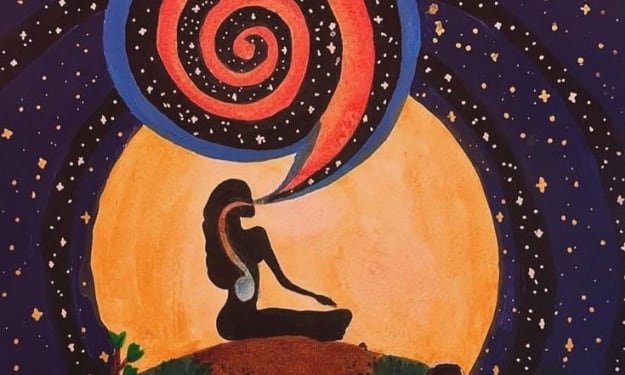
This is not an article meant to explain, but to remind. It does not aim to offer ready-made truths or impose spiritual views. It is simply a gentle invitation—a possible gateway. Because everyone has their own timing for understanding, and what may come as a sudden revelation to some, for others is the fruit of years of searching, reading, silence, and inner transformation.
By Halina Piekarska (UltraBeauty Blog)2 years ago in Humans
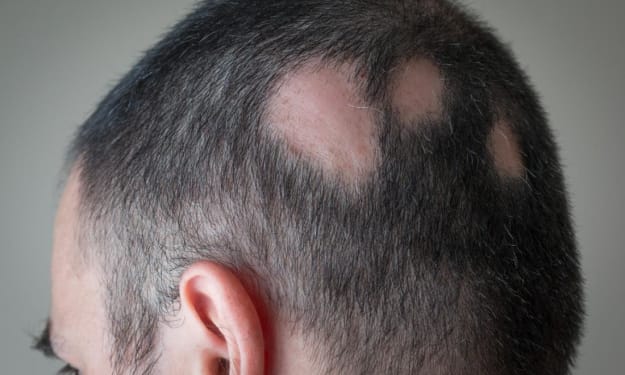
Alopecia Areata and Nutritional Deficiencies: Exploring the Link Between Diet and Autoimmune Hair Loss. AI-Generated.
Hair is more than just a cosmetic feature—it’s often seen as a symbol of health, youth, and identity. So, when someone begins to lose hair unexpectedly, it can be emotionally distressing and physically alarming. Among the many forms of hair loss, Alopecia Areata stands out due to its unpredictable and autoimmune nature. While genetic and environmental factors are known contributors, recent research points toward an important and often overlooked component—nutritional deficiencies.
By vijayan master's Ayurveda2 years ago in Humans
The AI Revolution in Medicine: How Artificial Intelligence is Changing Healthcare in 2025
Al elligence (AI) is advancing. From disease diagnosis to personalized treatment plans, AI is revolutionizing how doctors diagnose, treat, and prevent illnesses. As we move deeper into 2024, let us explore the latest AI developments that are revolutionizing healthcare—and what it means for doctors and patients. ### **1. AI-Powered Early Disease Diagnosis** One of the most exciting uses of AI is in the diagnosis of early disease. Technology giants such as **Google DeepMind** and **IBM Watson Health** have created algorithms that are able to identify diseases such as **cancer, diabetes, and heart disease** with remarkable precision—even before symptoms even occur. For example, AI algorithms trained on millions of medical scans are able to identify **early-stage tumors** that may go unnoticed by human radiologists. Hospitals are increasingly using these tools in 2024, leading to faster interventions and better survival rates. ### **2. Personalized Medicine: Treatment Tailored to Your DNA** Gone are those days of blanket medicine. AI now allows us to have **personalized treatment plans** depending on a patient's genetics, lifestyle, and medical history. Companies like **Tempus** and **23andMe** employ machine learning to interpret genetic data and suggest the best possible treatments for patients. In oncology, AI assists oncologists in forecasting which **chemotherapy medications** will be most effective for a particular type of cancer, minimizing trial-and-error methods and enhancing outcomes. ### **3. Virtual Health Assistants & Chatbots** AI-powered chatbots such as **ChatGPT-4o** and **Ada Health** are emerging as the initial point of contact for patients. Such virtual assistants are able to: - Investigate symptoms - Provide initial diagnoses - Make doctors' appointments - Provide mental health counseling These devices are reducing waiting lists and relieving pressures on health systems, especially in under-served communities, in 2024. ### **4. Robotic Surgery & AI-Assisted Procedures** Robotically assisted surgical platforms such as **Da Vinci Xi** and **Medtronic's Hugo** are AI-enabled now, making **less invasive, more accurate surgeries** possible. AI helps surgeons by: - Complication prediction in real-time - Controlling robotic arms with sub-millimeter precision - Minimizing recovery times Hospitals also report fewer surgical mistakes and quicker recoveries for patients due to these advancements. ### **5. Drug Discovery at Warp Speed** It usually takes **10-15 years** to create new medicines, but AI is shortening the time. **Insilico Medicine** and **BenevolentAI** are a few companies that use deep learning to: - Mimic drug interactions - Identify possible treatments for orphan diseases - Repurpose existing drugs for new indications In early 2024, an **Alzheimer's drug** designed with AI entered clinical trials—a feat that would have taken decades without machine learning. ### **Challenges & Ethical Concerns** In spite of everything, healthcare AI raises significant questions: - **Data Privacy:** Is the data of patients safe? - **Bias in AI:** Can algorithms exacerbate racial or gender inequalities? - **Regulation:** Who is at fault if AI gets something wrong? **AI ethics frameworks** are being constructed by governments and tech firms, although the debate continues to rage. ### **The Future of AI in Medicine** By 2030, AI will probably be **part of every aspect of healthcare**, ranging from simple check-ups to complicated surgeries. The challenge will be how to combine innovation with ethics and patient safety. One thing is certain: **AI is not replacing physicians—it's empowering them** to provide quicker, brighter, and more empathetic care.### **Conclusion: The Future of AI in Healthcare – A Double-Edged Sword?** Artificial intelligence is undeniably transforming healthcare, offering unprecedented advancements in early diagnosis, personalized treatment, robotic surgery, and drug discovery. These innovations promise **faster, more accurate, and more accessible** medical care, potentially saving millions of lives. However, the rise of AI in medicine also brings challenges—**data privacy risks, algorithmic bias, and ethical dilemmas**—that must be addressed to ensure equitable and safe implementation. As we move forward, the key will be **collaboration between AI and human doctors**, combining machine precision with human empathy and judgment. The future of healthcare isn’t about replacing physicians with robots—it’s about **empowering them with smarter tools** to deliver the best possible care. One thing is certain: **AI is here to stay in medicine**, and its impact will only grow. The question is no longer *if* AI will change healthcare, but *how* we can harness its power responsibly for the benefit of all.
By Habibulla Mesba2 years ago in Humans
Human Body Facts with No Obvious Explanation. AI-Generated.
Okay, look at yourself in the mirror. Yeah, right in the eye. See that little fold of tissue in the inner corner of both of your eyes? Well, get ready for this. It was actually once a third eyelid or nictitating membrane. You can see it today in snakes or lizards, for example. The third eyelid was used for the same purpose as the other two, although it's unclear whether humans ever even had it fully grown. This membrane wasn't as thick as the two eyelids we have, and it could moisten the eye without obstructing the view.
By taylor lindani2 years ago in Humans
"More Seniors Are Seeking Clarity on Their Alzheimer’s Status, Research Finds". AI-Generated.
Alzheimer’s disease, a progressive neurodegenerative disorder, remains one of the most feared age-related conditions in the U.S. With no cure yet available, early detection has become a growing focus for both patients and researchers. A recent survey reveals that an increasing number of older Americans are actively seeking information about their Alzheimer’s risk—whether through genetic testing, cognitive assessments, or biomarker screenings.
By Mitu Akter 2 years ago in Humans