science
The Science Behind Relationships; Humans Media explores the basis of our attraction, contempt, why we do what we do and to whom we do it.
Rafael Devers
Rafael Devers is one of the brightest stars in Major League Baseball (MLB) today. He plays for the Boston Red Sox, one of the most famous baseball teams in the world. Known for his powerful bat and exciting style of play, Devers has become a fan favorite in Boston and across the country.
By Farhan Sayedabout a year ago in Humans
"The Stranger Who Remembered Me Before I Was Born"
I was 27 the first time someone told me they remembered me before I existed. It happened on a late train — the kind that smells like metal and old gum, where time feels a little warped and nobody looks anyone in the eye.
By Hamad Haiderabout a year ago in Humans
Is It Love or Just a Wound to Heal?
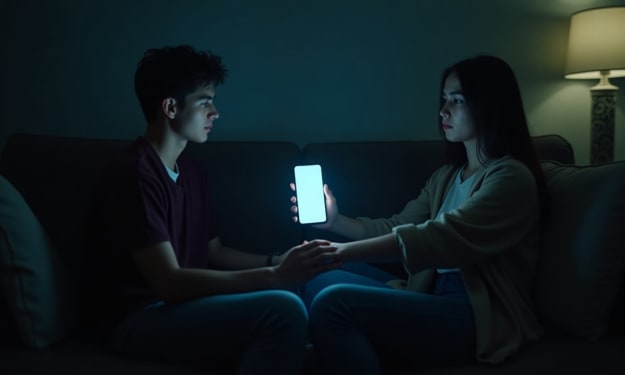
Have you ever met someone and felt an intense, almost unexplainable pull toward them? Like you've known them forever, or that they were meant to come into your life? Sometimes, that electric connection isn't love — it's a reflection of something much deeper: a wound waiting to be healed.
By F. M. Rayaanabout a year ago in Humans
Why We Mistake Chaos for Love: The Psychology of Emotional Whiplash
Have you ever felt butterflies around someone who was unpredictable? Or mistook jealousy, drama, or emotional chaos for proof of deep passion? You’re not alone. Many of us, especially in the age of fast-paced dating and emotional burnout, confuse emotional intensity with love. But what we’re often experiencing isn’t love — it’s emotional whiplash.
By F. M. Rayaanabout a year ago in Humans
AI Tools in Daily Life: How I Let Robots Take Over My Brain (and My Calendar)
Ever since AI became the cool kid on the tech block, I’ve been in a whirlwind romance with all things artificial intelligence. And let me tell you—it’s less “Terminator”, more “Siri, why am I like this?”
By Kaitesi Abigailabout a year ago in Humans
The Pandemic Didn’t End—We Just Stopped Talking About It
The Illusion of Closure It was easy to think that the pandemic was over once the masks were removed and the headlines stopped. Classrooms filled, weddings resumed, and airports reopened. Without the mist of fabric separating us, we shook hands, gave each other another hug, and grinned. Nevertheless, the virus persisted. Yes, we did. These whispers are now becoming more audible in the background hum of our everyday lives. Hospitals are silently preparing, new variants are being found, and once more, it seems like everyone is holding their breath. The fear, however, is more subdued this time. We’re exhausted, not because it’s less real. Weary of mourning. I’m sick of worrying. I’m sick of remembering. 2019: When the World Changed Overnight It started in China’s Wuhan. December of 2019. A group of cases that resembled pneumonia turned into a nightmare for the entire world. COVID-19 was declared a pandemic by March 2020. The borders were closed. Whole cities were under lockdown. They raided supermarkets. The once-vibrant streets became eerily quiet. It was a human crisis, not merely a medical one. Livelihoods fell apart. Schools were no longer accessible to children. The elderly passed away by themselves. With stethoscopes and wet scrubs, frontline workers held the line at the gates like soldiers throughout it all. Vaccines offered hope by early 2021, but the wounds were severe. Institutional trust was eroded. Compared to the virus, conspiracy theories spread more quickly. And innumerable lives were irrevocably altered for each patient who recovered. A World That Held Its Breath When NamesBecome Silence and Numbers Become Names Numbers weren't just data during the pandemic's peak months; they were heartbreak quantified in numbers. ✨ The United States Over 1.1 million deaths More than 103 million infections In New York, bodies were kept in refrigerated trucks. Families were able to say goodbye virtually thanks to nurses holding iPads. ✨ India Over 530,000 official deaths (possibly 4 million total) Parking lots became intensive care units due to oxygen shortages. Crematoriums were open 24/7. ✨ Brazil 700,000+ fatalities Overcrowded hospitals, mass graves, and a public health system on the verge of collapse. ✨ Italy Just in the first half of 2020, over 30,000 deaths Dozens of coffins were transported out of Bergamo by military trucks. ✨ China 120,000+ reported deaths Entire cities quarantined. Streets disinfected by drones. ✨ Bangladesh Over 2.05 million infections More than 29,500 confirmed deaths Families waited outside Dhaka hospitals for oxygen. Red flags marked homes in isolation. Nurses worked around the clock, often without proper protection. During the Delta wave, cemeteries struggled to cope. Yet, in the darkness, the country lit small lamps of hope—from food relief to prayer mats. ✨ Global Toll 770+ million infections 18–33 million estimated deaths (direct and indirect) Each a story. Each a universe lost. The Virus Today: A Quiet Reentry The virus has not disappeared as 2025 approaches; it has only changed. There are new variations that come with new risks, like KP.2 and FLiRT. Despite the fact that many people have received vaccinations or have had prior infections, these variations pose new difficulties:
By Tousif Arafatabout a year ago in Humans
The Results are IN!. Top Story - June 2025.
Well, the wait is finally over. There's good news. Amazing news. So here it is: Chemotherapy has worked. There is necrotic tissue on the lymph nodes shown in the CT scan. The tumor shrank significantly, as well. What are the next steps? Where do we go from here on this roller coaster ride? Well, I'll tell you.
By Jessie Lynn Nelsonabout a year ago in Humans
Why We're Attracted to the People Who Hurt Us Most
It sounds like a paradox: why do we fall hardest for the people who hurt us most? Why do we stay when we know we should leave? And why do we find ourselves craving attention from those who give us the most pain? The answers lie deep within human psychology, early emotional conditioning, and the way love and trauma often intertwine.
By F. M. Rayaanabout a year ago in Humans
Toxic Love Languages: How Manipulation Masquerades as Romance
Love is supposed to feel safe. But what happens when love starts to feel confusing, draining, or even painful? For many people, especially those navigating modern relationships, this feeling isn't unfamiliar. Hidden beneath romantic gestures and sweet words, toxic patterns can thrive — often unnoticed. These patterns are sometimes disguised as "love languages" when, in reality, they are subtle forms of manipulation.
By F. M. Rayaanabout a year ago in Humans
A Day in the Life of Dr. Rodrigo Villagrán: Surgeon, Educator, Researcher. AI-Generated.
Every day, people across Chile wake up and go about their morning routines, but for Dr. Rodrigo Villagrán, the start of the day means diving into a world of healing, science, and teaching. As one of Chile’s leading bariatric surgeons, Dr. Villagrán has dedicated his life to helping people take back control of their health. Whether he's operating in Santiago or Antofagasta, mentoring medical students, or reviewing clinical research, his schedule is packed with purpose.
By juliamartinsabout a year ago in Humans
Why People Return to Toxic Relationships
Toxic relationships are complex and heart-wrenching. Despite the undeniable pain, many individuals find themselves repeatedly drawn back into these harmful dynamics. Rather than a simple matter of weak will or poor decision-making, returning to a toxic partner is often a manifestation of deep-rooted psychological patterns, emotional dependencies, and a yearning for familiarity—even when familiar means suffering.
By Edge Alexanderabout a year ago in Humans