science
The Science Behind Relationships; Humans Media explores the basis of our attraction, contempt, why we do what we do and to whom we do it.
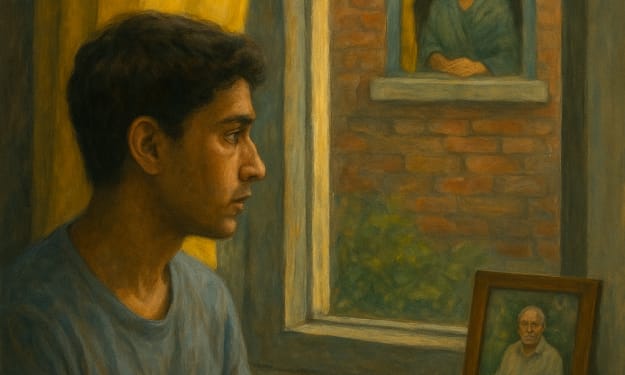
The Window with the Yellow Curtains
The apartment across the street had always been empty. I could see the entire structure from the window in my bedroom: sun- and time-worn brick, chipped and crooked balconies, like teeth that had forgotten how to bite. However, a particular second-floor window stood out. The bright yellow curtains had been drawn shut for a long time.
By Ahmed Rayhanabout a year ago in Humans
From Digital Transformation to Digital Culture: The Real Shift in 2025
It means using new software, systems, and devices to do better work. But in 2025, the real shift is deeper than just tools and apps. Naushad Parpia, a business leader, says the culture matters more now. Changing how people think, act, and work with tech is now key. This article shows how digital culture is the next big step.
By Naushad Parpiaabout a year ago in Humans
Mirror Neurons
Dr. Imran Kazi had spent most of his life studying the human brain, but the concept that fascinated him most wasn’t consciousness or memory—it was empathy. He called it “the curse of connection.” As a neuroscientist, Imran knew about mirror neurons—the brain cells that allowed humans to feel the emotions of others. If you saw someone cry, your brain mirrored their pain. If you witnessed joy, you smiled too. It was what made love possible. And war unbearable. For years, Imran had viewed empathy as the highest human virtue. But after what happened with his younger brother, Raheel, he wasn’t so sure anymore. Raheel had returned from a humanitarian mission in Gaza, broken. A warzone medic, Raheel had seen children dismembered, families buried under rubble, and smiles vanish in a single strike. The worst part? He felt all of it—every scream, every tear, every loss—as if it were his own. Raheel didn’t come back with scars on his body. He came back with them in his soul. “I can’t switch it off,” he told Imran one night, his eyes hollow. “Every face I saved or failed haunts me. They live in me now.” Imran, the scientist, tried to help. Therapy. Meditation. Neural stimulation. Nothing worked. Raheel took his own life six months later. That was the moment Imran’s fascination with mirror neurons turned into something darker. He began to question whether evolution had made a mistake. Maybe feeling too much was a flaw, not a feature. Years passed, but the question stuck with him like an unshakable shadow: What if empathy is killing us more than saving us? That thought birthed his most controversial research—Project GlassMind. GlassMind wasn’t about enhancing empathy. It was about controlling it. Using targeted neural dampeners, Imran theorized he could “dial down” empathy in people selectively. Imagine a surgeon operating without trembling over a child’s cry. A soldier choosing logic over trauma. A policymaker deciding what’s fair—not just what feels right. It was utilitarian. Cold. But Imran believed it might save more lives than it destroyed. When he presented his findings at the Global Neuroethics Conference, the response was split. Half the audience stood in awe. The other half accused him of trying to erase the very thing that made humans human. “You’re proposing we turn off our souls,” one critic barked. “No,” Imran replied. “I’m proposing we give people the power to protect them.” Still, controversy followed him like a specter. He was dubbed “The Empathy Assassin” by the press. Funding dried up. Universities distanced themselves. But Imran didn’t stop. In secret, he continued his research, developing a prototype headset that could selectively mute or enhance mirror neuron activity based on the user’s choice. Then came Zara. She was a trauma counselor from a war-affected region in Sudan. Her nonprofit reached out after a leaked paper of Imran’s surfaced online. She wasn’t angry. She was curious. “I want to try it,” she told him, eyes burning with sincerity. “If what you made can help me keep going without falling apart… I need it.” Zara was drowning in others’ pain. She wanted to care. She just didn’t want to drown. Imran hesitated, then agreed—on one condition: she would document her experience, good or bad, and report it back to him. Two months passed. Then three. When Zara returned to his lab, she looked healthier, steadier. “It worked,” she said. “I still feel. But now I choose when and how deeply. I no longer carry every sorrow like it’s my own. I’m helping more people than ever.” Imran should’ve been thrilled. Validated. But instead, he felt an unfamiliar chill. Had he just proved that the human spirit was better when it wasn’t fully human? Late that night, he sat in the dim lab, turning the headset over in his hands. He thought of Raheel. Of every person who loved too much and broke because of it. He had created a lifeline—but had he also built a cage? He put the device on himself. At first, nothing happened. Then, he adjusted the setting. The moment was quiet. Chilling. He called up a video of Raheel’s funeral. Watched his mother weep. Felt… nothing. Another twist of the dial. Tears. Crushed breath. Pain in his chest. Back down. Peace. Cold, clear, terrifying peace. He pulled the headset off. This was power. And danger. The ability to control the volume of your soul. In the end, Imran didn’t destroy the device. But he didn’t commercialize it either. Instead, he encrypted the software and locked it in a private vault with a simple note: “Empathy is the weight that balances humanity. May we never forget how heavy it must be.” He later wrote a paper titled “Mirror Neurons: Blessing or Burden?” It went viral—not because it offered answers, but because it asked the right question. Years after his death, long after his invention became myth, a quote of his was etched on the walls of the Global Museum of Human Neuroscience: “To feel what others feel is the most human act there is. But sometimes, being human hurts more than we can bear.” And in a quiet corner of that museum sat a glass case, empty except for a shattered prototype headset. The plaque read: “The Ghost of Empathy.”
By Syed Kashif about a year ago in Humans
The Hearts Whisper and Shadows Linger. Content Warning.
On a rain-soaked evening in a city that had seen too many heartbreaks and fleeting romances, Lena found herself wandering under the warm glow of streetlights. Each droplet that slipped down the cobblestone resembled tiny memories of a past too painful to bury. Lena had once believed love was the answer to every ache, a promise of tomorrow’s magic. Yet now, haunted by the echo of promises broken, she wondered if trust in love was nothing more than a fairy tale spun to soothe aching hearts.
By Edge Alexanderabout a year ago in Humans
Rethinking Justice and Revenge: Echoes from the Oresteia
The stage opens with blood and ends with law. Aeschylus’ Oresteia, a trilogy of ancient Greek tragedies, charts a world suspended between the emotional and the institutional. At its heart lies a question that still haunts us: What is justice, and how does it differ from revenge? The plays present a cyclical, generational pattern of violence: Agamemnon sacrifices his daughter Iphigenia. His wife Clytemnestra murders him in return, and their son Orestes, in turn, kills her. Each act is a response to a prior harm, each justified by the language of duty, loyalty, and moral outrage. But then, something shifts. Athena intervenes, and the cycle halts. Not through more blood, but through judgment, argument, and law. What began as vengeance ends with justice, or so it seems. While the trilogy is often seen as a celebration of justice triumphing over revenge, a deeper reading reveals how both impulses share a common emotional and neurological origin. Drawing on philosophical insights from Plato and contemporary thinkers like Martha Nussbaum and Jonathan Haidt, as well as findings from neuroscience, the piece argues that justice and revenge are not opposites but reflections of the same human desire to restore moral balance. This article explores the fragile boundary between justice and revenge, using Aeschylus’ Oresteia as a philosophical lens.
By Sergios Saropoulosabout a year ago in Humans
Quiet times in the brain can help combat Alzheimer's and shape memory.
Neuroscientist Nuri Jeong anticipated a sad reunion with her grandmother, whose Alzheimer's condition had progressed to the point where close family claimed she no longer recognised them, when she returned home to South Korea.
By Francis Damiabout a year ago in Humans