science
The Science Behind Relationships; Humans Media explores the basis of our attraction, contempt, why we do what we do and to whom we do it.
Nuclear medicine
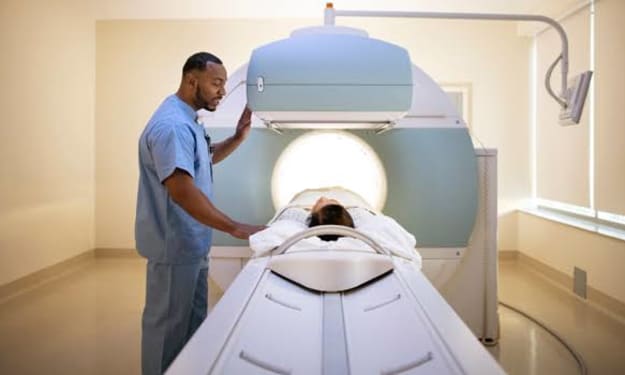
Nuclear medicine Nuclear medicine is a branch of medical imaging that uses small amounts of radioactive materials, known as radiopharmaceuticals, to diagnose and treat diseases. It involves the use of gamma rays, positrons, or beta particles emitted by these radioactive materials to image and/or treat specific organs or tissues within the body. This technique is particularly useful in diagnosing and treating cancer, heart disease, and various neurological and endocrine disorders. In this article, we will discuss the scientific and technical concepts related to nuclear medicine, its advantages and limitations, and some applications of this technology. Radiation in Nuclear Medicine: Nuclear medicine procedures typically exploit the emission of gamma rays or positrons by radioactive materials. Gamma rays are electromagnetic radiation with high energy levels that can penetrate the body and are detected by gamma cameras. Positrons are positively charged particles that can annihilate with electrons in the body, producing gamma rays that are detected by positron emission tomography (PET) scanners. Beta particles are high-speed electrons emitted by certain radioactive materials and can be used for targeted radiation therapy. Patient Preparation: Before undergoing nuclear medicine procedures, patients are typically required to fast for several hours or avoid certain foods and medications that can interfere with the radiopharmaceuticals' uptake. In some cases, patients may need to have a catheter inserted to deliver the radiopharmaceuticals directly into the bloodstream or a specific organ. Patients are also advised to inform their healthcare providers if they are pregnant or breastfeeding, as radioactive materials can harm the fetus or infant. Advantages and Limitations: One of the main advantages of nuclear medicine is its ability to detect diseases at an early stage, often before symptoms appear. It can also provide detailed functional information about the body's organs and tissues that cannot be obtained with other imaging techniques such as X-rays or CT scans. Additionally, nuclear medicine can be used to deliver targeted radiation therapy to cancer cells, minimizing damage to healthy tissue. However, there are also some limitations to nuclear medicine. The radiation exposure from radiopharmaceuticals can be a concern, particularly for children and pregnant women. Additionally, the images produced by nuclear medicine can be less clear than those produced by other imaging techniques, and some radiopharmaceuticals may not be available or effective for all diseases. Applications of Nuclear Medicine: There are many applications of nuclear medicine, ranging from diagnostic imaging to targeted radiation therapy. Here are three examples: PET scans: PET scans are used to detect cancer, heart disease, and neurological disorders such as Alzheimer's disease. They can also be used to monitor the effectiveness of cancer treatments. Iodine-131 therapy: Iodine-131 is a radioactive material that is used to treat thyroid cancer by delivering targeted radiation therapy to the thyroid gland. Hybrid scanning techniques: Hybrid scanning techniques such as PET/CT or PET/MRI combine the functional information obtained from PET scans with the anatomical information obtained from CT or MRI scans, providing more detailed and accurate images. Nuclear medicine has brought a teremendous revolution in the field of medical. Due to nuclear medicine humans are now capable to cure and diagnose multiple diseases that were considered impossible in thd past. It is used to diagnose and treat diseases like cancer, tumor, and the diagnosis of brain stroke, blocked vein nerve pressed by the backbone due to the CT scan and MRI tests.
By Abdul rafey 4 years ago in Humans
Albert Einstein
Albert Einstein was a man who needs no introduction. His name has become synonymous with genius and his contributions to the field of science have left an indelible mark on the world. But behind the accolades and the scientific breakthroughs lies a story of a man who, despite his intellect, struggled to fit in with the world around him.
By Asim Pervez4 years ago in Humans
All About Climate Change
Climate change is a pressing issue facing the world today, and its effects are already being felt in many parts of the globe. It is a phenomenon that is caused by the increase in greenhouse gases in the Earth's atmosphere, primarily due to human activities such as burning of fossil fuels, deforestation, and industrialization. The accumulation of these gases in the atmosphere traps heat and warms the planet, causing changes in weather patterns, melting of glaciers and sea ice, and rising sea levels.
By Muhammad Abrar4 years ago in Humans
The Art of Mindful Procrastination
Prioritizing Tasks Through Mindful Delay Procrastination is often seen as a hindrance to productivity and a bad habit that we need to overcome. But what if we can use procrastination to our advantage? Mindful procrastination is a deliberate and conscious decision to delay an activity in order to engage in another activity that is more fulfilling, enjoyable, or meaningful. By prioritizing our tasks and delaying those that are less important, we can engage in activities that recharge our energy and increase our motivation.
By ethics with AI4 years ago in Humans
Framework for checking the quality of the milk and milk products
WHY THIS PROBLEM STATEMENT? For newborns, kids, and adults, milk is their main source of nutrients. The nutritional value of milk is directly impacted by its quality, and this has an effect on consumers' health and wellbeing. High-quality milk offers the vital nutrients needed for growth and development whereas low-quality milk can cause health problems like food poisoning, bacterial infections, and allergic responses.
By Vinay Varshigan4 years ago in Humans
The Human Element
In a world where artificial intelligence had taken over many aspects of human life, there was still one thing that it could not replicate: creativity. No matter how advanced the algorithms became, they could never replace the unique perspective and imagination of a human being.
By S McCellon4 years ago in Humans
What is a concussion?
Introduction: A concussion is a type of traumatic brain injury that occurs when a blow to the head or body causes the brain to shake inside the skull. This shaking can lead to a range of symptoms, including headaches, dizziness, nausea, and confusion. In this article, we will explore what a concussion is, how it is treated, and what you should avoid doing when you have one.
By DIYStudent4 years ago in Humans
Imposter Syndrome. Top Story - March 2023.
An inalienable fact about Autistics is that we tend to struggle at life more than the average neurotypical. This is particularly true of female Autistics, who face greater barriers to get diagnosed, and find it harder to ger support when they are. It doesn't particularly help that common co-morbids of Autism are the Trauma Twins: Anxiety and Depression. As such, on the occasion that Autistic people find themselves succeeding, we promptly find ourselves taking up arms against Imposter Syndrome.
By Natasja Rose4 years ago in Humans
History of 1918 Flu Pandemic
The 1918 flu pandemic, also known as the Spanish flu, was one of the deadliest pandemics in human history, infecting an estimated 500 million people worldwide, and killing at least 50 million. It occurred during a time of war, and the movement of troops and crowded conditions likely contributed to the rapid spread of the virus.
By Muhammad Abrar4 years ago in Humans