science
The Science Behind Relationships; Humans Media explores the basis of our attraction, contempt, why we do what we do and to whom we do it.
Empaths Don’t Need Thicker Skin, They Need Better Boundaries
Being an empath is often treated like a badge of honor. You’re the one people turn to when they’re overwhelmed, confused, or hurting. You listen deeply, sense emotional shifts instantly, and care in ways that feel natural and instinctive. But over time, that constant emotional openness can come at a cost.
By Leigh Cala-or8 months ago in Humans
Social Media Causing the Decline in Humanity?
From the moment we wake up to the moment we fall asleep, many of us are glued to screens filled with social feeds, infinite scrolls, and algorithmic suggestions tailored to grab — and keep — our attention. While social media promised connection, empowerment, and community, it’s increasingly clear that its **cost to our mental health, social cohesion, and emotional well-being is profound.** Unless we confront these issues head-on, we risk a generational decline in humanity’s psychological and interpersonal health.
By AnthonyBTV8 months ago in Humans
Practical Magick: Applied metAlchemy
How wonderful it is that no one need wait one moment before starting to improve the world. -Anne Frank This simple, profound sentiment of personal responsibility and change underlies the second mantra of meta-alchemy. When energy is sufficient to facilitate it, grow and evolve as a person, as a professional, as a creator, and as a functional member of society. Take a class, go to therapy, work in your garden—evolution has myriad faces, determined only by the one you wish to see in the mirror. Just remember that you cannot take sustenance from stone; if you don't ensure sufficient energy to sustain your growth, it will fail to take root due to inhospitable conditions.
By Maia Gadwall the metAlchemist9 months ago in Humans
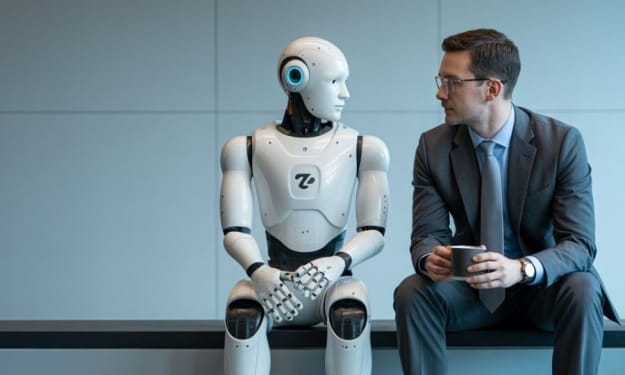
Will Technology Ever Replace Emotional Intelligence?
Technology has learned how to speak, write, predict, and respond. It can recognize faces, analyze emotions, and even simulate empathy through carefully designed language. As machines become more advanced, a quiet question begins to surface in many minds: Will technology ever replace emotional intelligence?
By Zeenat Chauhan9 months ago in Humans
The Fear of Becoming Irrelevant in a Rapidly Changing World
There is a quiet anxiety many people carry today, even if they rarely talk about it out loud. It shows up in small moments of doubt, in passing thoughts late at night, and in sudden comparisons we didn’t intend to make. It’s the fear that the world is moving forward too fast and that somehow, we are being left behind.
By Zeenat Chauhan9 months ago in Humans
Why East Asian Societies Win Systems but Lose Mental Peace
In the glittering skylines of Tokyo, Seoul, and Shanghai, one witnesses the pinnacle of human organization. East Asian societies have mastered the art of building efficient, high-performing systems that propel economies, education, and innovation to global dominance. From Japan's bullet trains that run with split-second precision to South Korea's tech giants like Samsung dominating the smartphone market, these nations exemplify systemic excellence. Yet, beneath this veneer of success lies a profound paradox: the very mechanisms that drive their triumphs often come at the expense of mental peace. High suicide rates, burnout epidemics, and widespread anxiety plague these populations, raising a critical question why do East Asian societies win at systems but lose at mental well-being? To understand this dichotomy, we must first appreciate the "winning systems" that define East Asia. Rooted in historical legacies like Confucianism, which emphasizes hierarchy, discipline, and collective harmony, these societies have engineered frameworks that prioritize efficiency and results. Take education, for instance. In countries like China, Japan, and South Korea, the gaokao, keju-inspired exams, or suneung respectively, are not mere tests but national rituals that determine life trajectories. These systems produce some of the world's top performers in international assessments like PISA, where East Asian students consistently outscore their global peers in math and science. The result? A workforce of highly skilled professionals fueling economic miracles. Post-World War II Japan transformed from ruins to the world's second-largest economy by the 1980s through kaizen continuous improvement and just-in-time manufacturing. Similarly, Singapore's meritocratic governance, blending authoritarian efficiency with capitalist vigor, has turned a resource-scarce island into a global financial hub with one of the highest GDPs per capita. Economically, the "Asian Tigers" South Korea, Taiwan, Hong Kong, and Singapore exemplify this systemic prowess. Their export-driven models, supported by state-led industrial policies, achieved rapid industrialization. China's "996" work culture 9 a.m. to 9 p.m., six days a week has propelled it to become the world's manufacturing powerhouse, with companies like Huawei leading in 5G technology. These systems are not accidental; they stem from cultural values that value perseverance (gaman in Japanese) and filial piety, where individual sacrifices bolster societal progress. Urban planning in cities like Seoul showcases this: efficient public transport, smart city integrations, and disaster-resilient infrastructure make daily life seamless. Even healthcare systems, like Taiwan's National Health Insurance, provide universal coverage with low costs and high outcomes, outpacing many Western models in life expectancy. However, this relentless pursuit of systemic perfection extracts a heavy toll on mental peace. Mental health statistics paint a grim picture. South Korea has one of the highest suicide rates globally, at around 24.6 per 100,000 people according to WHO data, far exceeding the global average of 9.2. Japan reports over 20,000 suicides annually, often linked to karoshi death from overwork. In China, urban youth face "involution," a term describing intense competition yielding diminishing returns, leading to widespread depression. A 2023 Lancet study highlighted that East Asia has some of the lowest happiness scores in global surveys, despite economic wealth. Why this disconnect? At the core lies a cultural emphasis on collectivism over individualism. In Confucian- influenced societies, personal fulfillment is subordinated to group harmony and societal expectations. Children are drilled from toddlerhood to excel academically, not for self-actualization but to honor family and nation. This creates immense pressure; failure isn't personal it's a communal shame. In Japan, the concept of hikikomori describes over a million young adults withdrawing from society due to overwhelming stress. Work cultures amplify this: mandatory overtime, hierarchical bosses, and a stigma against mental health discussions prevent seeking help. Unlike Western individualism, where personal happiness is paramount, East Asian norms view emotional expression as weakness. Buddhism and Taoism, indigenous philosophies promoting inner peace, have been overshadowed by modern capitalist drives, leaving a spiritual vacuum. Comparatively, Western societies like those in Scandinavia prioritize work-life balance, with policies like Denmark's 37-hour workweek and generous parental leave fostering mental well-being. The World Happiness Report often ranks Nordic countries highest, attributing it to social support networks and trust in institutions elements present in East Asia but channeled differently. In the U.S., while stress exists, cultural narratives celebrate "pursuing happiness" and therapy is normalized. East Asia's systems, while efficient, lack flexibility for personal detours. A Harvard study on longevity notes that while East Asians live longer due to healthy diets and discipline, their subjective well-being lags because of suppressed emotions. The roots trace back historically. Post-colonial and war-torn recoveries in the 20th century necessitated rapid rebuilding, embedding survivalist mentalities. Japan's Meiji Restoration in the 1860s industrialized the nation through top-down reforms, setting a precedent for state-orchestrated progress. China's Cultural Revolution and subsequent reforms under Deng Xiaoping prioritized economic output over individual rights. These histories forged resilient systems but at the cost of psychological resilience. Modern globalization exacerbates this: East Asian youth compete in a hyper-connected world, facing AI-driven job uncertainties while clinging to traditional pressures. Yet, glimmers of change emerge. South Korea's government has introduced mental health initiatives, like the 2022 Suicide Prevention Act, mandating counseling in schools. Japan's "Premium Friday" encourages early work endings for leisure. In China, the "lying flat" (tangping) movement sees young people rejecting hustle culture for minimalism. Companies like Alibaba are experimenting with flexible hours amid public backlash against 996. These shifts suggest a budding recognition that sustainable success requires mental equilibrium. To bridge this gap, East Asian societies could integrate mindfulness practices rooted in their heritage. Reviving Zen meditation in Japan or qigong in China could counterbalance systemic rigors. Policy-wise, mandating mental health days, reducing exam pressures through holistic education, and destigmatizing therapy via public campaigns are vital. Economists argue that happier workers are more productive Finland's model shows high innovation despite short hours. Imagine East Asia blending its systemic strengths with emotional intelligence: efficient trains paired with serene minds. In conclusion, East Asian societies' triumph in systems is undeniable, a testament to discipline and ingenuity. Yet, the loss of mental peace underscores a universal truth: true prosperity encompasses not just material wealth but inner harmony. As these nations evolve, the challenge is to humanize their systems ensuring that the pursuit of excellence doesn't eclipse the essence of living. By addressing this paradox, East Asia could not only maintain its global edge but also pioneer a model of balanced, holistic success for the world.
By Arjun. S. Gaikwad9 months ago in Humans
How Fast Could Russia Win a War With Ukraine?. AI-Generated.
Understanding “Winning” in a Modern War Before discussing speed, we must define what winning means. In modern conflicts, victory can mean very different things: Full territorial control Regime change Military dominance without occupation
By Say the truth 9 months ago in Humans
The Attention Economy Is Quietly Rewriting Our Minds — and Most People Don’t Notice
Every time you unlock your phone, scroll a feed, or tap a notification, you are participating in something far bigger than momentary distraction. You are engaging in what experts call the attention economy — a system where human focus is the most valuable resource on Earth. This isn’t hyperbole. It’s reality. For the companies that fuel the modern internet, your attention is currency. Every second spent watching, clicking, or reacting generates data that platforms use to predict your behavior, tailor your feed, and pull you deeper into their ecosystem. And the consequences go beyond algorithms. They are reshaping how we think, feel, and decide — often without our conscious awareness.
By Yasir khan9 months ago in Humans
The Day My Phone Started Knowing Me Better Than I Did
It started with a notification I almost ignored. “Good morning, Alex. Based on your sleep patterns, we’ve adjusted your morning schedule. Coffee is ready at 7:15. You might want to leave home at 8:03 instead of 8:10.” I froze. My phone had never spoken to me like this before. Sure, it suggested playlists, predicted traffic, and reminded me of appointments. But it had never calculated me this precisely. Curiosity overcame caution. I followed its instructions. The coffee was perfect. Traffic was lighter than usual. I arrived at work feeling oddly efficient.
By Yasir khan9 months ago in Humans