
We Don’t Eat for Nutrition. We Eat for Relief.
Nearly 3 out of 4 adults report eating differently under stress, not because of hunger, but because the body is seeking relief.

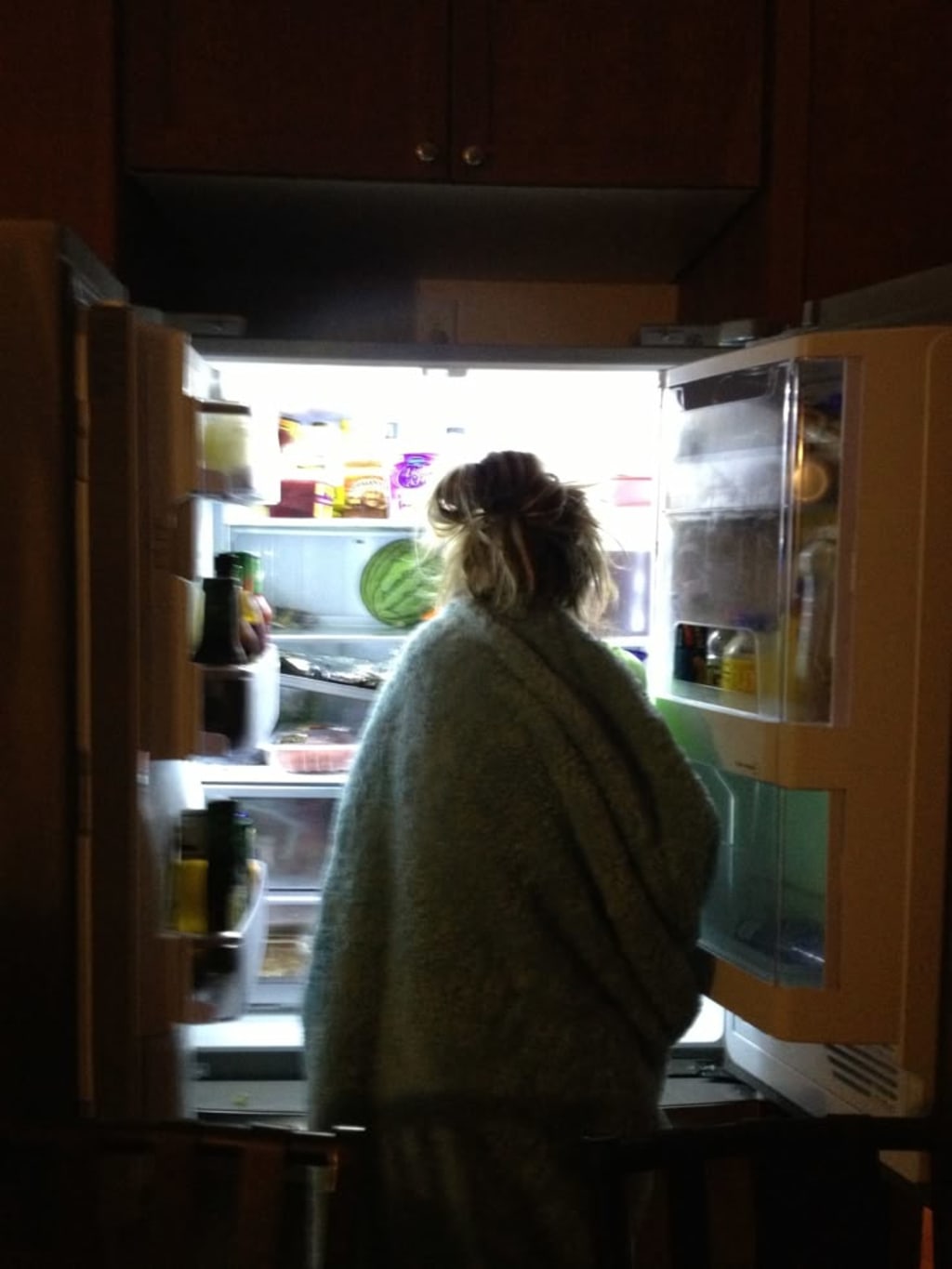
There is a certain hour at night when kitchens light up again.
The day is technically over. The work is done or abandoned. The phone is finally quiet. And yet refrigerators open, cupboards slide out, and hands reach for food without much thought about taste or nutrition. It happens almost automatically, as if the body is finishing a sentence the day never completed.
It looks like hunger. But it rarely is.
If hunger were the reason, the decision would feel simple. Instead, people stand there longer than necessary, scanning shelves they already know, hoping for something specific without being able to name it. The door stays open. The light hums. The moment stretches.
That pause is the clue.
Food used to arrive with structure. Meals had edges. Breakfast ended, lunch began, dinner closed the day. Eating marked time. Now it leaks into everything. It happens in fragments. Between tasks. Between notifications. Between thoughts that never quite land.
In that space, food takes on a second job.
It becomes something to do when the day does not resolve cleanly. Something to reach for when the body is tired but the mind refuses to slow down. Something familiar in a routine that no longer has clear borders. Not celebration. Not nourishment. Regulation.
This is not accidental behavior. It is learned.
The body remembers what softened the noise last time.
For years, we were told to think about food through rules and diagrams. What belongs. What doesn’t. How much is too much. Recently, those rules have started to change. I wrote about that shift in The Food Pyramid Has Been Flipped. Here’s What the New One Really Means., where the focus moved toward food quality and away from rigid hierarchies.
But even updated guidance often misses this quieter truth.
Modern nutrition advice rarely talks about this part.
It talks about ingredients, portions, labels, macros. It assumes eating is a rational act guided by knowledge. But most people already know what they “should” eat. That knowledge does not stop the reach for snacks late at night or stress eating during long afternoons.
Because the decision was never nutritional.
Studies have shown that stress changes appetite, not by increasing true hunger, but by increasing the desire for quick comfort. Sugar lowers cortisol temporarily. Fat slows the nervous system. Warm food signals safety. Even texture plays a role. Crunch releases tension in ways most people never consciously notice.
The body is not confused. It is responding.
This is where discipline becomes such a fragile solution.
Willpower works best in calm environments. But most people eat under pressure. They eat while tired, overstimulated, emotionally crowded. Asking restraint to replace rest or connection is like asking a chair to replace sleep.
That’s why the current debates around nutrition feel incomplete. In The New Food Pyramid Sounds Bold. That Doesn’t Mean It’s Settled., I questioned whether changing diagrams alone can solve a problem that is rooted in how people live, not just how they eat.
When food becomes the fastest form of relief available, removing it without replacing what it was compensating for only sharpens the craving.
That’s where many diets quietly fail. Not dramatically. Not loudly. They fail in kitchens at night, in cars, in moments no one posts about. They fail not because people lack discipline, but because food was doing more work than anyone acknowledged.
The shift happens when the question changes.
Instead of asking what to eat, people who change their relationship with food ask something else first.
What is this moment actually asking for?
Sometimes the answer is food. Real hunger still exists. But often it is pause. Or quiet. Or the end of a day that never properly ended. Sometimes it is simply permission to stop.
Once that question is allowed, eating becomes less reactive. Not perfect. Just more honest. Food stops being the first response to everything.
Food is not the problem in modern life. It is the stand-in.
It holds emotional weight because other supports thinned out. Shared meals became rare. Downtime became optional. Rest became something to earn. In that absence, food stepped forward.
It soothes when nothing else is available.
That does not make people weak. It makes them adaptive.
Eating well, then, is not about control. It is about reducing the load food is carrying. About letting it return to what it was meant to be, instead of what it has been forced to become.
The less food is asked to manage stress, boredom, loneliness, and fatigue, the more quietly it returns to its original role.
Nourishment. Not negotiation.
And once that happens, many people notice something unexpected.
They don’t need to think about food as much anymore.
******
About the Creator
Aarsh Malik
Poet and storyteller who believes in the quiet power of words.
My first book, QUIET FLAME
Buy Coffee
⏳ 90 days. $2,000
If my words stay with you, a little tip can help me get there.
Enjoyed the story? Support the Creator.
Subscribe for free to receive all their stories in your feed. You could also become a paid subscriber, letting them know you appreciate their work.
Comments
There are no comments for this story
Be the first to respond and start the conversation.