humanity
For better or for worse, relationships reveal the core of the human condition.
Why Your Degree is Just a Paper if it Doesn't Teach You to Question
Dear Friend, You have spent the first quarter of your life inside classrooms. You have memorized textbooks, passed grueling examinations, crossed the stage in a graduation gown, and proudly framed your university degree. Perhaps you have secured a respectable corporate job, and in the eyes of society, you are the absolute definition of a successful, educated individual.
By Arjun. S. Gaikwad5 months ago in Humans
Your Gadgets Are in the 21st Century, but What About Your Mindset?
Dear Modern Citizen, You wake up every morning to a smart alarm, check notifications on a device that connects you to the entire globe in milliseconds, and perhaps commute to a glass-facade corporate office. You trade in global markets, discuss the future of Artificial Intelligence, and proudly identify yourself as a progressive, global citizen of the 21st century.
By Arjun. S. Gaikwad5 months ago in Humans
An Open Letter to the Ensnared Fanatic: In Surrendering Your Reason, You Find the Mob, Not God
Dear Friend, You consider yourself the ultimate protector of your religion, your faith, and your God. You believe that your aggression, your anger, and your loud slogans are saving your religion from imminent destruction. I am writing this letter to you not with hatred or anger, but with deep compassion and a rational concern. Because when you wager your rationality and your humanity in the name of religion, you are not actually defending your faith you are simply becoming a cog in a blind, unthinking mob.
By Arjun. S. Gaikwad5 months ago in Humans
An Open Letter to the Modern Indian Woman. Your True 'Golden Age' Is Not in the Past – It Is Right Now
Dear Modern Woman, As you read this letter today, you might be on your way to the office, working on a college assignment, or perhaps sitting on your balcony, weaving new dreams for your future. Whatever you are doing, one thing is certain: today, you hold the power and the freedom to choose exactly how you want to live your life.
By Arjun. S. Gaikwad5 months ago in Humans
The True Golden Age for Indian Women Isn't in the Past. It’s Right Now
If you ask historians or flip through the pages of standard Indian textbooks, you will often find references to the Golden Age of women in the early Vedic period. We are taught to look backward to a time of scholars like Gargi and Maitreyi to find a civilization where women held intellectual and social authority.
By Arjun. S. Gaikwad5 months ago in Humans
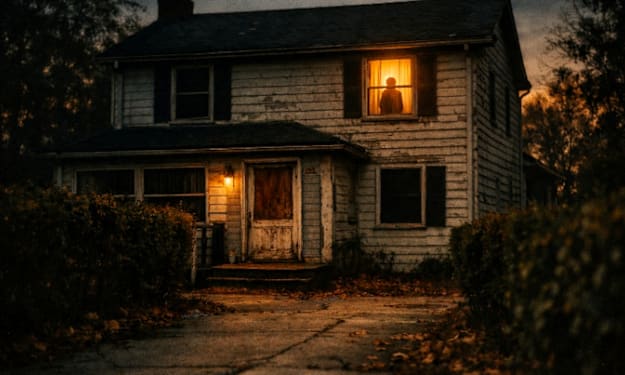
"I Returned to My Childhood Home After 20 Years. The Bedroom Door Was Closed — and Someone Was Breathing Behind It.". AI-Generated.
I almost didn't go. Twenty years is enough time to convince yourself that a place has stopped mattering. That the memories have softened enough, faded enough, that walking back into them won't cost you anything. I had a good life in Portland — steady work, an apartment with big windows, a routine that felt solid on most days. I had moved on. I was sure of it. Then my uncle called and told me the house in Dayton was going on the market. My father had passed in 2019. My mother followed fourteen months later, quietly, the way she did most things — without making a fuss, without giving any of us enough time to prepare. The house had been sitting empty since then, the estate tangled in paperwork, my uncle managing everything from a distance. He asked if I wanted to do a final walk-through before the realtor came. Take what I wanted. Say whatever I needed to say. I booked a flight that same night. The lawn stopped me before I even got to the front door. I turned onto Calloway Drive and pulled up slowly, and the first thing I noticed — before the sagging gutters, before the peeling shutters, before the maple tree my father had planted the year I was born that had grown so large it now shaded half the roof — was that the grass had been freshly cut. Clean lines. Neat edges along the driveway. Someone had been out here recently and done a careful job of it. My uncle hadn't mentioned hiring anyone. I hadn't asked him to. I sat in the rental car for a moment, just looking at it. Told myself it was probably a neighbor. Someone who couldn't stand watching an empty house go to ruin. That happened sometimes. There was a perfectly reasonable explanation and I was going to find it and it was going to be nothing. I got out of the car. The smell of the house hit me before I was fully through the door. Wood and dust and something faintly floral — my mother used to keep dried lavender in a ceramic bowl by the staircase, and somehow, two years later, the ghost of it was still there. My body recognized it before my brain did. I stood in the entryway with my hand on the doorframe and just breathed for a moment. The living room was empty. Bare floors, bare walls, afternoon light coming through curtains no one had bothered to take down. My parents' furniture had been donated years ago — a practical decision that I had agreed to over the phone and was now, standing here, deeply unprepared for. I moved through the house slowly. The kitchen where my mother stood every morning with her back to me, making oatmeal I always complained about. The narrow bathroom with the small hexagonal tiles. The hallway that felt half the size I remembered, the way childhood spaces always do when you return to them as an adult and realize the whole world you grew up in was actually quite small. I was holding it together. I was doing fine. Then I started up the stairs. My old bedroom was the second door on the right. It was the only door on the floor that was closed. I noticed it halfway up. Every other door was open — the master bedroom, the upstairs bathroom, the small room my parents had used as a study. All open. Just mine was shut. I stopped on the stairs and stood there. Old houses settle. Doors swing closed on their own. There was no reason for the feeling moving through my chest right now. There was a completely logical explanation and I was going to feel foolish in about thirty seconds. Then I heard it. Soft. Steady. Unmistakable. Someone on the other side of that door was breathing. I stood in that hallway for a long time. Then I walked forward and knocked. Silence. A long pause. Then a voice — thin, careful, elderly: "Michael? Is that you, sweetheart?" Her name was Carol. She was 77 years old, and she had been living in my childhood bedroom for seven months. We sat on the floor together — the pale blue carpet was still there, still the same shade, worn thin in the spot near the window where I used to sit and read — and she told me everything slowly, like someone who had been carrying a confession for a long time and wasn't sure how it would be received. She had known my mother. Not recently — years ago, before we moved to this house, when my mother was in her early thirties and going through something she had apparently never talked about with anyone in the family. Carol had been her neighbor during that time. They had been close in the particular way people become close when one of them is struggling and the other one shows up anyway. Then life moved them apart, the way it does, and they lost touch. When Carol's apartment building was sold last year and the rent on her new lease came in at nearly double what she'd been paying, she was stuck. Fixed income. No family nearby. Every affordable housing waitlist in the county was backed up by months. She had remembered my mother mentioning, once, that she kept a spare key under the ceramic frog by the back door. She had come to stay for one night. She had been mowing the lawn because she said she felt she owed the house something for letting her stay. I didn't call the police. That thought entered my mind and left it within seconds. We talked until the room went dark and I had to turn on the small lamp she'd set up on the floor beside her folding chair. She told me about my mother as a young woman — before marriage, before kids, before she became the fixed, certain person I had known my whole life as Mom. She told me about a version of my mother who had doubted herself, who had been lost for a while, who had leaned on a neighbor's kindness during a chapter she'd chosen to keep private forever. It was like being handed a photograph of someone you love from before you existed. Like discovering a whole room in a house you thought you knew completely. I cried. Carol handed me a tissue from her cardigan pocket without making it into a moment. Before I left, I called my cousin in Columbus. He has a spare room and he's a good person. He said yes without hesitation. I drove Carol there the following morning. She brought one suitcase and a small plant she'd been keeping on the windowsill of my old bedroom. She had kept it alive for seven months. The realtor got a clean, empty house. I got something I hadn't known I was looking for — a fuller, more honest picture of my mother. A woman who had an entire life before I arrived and complicated everything with my needs and my noise and my love for her. A woman who had struggled privately and never once let it show. I used to think I knew her completely. I was standing in her house, in the room where I grew up, being introduced to her by a 77-year-old woman with a suitcase and a small plant and nowhere else to go. I don't think that's a sad ending. I think that's just what it looks like when you finally stop seeing your parents as parents — and start seeing them as people.
By Baseer Shaheen 5 months ago in Humans
Dr. Prakash Bhatia and the Shift Toward Functional Psychiatry. AI-Generated.
Dr. Prakash Bhatia is a board-certified psychiatrist with more than 25 years of experience treating adults, adolescents, and older adults across the full spectrum of mood, anxiety, trauma, and cognitive disorders. Throughout his career, he has worked with patients navigating emotional and psychological challenges while helping them build healthier routines, stronger coping strategies, and greater emotional stability. His work reflects a broader shift happening within modern mental health care, where many professionals are moving beyond symptom reduction alone and placing greater attention on long term resilience and practical daily functioning.
By Prakash Bhatia5 months ago in Humans
Plan B. Top Story - May 2026.
I’m not sure where I first heard the phrase, “Always have a plan B,” but whether it was on a television show or from an older adult, the axiom is how I’ve built my life. When I was in grammar school and didn’t want to do my homework, my favorite plan B was to go to the teacher before class started and explain that I tried to do the assignment, but I just wasn’t getting it, and could they please explain it to me again? This excuse was so much better than, “My dog ate my homework.”
By Mark Gagnon5 months ago in Humans