family
Family unites us; but it's also a challenge. All about fighting to stay together, and loving every moment of it.
The Last Library of Humanity
M Mehran Eli walked slowly through the ruins of the city, the wind carrying with it the faint smell of dust and forgotten fire. His boots crunched against shards of glass that had once been windows to tall buildings. The world, he thought, had grown quieter than it ever should have been. He wasn’t alone. Humanity had not completely disappeared—though sometimes, it felt like it had. Small clusters of people still survived, scattered like seeds across barren soil. But survival had become a task of instinct: eat, drink, shelter, repeat. Few remembered what it meant to live beyond survival. Eli carried a canvas bag across his shoulder, heavy with items most people wouldn’t have bothered with. Where others hunted for canned food or spare tools, he searched for books. Pages torn, spines cracked, some nearly dissolved by rain—but to him, they were treasures. Words, he believed, were the last evidence of what humans once were. That morning, he stumbled upon something extraordinary. Behind the skeletal remains of a school, he found a basement door wedged half-open by rubble. It took him nearly an hour to pry it wider, squeezing himself through the narrow gap. Inside was darkness. He lit a match. The flame revealed rows upon rows of shelves, damp but intact. His breath caught in his throat. It was a library. The books were swollen with moisture, but thousands of them remained. Stories. Histories. Ideas. Dreams. It was as if he had stepped into the mind of humanity itself. He set the match in a metal tin and fed it bits of paper until a small flame danced. Light flickered across spines with faded titles: The Odyssey, A Brief History of Time, Collected Poems of Rumi, Medical Guides, Atlases. His fingers trembled as he touched them. For hours, Eli read. He turned brittle pages carefully, whispering words aloud just to hear them exist again. Each book was a voice of someone long gone, yet still speaking. Here was joy, here was sorrow, here was questioning. When night fell, he built a fire in a corner of the basement. He ate a small ration of dried beans and bread, then sat cross-legged with a book of poetry. He read verses about love and loss, and for the first time in months, he felt less alone. But the world outside was never patient. The next morning, as sunlight filtered through cracks in the ceiling, Eli heard footsteps above. Heavy, deliberate. He froze. Voices followed. A group—scavengers, most likely. They were dangerous not because they were evil, but because hunger made people cruel. Books meant nothing to them. If they found the library, they would burn it for warmth. Eli quickly stuffed three books into his bag: one on medicine, one on farming, and one filled with poems. Knowledge for the body, knowledge for survival, knowledge for the soul. Then he smothered the fire and pressed himself into the shadows. The footsteps grew louder. Dust fell as the intruders pried open the basement door. Torchlight cut through the darkness. “Look at this,” one of them muttered. “More junk.” Another kicked a book, laughing. “Paper doesn’t feed you.” They didn’t notice Eli, pressed silently against the far wall. For a moment, he feared they would start tearing the shelves down for firewood. But luck—or perhaps mercy—intervened. “There’s nothing here worth taking,” the leader growled. “Move on.” One by one, the scavengers left. Their footsteps faded until the silence returned. Eli didn’t move for nearly an hour, waiting, listening. Only when he was sure they were gone did he rise, his muscles aching. He looked around at the rows of books, untouched, waiting. “I’ll come back,” he whispered, as if promising the library itself. For the next several months, Eli did return. He made careful trips, each time taking a few books with him and hiding them in safer places. Sometimes he traded knowledge for food: how to treat wounds, how to plant seeds, how to build shelters. People thought he was strange, but they listened. Slowly, in small ways, communities began to grow again. What mattered most, however, were the poems. At night, when people gathered around small fires, Eli would read verses aloud. Stories of love, of courage, of mistakes, of dreams. Faces softened in the glow, eyes widened, hearts remembered. The words reminded them that being human was more than surviving—it was feeling, imagining, connecting. Years passed. The city continued to crumble, but around it, villages rose. Children grew up hearing not only instructions on how to live, but songs, myths, and poems. Eli grew older, his beard turning white, but his voice stayed steady. One evening, as the sun dipped behind the hills, a child asked him, “Why do you care so much about old books?” Eli smiled. He placed a hand on the boy’s shoulder. “Because books are people,” he said. “Every page is someone reaching out across time, saying I was here, and I felt what you feel now. Without them, we forget who we are.” The boy thought about that for a long moment, then nodded. And in that moment, Eli knew humanity still had a chance. Not because of the tools they built, or the shelters they raised, but because they remembered the voices of those who came before. The library remained hidden in its basement, untouched by fire or greed. It was no longer just a collection of books—it was a seed. And in that seed, humanity began again.
By Muhammad Mehranabout a year ago in Humans
🌍 Storms, Floods, and Earthquakes: A Deadly Week Across South and Central Asia
A Week of Heartbreak The past week has been one of the darkest in recent memory for South and Central Asia. From raging floods in Pakistan and India to destructive earthquakes in Afghanistan and Tajikistan, nature’s fury has claimed thousands of lives and displaced countless families. Entire communities are mourning, homes have vanished beneath water or rubble, and survivors are left clinging to hope. Natural disasters are not new to this part of the world, but the scale and frequency of these recent events feel overwhelming, a reminder of both the region’s vulnerability and humanity’s fragile relationship with the environment. --- 🇵🇰 Pakistan: Lives Swept Away by Floods In Pakistan, torrential rains have triggered massive floods across several provinces. Rivers have burst their banks, swallowing villages and farmlands. The images are haunting: children stranded on rooftops waiting for rescue, farmers watching helplessly as their year’s harvest washes away, and relief camps overflowing with survivors. According to reports, hundreds of people have lost their lives in Pakistan alone, while thousands more remain missing. Rescue teams, already stretched thin, struggle to reach remote areas. Aid organizations warn that food, clean water, and medicine are desperately needed. --- 🇮🇳 India: Rising Waters Bring Fear Across the border in India, relentless monsoon rains have unleashed similar destruction. Northern and northeastern states are reeling under floodwaters that have submerged roads, destroyed crops, and forced mass evacuations. For many families, this is not the first time they’ve faced such devastation. Each year, seasonal rains bring with them the dread of losing everything. But this year, the intensity has been far worse. Villages that once stood proud are now ghost towns, their people scattered in temporary shelters. The tragedy has ignited conversations once again about climate resilience and government preparedness. --- 🇦🇫 Afghanistan: Earthquake Horror While floods raged in Pakistan and India, Afghanistan was rocked by a powerful earthquake that reduced entire neighborhoods to rubble. Survivors dig through the debris with bare hands, desperately searching for loved ones. In many villages, hospitals are either destroyed or overwhelmed, leaving the injured without proper care. The death toll in Afghanistan has climbed into the thousands, making it one of the deadliest earthquakes in the region in years. For a country already grappling with poverty and political instability, this disaster adds another unbearable layer of suffering. --- 🇹🇯 Tajikistan: Shaken to the Core Tajikistan too was struck by a destructive earthquake this week. Though smaller in scale than Afghanistan’s tragedy, it left dozens dead and many more homeless. In the mountainous terrain, landslides triggered by the quake have cut off access to critical areas, delaying rescue efforts. For the people of Tajikistan, this disaster is yet another reminder of how fragile life is in a country where infrastructure and emergency response remain limited. --- 🌐 A Shared Tragedy, A Global Concern What unites these tragedies is not just geography, but humanity’s vulnerability in the face of nature. Climate change has been cited as a key factor intensifying floods in Pakistan and India, while poor infrastructure and lack of preparedness have worsened the effects of earthquakes in Afghanistan and Tajikistan. This week’s disasters raise urgent questions: How can countries better prepare for natural catastrophes? What role should the international community play in providing timely aid? And most importantly, how can we ensure that the voices of the survivors are heard, not forgotten? --- 💔 Stories of Courage Amid Despair Yet even in the darkest moments, stories of courage shine through. Rescue workers risk their lives wading through floodwaters to save strangers. Families in unaffected regions open their doors to shelter the displaced. Volunteers in Afghanistan and Tajikistan work around the clock, pulling survivors from rubble, offering food and blankets despite their own losses. These stories remind us that even when nature unleashes destruction, the human spirit refuses to surrender. --- ✨ Final Thoughts This tragic week in South and Central Asia has left scars that will take years to heal. Thousands of lives have been lost, and survivors face the long road of rebuilding homes, livelihoods, and hope. But beyond the grief lies a responsibility—a call to action. Governments, global organizations, and individuals must step forward with compassion, aid, and long-term solutions. Disasters may be natural, but neglect is not. The people of Pakistan, India, Afghanistan, and Tajikistan deserve more than sympathy—they deserve solidarity and support. Because in the face of such overwhelming loss, humanity’s greatest strength lies in standing together.
By ✦•············• Freelancer •············✦about a year ago in Humans
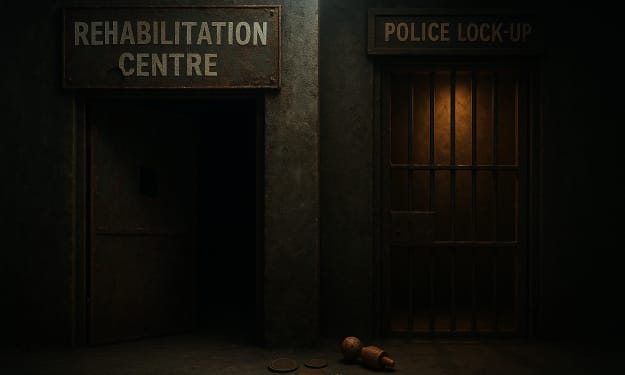
Chains of the Brothel – Part 3 The Cruelty of the Police, the Trap of Rehab
The wealthy man’s words hung in the air like venom: “What about the child—does he have a price too?” Anita froze. Her veins turned to ice. Aryan, barely four years old, clung to her dress, his small chest rattling with a cough. For a moment, the world stopped spinning. She tightened her arms around him, as if her fragile embrace could shield him from the darkness creeping closer.
By Shehzad Anjumabout a year ago in Humans
Chains of the Brothel : Part 4 —Ruin & Rebirth
A Mother’s Anchor Time moved like slow poison. Day after day, Anita sat within the suffocating walls of the brothel, her body scarred, her soul weary. She had lost her youth, her dreams, her dignity—everything. Yet through every storm, one fragile hope kept her alive: her son, Aryan.
By Shehzad Anjumabout a year ago in Humans
I Forgave Everyone Who Hurt Me—Except Myself
Forgiveness is something people talk about like it’s simple. Just let it go, they say. Free yourself from the weight of anger, resentment, and pain. I tried to live by that advice. I gave forgiveness freely to those who betrayed me, left me, lied to me, and broke me in ways I didn’t think I could recover from. And in many ways, it worked. The bitterness I once carried toward others loosened its grip on me. But there was one person I couldn’t forgive. Myself.
By Azmat Roman ✨about a year ago in Humans
Cancer Woman and Libra Man Compatibility Score. AI-Generated.
When a Cancer woman and a Libra man come together, their relationship feels like a delicate dance between emotion and intellect, sensitivity and diplomacy. Cancer, ruled by the Moon, thrives on emotional security, home, and nurturing bonds, while Libra, ruled by Venus, seeks harmony, balance, and social connections. On the surface, they may appear to have very different approaches to life, but these differences can either create a complementary partnership or lead to misunderstandings, depending on how much effort they put into understanding each other.
By Inspire and Funabout a year ago in Humans
Chains of the Brothel: Part 6 The Withering Light
Padma’s life had always been a fragile flame, trembling against storms too cruel for her tender years. She was born beneath shadows that should never touch a child, robbed of innocence before she even understood what innocence meant. That cursed night—when predators trampled her body and soul—became the invisible chain she would carry forever.
By Shehzad Anjumabout a year ago in Humans
Chains of the Brothel: Part 8 No More Fear
Shadows in the Old House The Old House had grown darker with each passing night. Its walls carried whispers of people the world had abandoned—voices swallowed into silence. Yet within that suffocating silence, Anita remained. Her presence glowed like a faint but unyielding flame.
By Shehzad Anjumabout a year ago in Humans
When the World Fell Silent, I Found My Voice
Excerpt (Short Intro): For years, I carried a silence that no one else could hear. Behind every smile was a storm I never let escape. This is the story of the night everything changed—the night I learned that speaking up can save a life, even your own.
By Roohullah Roohani about a year ago in Humans