family
Family unites us; but it's also a challenge. All about fighting to stay together, and loving every moment of it.
“The Last Candle”
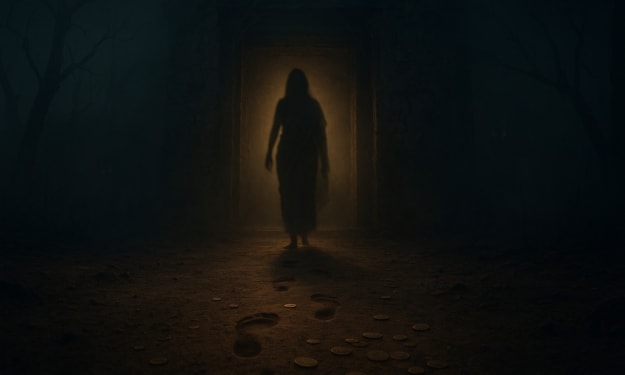
The power went out just as the storm reached its height. Thunder rattled the windows, lightning split the sky, and suddenly the house plunged into absolute darkness. For a long moment, there was nothing but the sound of rain lashing against the roof and wind howling through the cracks of the old wooden doors. Sara froze where she stood. She hated storms—not just because of the noise or the fear of the unknown, but because storms carried memories she had spent years trying to bury. Her hands searched blindly across the cluttered table until her fingers brushed against the smooth wax of a candle. It was the last one left in the house, a short stub of white that had already been used on nights like this. She found the box of matches nearby and struck one with trembling fingers. The flame leapt to life, small and fragile, before she lit the candle. At once, a soft golden glow spread across the living room, pushing the shadows back just far enough to give her comfort. Sara sat down near it, hugging her knees to her chest. She exhaled shakily. She was alone in the house—alone in the city, it often felt. She remembered another storm years ago. She had been ten, sitting in the same living room when her mother packed a suitcase and left into the rain. Sara had sat there crying, holding a candle in her hand, begging her mother not to leave. But the door had slammed shut, and she never came back. From that night on, storms meant loss. Storms meant endings. Her father had done his best to fill the emptiness that followed. He used to say, “Light is never just light, Sara. It’s memory. It’s hope. That’s why we keep candles around—because even the smallest flame can guide you home.” Now even her father was gone. He had passed away last spring, and the house that once felt alive with his laughter and warmth had become unbearably silent. The candle flickered gently, and Sara stared at it as though it were alive. The flame bent and swayed with the wind sneaking through the windows, but it never gave up. She leaned closer, whispering, “You’re small, but you’re still here.” A part of her wondered if the candle’s stubborn glow was a reflection of her own life. She had let her dreams slip away over the years. She once wanted to write a book, maybe even travel, but instead she stayed. She worked a job that paid just enough to survive, kept to herself, and tried not to think about the things she had lost. But as she sat there, she realized she had been living like the house—quiet, dim, waiting for someone else to bring light back in. The storm raged on outside, louder than ever. Rain hammered the roof. The candle trembled in the wind’s breath, shrinking, nearly faltering. Sara’s heart jumped in panic as if she might lose something far greater than wax and flame. But then, just as quickly, the flame straightened and burned brighter. Tears blurred her eyes. She thought of her father again, his resilience, the way he always kept moving forward even after her mother left. He used to sit her down and say, “The world is full of storms, Sara. But you don’t fight them with strength—you fight them with light.” The words echoed in her chest now. Hours passed slowly. She wrapped a blanket around herself, but her gaze never left the candle. The living room walls seemed alive with shifting shadows, painted by the little flame. In those shadows, she saw pieces of her past: her father reading to her by lamplight, her mother’s laughter before life became heavy, her younger self writing stories by candlelight. At one point, exhaustion nearly pulled her under. Her eyes fluttered, her body heavy, but she forced herself to stay awake. The flame became her anchor, her reason to keep breathing steadily. Then, almost without realizing it, she noticed the storm easing. The thunder grew faint, the rain softened to a whisper. Slowly, pale morning light began to seep through the curtains. The storm had passed. And still, the candle burned. Sara rose to her feet, stretching stiff legs, and walked to the window. She drew the curtains back. The world outside looked different—washed clean by the rain, glistening with new life. The air smelled fresh, alive, as though even the earth had been waiting for this renewal. She looked back at the candle. Its flame wavered, steady as ever. A small laugh escaped her lips, mixed with a sob. For the first time in so long, she didn’t feel crushed by emptiness. She felt… lighter. Not because the grief was gone, but because she realized she could carry it differently now. She walked to the table and leaned close. With a gentle breath, she blew the candle out. A thin ribbon of smoke curled upward, leaving the room dim again. But this time, she didn’t feel afraid of the dark. Because the last candle hadn’t only survived the night—it had given her something back. It had reminded her that she was still here, still burning, and that even the smallest light could keep her moving forward. Sara smiled softly and whispered, “Thank you.” She didn’t mean the candle alone. She meant her father’s lessons, her own strength, the small sparks of hope she thought had died but hadn’t. The storm was gone. And in its quiet aftermath, she finally felt ready to begin again.
By AHAD Barki about a year ago in Humans
Big Toys, Small Joys: A Walk Through the Past
It was a regular Tuesday morning when Claire wrapped her scarf, slipped on her coat, and stepped into the crisp hush of early autumn. The city hummed its usual tune — cyclists rattling past, café spoons clinking against cups, children skipping with juice boxes in hand.
By Shehzad Anjumabout a year ago in Humans
Whispers Between Two Worlds
Amara was used to silence. The kind of weighty, clean, weary silence that filled the morning hospital corridors. She clocked off at the end of a twelve-hour night shift and plodded home in tired feet and hazy mind. The city barely began to stir: public transport blasted angrily, shutters were pulled up by shopkeepers, and a foggy softness clung to the streets.
By Leyvel Writesabout a year ago in Humans
Cancer Woman and Scorpio Man Compatibility Score. AI-Generated.
When a Cancer woman and a Scorpio man come together, the connection is intense, magnetic, and deeply transformative. Both are water signs, which means they naturally understand each other’s emotional language, moods, and inner depths. Cancer is ruled by the Moon, representing nurturing, intuition, and emotional security, while Scorpio is ruled by Pluto and Mars, planets of transformation, power, and passion. This pairing often feels destined, as though the two were drawn together by unseen forces.
By Inspire and Funabout a year ago in Humans
I’m Not a Gift, but I Want a Gift
The screen washed her face in blue light. Marta scrolled through profiles like trading cards: the awkward ones—swipe left; the loudmouths with barroom grins—swipe left; the “I like sunsets and the sea” types—swipe left.
By Halina Piekarska (UltraBeauty Blog)about a year ago in Humans
The Language of My Mother's Hands
The LANGUAGE OF MY MOTHER'S HANDS WRITTEN BY: LEGANCY WORDS My mother and I never got along. We were like two radios tuned to different stations—always static, never harmony. Our conversations were a minefield of misunderstood comments and sharp replies. I thought she was critical; she thought I was careless. We loved each other, I suppose, but we didn’t know how to say it without starting another argument. Then the stroke happened. It didn’t just take away her strength; it stole her voice. The doctors called it aphasia. I called it a deep, unsettling silence. The woman who always had an opinion, a correction, or a worry to voice could now only look at me with tired, frustrated eyes. I moved back home to become her caregiver. The first few weeks were heartbreaking and awkward. I’d try to guess what she needed—water? medicine?—and she’d just shake her head, tears of frustration welling up. We were more lost than ever. But then, I stopped listening for her voice and started watching her hands. Her hands had always been busy. When I was a child, they were always stirring a pot, pulling weeds in the garden, or mending a torn sleeve. I just never truly saw them until now. One rainy afternoon, she pointed shakily toward the kitchen cabinet. I opened it, pulling out cans and boxes. She shook her head until I held up a bag of flour. She nodded, her eyes lighting up. Then she pointed to a bowl, an egg, the rolling pin. She wanted to make pie crust. I helped her to a chair at the kitchen table. I did the measuring and cracking, but she guided me with gestures—a little more water, a pinch of salt. Her hands, though weaker, remembered the motions: the way she rubbed the butter into the flour, the firm but gentle press of the rolling pin. She couldn’t tell me the recipe, but her hands showed me. For the first time, we weren't arguing; we were creating something together. Another day, she pointed to the dusty sewing box. I brought it to her. She rummaged through it until she found a worn-out shirt of mine, missing a button. With immense concentration, she threaded a needle. I watched, mesmerized. Her fingers, once so quick and sure, now moved slowly, deliberately. Each push and pull of the needle was a struggle, but she didn’t stop until the button was secure. She held it up, a quiet triumph in her eyes. It wasn’t about the button. It was her way of saying, “I can still take care of you.” The biggest lesson came in the garden. She sat in a chair while I knelt in the dirt, clumsily pulling weeds. She made a soft sound and gestured for me to stop. She mimed digging, then pointed to a fledgling tomato plant being choked by a weed. I had been about to pull the plant itself. She reached out and gently touched my hand. Then, with painstaking slowness, she guided my fingers to the base of the weed, showing me how to loosen the soil around it before tugging. It was the gentlest she had ever been with me. In that silence, I finally understood. Her criticism over my messy room as a child was a desire to give me order. Her insistence on perfect pie crust was a wish to give me something made with excellence. Her mending my clothes was a act of devotion. Her love wasn’t in her words; it had always been in her hands. They were the hands that had worked for decades, that had held me as a baby, that had planted every flower in this garden. They were the real language she had been speaking all along. I had just been too busy answering back to listen. Now, I hold her hand when we sit on the porch. We don’t need to talk. The silence between us isn’t empty anymore. It’s full of everything her hands have ever said. I finally understand my mother, and in learning her language, I have found a love deeper than words.
By LegacyWordsabout a year ago in Humans
Two Paths, One Heart
Paris. Springtime. The city was alive that afternoon — golden sunlight slipping through the trees, laughter bouncing off cobblestones, and the faint smell of roasted coffee drifting through the air. Tourists lingered without hurry, as if time itself had slowed for them.
By Shehzad Anjumabout a year ago in Humans
Chains of the Brothel: Part 1 Anita’s Silent Fall
In 1969, in a small, quiet village in Bengal, a child named Anita Das was born. The village was a place of stillness—narrow dusty lanes where children’s laughter echoed, fields that stretched endlessly in a green embrace, and evenings where the horizon glowed golden as the sun slipped away. Anita grew up with the innocence of the village stitched into her soul.
By Shehzad Anjumabout a year ago in Humans
Chains of the Brothel: Part 2 — The Price of 2200 Rupees
The year was 1990. Anita had been married only two years when her world began to collapse. She had once believed marriage was a doorway into love and safety. Amit Mishra had wooed her with promises — sweet words whispered in the quiet of evening, vows of forever, dreams of building a family together. Anita believed him. She gave him her trust, her loyalty, her heart.
By Shehzad Anjumabout a year ago in Humans
“The Night That Turned Into a New Beginning”
The night was supposed to be ordinary. Nothing more than the usual routine of walking home after a long, exhausting day. The streets were quiet, the kind of silence that feels heavier than noise. I remember feeling trapped inside my own head, weighed down by regrets and unfulfilled dreams. My life had fallen into a cycle: work, eat, sleep, repeat. It wasn’t living—it was just surviving. That night, however, something shifted. I had taken the long way home, hoping to clear my mind. Streetlights flickered like half-forgotten promises, and the distant hum of cars faded into the background. I was thinking about how small my life felt, how far away my dreams seemed. Somewhere between those thoughts, I realized I had been living as if I had endless time—but in reality, I had been wasting it. Halfway down the street, I saw an old café still open. The glow from its window spilled onto the pavement, warm and inviting. I don’t know why I stepped inside, but something in me whispered, go in. The café smelled of fresh coffee and old wood. There were only two people inside: the tired-looking barista cleaning the counter and a man sitting alone with a notebook. I ordered a coffee and sat in the corner, lost in thought. That’s when the man with the notebook looked at me and smiled. “You look like you’ve got a storm inside your head,” he said. I laughed nervously, unsure how to respond. But somehow, we started talking. He was a traveler, a writer who had been wandering city to city for years. He told me about the places he’d been, the risks he had taken, and the lessons he had learned. Every word he spoke felt like a reminder of everything I had once wanted for myself but had abandoned along the way. At one point, he said something that struck me deep: “Life doesn’t wait for us to be ready. If you’re waiting for the perfect moment, you’ll be waiting forever. You have to create the moment.” That single line pierced through my thoughts like lightning. For so long, I had been waiting—for opportunities, for courage, for someone to believe in me. But I realized the truth: nothing would ever change unless I changed first. When I left the café that night, the streets felt different. The silence was no longer heavy—it was peaceful. The same streetlights that once felt dull now looked like guiding stars. I walked home with a strange energy inside me, a spark I hadn’t felt in years. That night turned into the beginning of something new. The very next morning, I made a list of the things I had been putting off: starting a side project I had dreamed of, applying for opportunities I had been too afraid to chase, and reaching out to people who could inspire me. Slowly, I began ticking them off one by one. Was it easy? No. Some days I wanted to give up, to crawl back into the comfort of my old routines. But every time I thought of quitting, I remembered that conversation in the café. I remembered how one stranger’s words had reminded me that my life was still mine to rewrite. Weeks turned into months, and changes started to unfold. I wasn’t just surviving anymore—I was living. Opportunities I once thought were impossible started showing up, not because they magically appeared, but because I finally had the courage to chase them. Looking back now, it amazes me how one night—one ordinary evening that could have easily been forgotten—became the spark that reshaped my entire path. It taught me that life doesn’t always change in dramatic, cinematic moments. Sometimes, it changes in small, quiet ways: a random decision to walk a different street, a choice to step into a café, a conversation with a stranger. That night will always remind me of this truth: Every ending hides a new beginning, and sometimes, you just have to be awake enough to see it.
By Umar Farooqabout a year ago in Humans
I’m Not Young Anymore—And That’s a Strange Kind of Freedom
I used to think that youth was freedom. The late nights, the endless possibilities, the sense that life was still unwritten—it all felt intoxicating. But with it came a weight I didn’t recognize at the time: the constant pressure to prove myself, to chase after the next milestone, to look the part, to stay relevant. Now, I’m not young anymore. And oddly enough, that feels like a kind of freedom I never expected. When you’re young, everyone has an opinion about who you should be. Parents, teachers, friends, even strangers—all of them hand you a script. Study hard. Choose the right career. Find love. Get married. Build a family. Buy the house. Stay attractive. Stay ambitious. Stay hungry. It’s as if your twenties and thirties are a checklist, and you’re failing if you don’t keep up. I spent years measuring myself against that invisible yardstick, wondering if I was behind, if I was good enough, if I was doing life “right.” There was always someone younger, prettier, smarter, or more successful to compare myself to. Social media only made it worse, amplifying the noise of other people’s achievements until I could barely hear my own voice. But somewhere along the way, something shifted. Maybe it was age, maybe it was experience, or maybe just exhaustion. The truth is, the older I get, the less I care about keeping up with anyone else’s race. There’s a strange kind of liberation in knowing that certain doors are closed—or at least, no longer my doors to open. I’m not chasing every opportunity out of fear of missing out. I don’t feel the need to prove that I belong in every room. Instead, I’ve learned the sweetness of choosing carefully, of saying no, of letting go. Freedom, I’ve realized, isn’t about endless choices. It’s about the ability to stand in your own life and say, this is enough. There’s also a gentleness that comes with age. When I was younger, I was harsh with myself—every mistake felt like a catastrophe, every failure like a permanent stain. Now, I see mistakes as chapters, not verdicts. I don’t expect perfection anymore, from myself or from others. That’s its own kind of peace. And then there’s the body. Oh, the body tells the truth whether you want it to or not. Wrinkles show up uninvited. Joints ache. Energy dips. At first, I fought it—I tried to cling to youth with creams, diets, and endless comparison. But now? Now I see it differently. My body isn’t betraying me; it’s carrying me, reminding me that life is fragile, time is precious, and beauty is not defined by smoothness or symmetry. The freedom in aging is not about abandoning dreams—it’s about pursuing the right ones. It’s about focusing less on how I appear and more on how I feel. Less on performing for others, and more on living for myself. I used to believe freedom was staying forever young. But now, I think freedom is aging with grace, honesty, and courage. It’s not about having every option in the world—it’s about savoring the choices that truly matter. I’m not young anymore. And thank God for that. Thank you for reading this 🥰.
By Azmat Roman ✨about a year ago in Humans