fact or fiction
Is it a fact or is it merely fiction? Fact or Fiction explores relationship myths and truths to get your head out of the clouds and back into romantic reality.
THE HEART
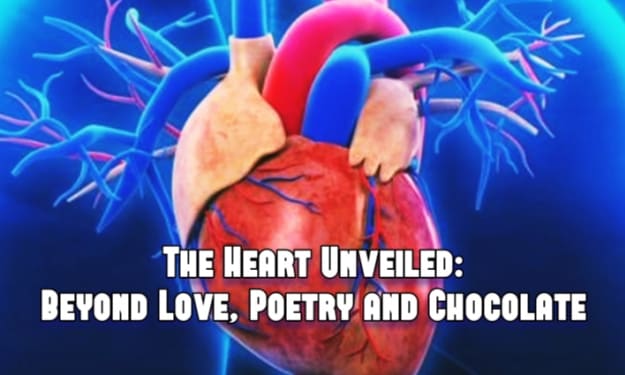
The Heart: More Than Just a Pump The heart, that throbbing, beating muscle, is arguably the most iconic organ in the human body. It’s the only organ with its own holiday and numerous mentions in songs. You’re unlikely to receive a love note adorned with a kidney or a spleen, or even a brain, despite its role in emotions. The Heart's Remarkable Functions While the heart performs essential tasks, like powering the circulatory system and transporting nutrients, oxygen, waste, heat, hormones, and immune cells throughout the body, it does not generate love or heartbreak. It’s not a poetic or emotional entity. In reality, the heart functions as a pump -- a robust, muscular pump that doesn’t concern itself with poetry, chocolate, or tears. Its primary role is maintaining pressure. Blood Pressure: The Heart's Balancing Act If you’ve ever used a squirt gun or opened a shaken soda can, you’ve seen how fluids move from high pressure to low pressure. The heart’s job is to maintain a similar pressure gradient by generating high hydrostatic pressure to pump blood out and creating low pressure to draw it back in. This pressure gradient is what we refer to as blood pressure, measuring the strain on your arteries as the heart circulates over five liters of blood at around 60 beats per minute. This amounts to about 100,000 beats a day, 35 million a year, and 2 to 3 billion heartbeats in a lifetime, a rhythm you can easily feel by taking your pulse. The Heart's Position and Structure For most people, the average adult human heart is about the size of two fists clasped together, a rare but accurate piece of trivia. The heart is a hollow, cone-shaped organ weighing around 250 to 350 grams, modest for such a vital workhorse. Though Americans often place their right hand over their left breast when pledging allegiance, the heart is actually located near the center of the chest, nestled in the mediastinum cavity between the lungs. It sits at an angle, with one end pointing towards the left hip and the other towards the right shoulder, positioning most of its mass slightly left of the midsternal line. The heart is encased in a double-walled sac called the pericardium. The tough outer layer, or fibrous pericardium, made of dense connective tissue, protects the heart and anchors it to surrounding structures, preventing it from bouncing around while beating. The inner serous pericardium includes an inner visceral layer, or epicardium part of the heart wall and an outer parietal layer. These layers are separated by a film of fluid that acts as a natural lubricant. The Heart's Inner Workings Within this sturdy casing lies the heart itself, which is composed of three layers: the epicardium, the myocardium, and the endocardium. The epicardium is the outermost layer, also known as the visceral pericardium, which provides a smooth, slippery texture. The myocardium is the thick, muscular middle layer responsible for the heart's powerful contractions. This layer is composed of cardiac muscle fibers that are connected by intercalated discs, enabling the rapid and coordinated contraction of the heart muscle. Finally, the endocardium is the innermost layer, a thin, smooth lining of the heart chambers and valves that ensures blood flows smoothly within the heart. The Heart's Chambers and Valves The heart is divided into four chambers: the right atrium, the right ventricle, the left atrium, and the left ventricle. The right atrium receives deoxygenated blood from the body through the superior and inferior vena cavae and pumps it into the right ventricle. From there, the right ventricle sends the blood to the lungs via the pulmonary artery for oxygenation. Once oxygenated, blood returns to the left atrium through the pulmonary veins, then to the left ventricle, which pumps it out to the body through the aorta. To regulate blood flow between these chambers and the major arteries, the heart has four main valves: the tricuspid valve, the pulmonary valve, the mitral valve, and the aortic valve. These valves open and close in response to pressure changes, ensuring that blood flows in one direction and preventing backflow. The Heart's Electrical System The heart's functionality is also governed by its intrinsic electrical system, which controls the timing of heartbeats. The sinoatrial (SA) node, located in the right atrium, acts as the heart's natural pacemaker, initiating each heartbeat and setting the pace for the heart rate. The electrical impulse generated by the SA node travels through the atria, causing them to contract and push blood into the ventricles. The impulse then reaches the atrioventricular (AV) node, which delays the signal slightly before sending it through the bundle of His and Purkinje fibers, leading to the coordinated contraction of the ventricles.
By Norden Lucas2 years ago in Humans
Artificial Intelligence in Healthcare
Artificial Intelligence (AI) is rapidly reshaping the landscape of healthcare, offering unprecedented capabilities in diagnosis, treatment planning, and patient care. Leveraging advanced algorithms and machine learning, AI systems are revolutionizing traditional medical practices by augmenting the capabilities of healthcare professionals and improving overall efficiency and accuracy.
By Joshua Onabor2 years ago in Humans
Health Care
Climate change is increasingly recognized as one of the most significant global health threats of the 21st century. Its impact on public health is multifaceted, affecting various aspects of human life and exacerbating existing health inequities. Understanding these impacts is crucial for developing effective strategies to mitigate and adapt to the health challenges posed by a changing climate.
By Joshua Onabor2 years ago in Humans
The Many Facets of Love: A Journey Through Emotion and Connection
Love is one of the most profound and multifaceted human experiences, touching every aspect of our lives and influencing our actions, thoughts, and well-being. It is a universal theme explored through literature, music, art, and philosophy, transcending cultural and geographical boundaries. This article delves into the various dimensions of love, from its biological roots to its emotional, psychological, and societal impacts.
By babatunde Oluwajuwon2 years ago in Humans
Embracing Mistakes: A Pathway to Growth and Success
Thomas Alva Edison was once inquired as to whether he had committed errors in his day to day existence. He answered, "On many times!" The examiner, shocked, then commented, "Then, at that point, you should not be exceptionally clever?" Edison's reaction was significant: "I might not have been extremely wise, yet committing endless errors has made me dramatically more brilliant!" This discourse embodies a strong truth about the idea of slip-ups and their part in our own and proficient development.
By MD.KAMRUL HOSEN2 years ago in Humans
Does a Quote ever hit you the wrong way?
The Quote read: You are keeping yourself from the life you want by feeding the life you don't want. While it seems simple or obvious, this quote disturbed me as I applied it to myself, my life, and my truest desires.
By Shanon Angermeyer Norman2 years ago in Humans
The strangest and rarest diseases in the world
Exploding head syndrome This is a syndrome that affects thousands of people around the world. The main symptom is the feeling of the head exploding while preparing to fall asleep without any warning signs. Most patients with this syndrome are over 50 years old but can also occur in teenagers.
By Ken Daklak2 years ago in Humans