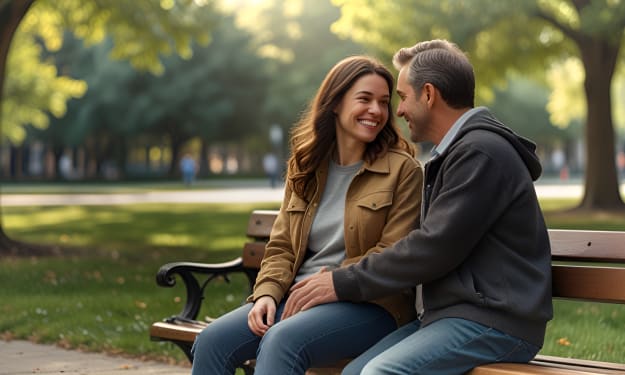
breakups
When it comes to breakups, pain is inevitable, but Humans thinks that suffering is optional.
Fake Love
Love is often seen as the most beautiful emotion, the force that binds hearts together. It is the foundation of deep connections, selfless giving, and unwavering trust. However, not all love is real. In a world driven by superficiality and self-interest, fake love has become an unfortunate reality. It mimics true love in appearance but lacks depth, sincerity, and commitment. Many people fall victim to fake love, only to realize later that it was all an illusion.
By Kuldeep Singh Shekhawat2 years ago in Humans
Signs She Is Pretending To Love You
There is real love in a partnership when there is trust, respect, and an emotional connection. That being said, not all relationships are based on real love. There are times when people stay in relationships because it's easier, safer, or better for them in some other way. If you feel like something isn't right, you might want to find out if she really loves you or is just acting. Here are some very clear signs that she's not really loving you.
By Relationship Guide2 years ago in Humans
Over thinking ruins happiness
Overthinking: How It Ruins Happiness and What to Do About It Overthinking can feel like a heavy weight pressing down on the mind. Imagine lying awake at night, replaying conversations and stressing over every word. This loop of thought can leave you exhausted and frazzled. Overthinking, defined as excessive pondering about situations, choices, or interactions, is a widespread issue in today’s fast-paced life. It affects many people, crowding their mind with doubts and fears. The truth is, overthinking is a major hurdle to happiness. However, it can be managed with daily effort and sensible strategies. The Science of Overthinking The brain responds to worry by releasing stress-related neurochemicals. This process can lead to a state of anxiety, making it tough to relax. According to research, about 30% of adults experience anxiety, much of which is connected to overthinking. Each thought can spin a web of doubt that drags you further into negativity. Cognitive biases fuel this cycle. Common patterns like catastrophizing (imagining the worst) or all-or-nothing thinking (seeing situations in black and white) can distort your reality. These biases create an endless loop of negative thoughts. Psychological studies show that these distortions can keep people trapped in overwhelming worry. Overthinking doesn't only affect the mind; it impacts the body too. Stress and anxiety can manifest as sleep disturbances, digestive problems, and even headaches. These physical symptoms only increase the feelings of frustration and helplessness. How Overthinking Impacts Different Aspects of Life Overthinking and Relationships Overthinking can poison relationships. If you analyze every interaction, you start to doubt your connections. You may fear rejection or misinterpret harmless comments. This can create unnecessary tension and distance from loved ones. Overthinking and Productivity When it comes to productivity, overthinking can be a significant roadblock. It’s hard to focus on tasks when your mind is racing with doubts. You may find yourself second-guessing decisions or procrastinating due to fear of making mistakes. This delay affects your performance and can hinder your goals. Overthinking and Self-Esteem The link between overthinking and low self-esteem is undeniable. Excessive self-criticism can lead to feelings of worthlessness. Constant comparisons with others create a downward spiral where you feel less capable, which only intensifies your worries. Identifying Your Overthinking Patterns Common Triggers and Situations Recognizing what triggers your overthinking is crucial. Stressful moments, uncertainty, or social gatherings often lead to spiraling thoughts. Take time to reflect on situations that make you feel anxious and develop a plan to cope. Journaling as a Tool for Self-Awareness Journaling can serve as a powerful tool to identify thought patterns. Write down your feelings and worries daily. This practice can help reveal what’s bothering you and how often these thoughts occur. Mindfulness as a Key to Detection Implementing mindfulness can assist in recognizing your thoughts without judgment. By observing your thoughts, you can distance yourself from them, reducing their grip on your happiness. Practical Strategies to Break the Cycle Cognitive Behavioral Therapy (CBT) Techniques CBT techniques can provide effective tools for managing overthinking. Cognitive restructuring helps challenge negative thoughts, while learning to replace them with more balanced perspectives is essential. According to mental health experts, this can significantly reduce anxiety. Mindfulness and Meditation Exercises Simple mindfulness exercises can redirect your focus away from overthinking. Try deep breathing or guided meditation. Resources like apps and online videos can help you get started. Engaging in Enjoyable Activities Diverting attention toward enjoyable activities reduces stress. Whether it's painting, hiking, or reading, finding joy can bring you back to the present and away from anxious thoughts. Seeking Professional Help When to Seek Therapy It may be time to seek therapy if overthinking disrupts your daily life. Signs include feelings of hopelessness, difficulty functioning at work or in relationships, and persistent anxiety. Finding a Qualified Therapist To find a qualified therapist, consider asking for recommendations from friends or looking online. Websites that list licensed professionals can also guide you. Benefits of Professional Intervention Therapy offers numerous benefits, including enhanced coping strategies and reduced anxiety. A professional can provide tools to help you navigate the overthinking maze and reclaim your happiness. Conclusion Overthinking can cloud your happiness, but recognizing its effects is the first step toward change. Key takeaways include understanding the science behind overthinking, identifying personal patterns, and implementing practical strategies to manage it. Take action today. Start journaling or exploring mindfulness techniques. Remember, breaking free from the cycle of overthinking is possible. Empower yourself with hope and take those first steps toward a happier life.
By Story silver book 2 years ago in Humans
Marianne Faithfull
Marianne Faithfull: A Life of Music and Resilience Marianne Faithfull is a famous British singer, songwriter, and actress. She became popular in the 1960s and is known for her unique voice, emotional songs, and dramatic life story. Over the years, she has faced many challenges, including health problems and personal struggles, but she always found a way to continue making music.
By Farhan Sayed2 years ago in Humans
Bernie Sanders
Bernie Sanders is a well-known American politician who has been active in U.S. politics for many years. He is famous for his progressive ideas and his fight for social justice. Sanders has served as a U.S. Senator from Vermont and has run for President of the United States twice.
By Farhan Sayed2 years ago in Humans
Kash Patel
Kash Patel is an American lawyer, national security official, and political advisor. He is best known for his work in the Trump administration, where he played an important role in intelligence, defense, and national security. Over the years, he has become a well-known figure in U.S. politics, especially for his involvement in government investigations and policies.
By Farhan Sayed2 years ago in Humans
A rekindling of friendship from heartbreak to hope. Content Warning. AI-Generated.
A Friend I Thought I'd Never Find I didn't mean to disappear. Being a young adult was the storm life blew me through. I felt like trash people used to discard because they could, without their feet even hanging over the edge of the dumpster first. I was nothing, no one—though she saw me. Everyone else? They broke me. I had been through hell in my relationship. The kind of abuse that strips you of everything, leaving you raw and exposed. I thought that after all the pain, things might get better. But then the world proved me wrong. The very community that should’ve been my refuge turned against me. They hurt me in front of my children, stole from me, broke into my home time and time again. And then, the worst thing I could imagine happened: they took my children from me. I had nothing. Nothing at all. No family, no love, no reason to keep going. I felt like I was nothing—just a broken piece of trash tossed aside. But the worst loss wasn’t just my family or my home. It was her. The one person who had never judged me, who had always seen my heart, not the scars I carried. Losing touch with her wasn’t something I ever wanted. But that night—the night the violence reached its peak—everything shattered. I had to leave. The authorities moved me to a safe place. For my protection, they cut me off from the world. I couldn't contact her. I couldn't tell her where I was. I was told to stay away; never return to the place where everything went wrong, the place where she lived. Years passed. Decades. Silence filled the space between us. And then, somehow I managed to get through to her. And when I did she said the things I longed to hear all my life: "No matter how far apart we are, I'll always be here." And she was. Until that Christmas night when life took her from me. I'd broken in ways I never knew possible the day she left me. She had been my anchor, the only person who had truly believed in me when no one else did. And when she was gone, I didn’t know how to pick up the pieces. I swore I would never trust anyone again. I stopped believing in friendship. For years, I closed myself off from the world. Because how could I trust anyone when the one person I trusted was taken from me? But then, one day, something happened out of nowhere. I was on my social media scrolling when suddenly, a name brought my heart to a standstill. Someone I never thought I'd hear from again. A message. A voice note. For the longest time, I didn't know what to do. But something propelled me to listen. He wasn't a stranger. I had met him a few years ago, through my husband. But life had pulled us in different directions, and we had lost touch. I was hesitant at first—scared, uncertain. But then I realized something: I liked him, not because of what he did or who he was, but because he made me feel heard. He didn't just talk to me; he listened. We shared so many things in common, so many thoughts that felt like they came from the same place. And slowly, I realized something I hadn’t dared to believe in a long time. I had found a friend. Not just anyone, but someone who felt like a part of me, someone I could talk to without hesitation, someone who accepted me as I was. Of course, I was careful. I’d learned the hard way to be cautious with who I trusted. Social media is full of scammers, people who try to deceive you. But this wasn’t that. I checked everything, double-checked, made sure he was who he said he was. And he was. We now talk for hours, sometimes till my voice becomes tired. And it's the most natural thing in the world. Because I can talk about anything with him—life, struggles, hopes, dreams, all the little things that somehow mean everything. I never thought I would ever find a friend like her again. But here I am, with someone who understands me in ways I never imagined possible. After losing my first friend, I swore I’d never believe in true friendship. I didn’t think it existed. But now? Now I know. Now I believe in it with all my heart. I never thought I’d say this, but I am lucky. And for the first time in a long, long time, I am truly, completely happy.
By Rakesh Professional2 years ago in Humans
How to Choose the Perfect Last-Minute Valentine’s Day Gift. AI-Generated.
How to Choose the Perfect Last-Minute Valentine’s Day Gift Valentine’s Day has a way of sneaking up on even the most organised among us. If you find yourself scrambling for a thoughtful gift at the eleventh hour, there’s no need to panic. A last-minute gift can still be meaningful, personal, and memorable if chosen with care and creativity.
By Mutonga Kamau2 years ago in Humans