advice
Dating, married, single, divorced, and more. Advice on the relationships you have in life. Dear, Humans..
What Real Love Feels Like: Signs You’ve Found the One
Real love is not the brief spark of a summer fling or the stormy passion that fades once the newness wears off. It is a steady, reassuring bond that deepens through shared laughter and hard-won agreements alike. While infatuation pulls you in with its whirlpool feeling, mature love remains calm, like a well-tended ember. It lets you show your flaws without fear, nudging you to grow rather than leaning on another person for completeness. When a partner champions your ambitions, celebrates your quirks, and still meets you as an equal, that mutual openness often points to something lasting.
By Olivia Smithabout a year ago in Humans
Echoes of Serenity.
I often wonder when it happened — the moment the world became so unbearably loud. Not just in the way cities hum with restless traffic, or the ceaseless scroll of breaking news, notifications, and digital voices, but in the relentless chatter inside our own heads. The noise that follows us from morning till night, reminding us of what we lack, what we should fear, and who we ought to be. I didn’t notice it until the day I stood on my apartment balcony, looking out over the city I once loved, and realized I couldn’t hear myself think. It was a late winter afternoon, the kind where the sky turns pale, and the air carries a kind of hushed melancholy. Far below, the world was moving — cars honking, street vendors shouting, hurried footsteps on concrete. But none of it felt real. It was as if I’d become a spectator to my own life, watching it unfold from a distance. I picked up my phone, half out of habit, half in search of some escape, and as I scrolled through endless images of perfection, crisis, tragedy, and distraction, something inside me quietly fractured. That was the moment I realized: I had forgotten what peace felt like. The Noise We Don’t Hear In today’s world, silence has become a luxury we no longer afford ourselves. From the moment we wake, the barrage begins — alerts, emails, demands, opinions, tragedies we can’t control but feel obliged to grieve. It’s a world that thrives on urgency, where resting feels like weakness and reflection is treated as a quaint indulgence. I wasn’t immune to it. Like so many of us, I’d built my days around productivity, my self-worth tethered to achievements and online validation. Every quiet moment was quickly filled with something — a podcast, a playlist, a conversation, a notification. I convinced myself it was staying connected. In truth, it was avoidance. Avoidance of my own restless mind. Avoidance of the uneasy questions that surface in stillness. Who am I without the noise? What do I truly want, when no one else is watching? I didn’t know anymore. A Whisper Through the Static It was my grandmother who saved me. Not in some grand, cinematic moment, but through a quiet conversation on a park bench. She was visiting for the first time in years, carrying with her the scent of jasmine and old paper. We sat in a small, hidden park near my apartment — one of the few places left untouched by billboards and city clamor. We spoke of simple things at first — tea blends, the stubborn cat that haunted her garden, the book she was rereading for the third time. But then she said something that struck me still: “The world will always be loud,” she murmured, watching a leaf spiral to the ground. “But you don’t have to be.” I looked at her, truly looked, and saw in her weathered face a kind of calm I’d forgotten existed. A serenity untouched by headlines and hashtags. She told me how, in her youth, the village she lived in had no electricity. The nights belonged to stars and the sound of crickets, and the days moved by the sun’s command. Life was not easier, but it was quieter. And in that quiet, people learned to listen — to themselves, to nature, to one another. I asked her how she stayed calm now, in a world so different from the one she’d known. She smiled. “I carry the old world inside me.” The Return to Quiet That night, I made a decision. I turned off my phone. Not just on silent. Not just on airplane mode. I powered it down completely. The initial panic was embarrassingly real — a sudden anxiety about what messages I might miss, what news might break, what moments I might fail to capture. It felt absurd how deeply I’d let this device dictate my emotions. I lit a single candle in my room. No music. No television. Just the soft, flickering glow and the steady hum of my own breath. The silence was deafening at first, as though every thought I’d suppressed came rushing back in a single, breathless tide. But then, something remarkable happened. The thoughts slowed. The tension in my chest began to loosen. The world beyond my window carried on — sirens in the distance, the occasional laugh from a neighboring apartment. But inside, a fragile calm began to bloom. I realized how long it had been since I’d sat alone with myself without distraction. How often I’d drowned out my own voice under the clamor of others. And in that fragile, unfamiliar stillness, I heard it — a small, steady echo of serenity. Not loud. Not demanding. But there. A quiet reminder that peace isn’t found in the absence of problems, but in the space between them. The Everyday Ritual Since then, I’ve built small rituals into my days. Nothing dramatic. No grand retreats to monasteries or life-changing declarations. Just ordinary acts of rebellion against the noise. A cup of tea in the early morning, phone untouched. Ten minutes watching the sunset without trying to photograph it. A journal by my bedside, filled not with plans but with stray thoughts, half-formed hopes, and gratitude for things as simple as the warmth of sunlight on my face. I’ve learned to savor silence. To seek it, not fear it. To understand that in quiet moments, we reconnect with the parts of ourselves the world tries to drown out. And no, the noise hasn’t stopped. The world remains restless, messy, often brutal. But I no longer let it dictate the rhythm of my heart. Serenity isn’t a destination. It’s a choice we make, moment by moment. To breathe. To listen. To remember who we are beneath the static. Echoes in Others What surprised me most was how contagious serenity can be. In softening my own presence, I noticed others doing the same. Conversations slowed. Eye contact lingered. Laughter came easier. I started leaving my phone at home during evening walks. Strangers nodded greetings. A little girl once handed me a daisy, unprompted. I spoke to an old man about the shapes of clouds. These small, unremarkable moments became anchors in my days, reminders that beneath the noise, humanity persists in gentle, beautiful ways. It isn’t perfect. I still get pulled back into the rush, the anxiety, the endless scroll. But now, I recognize it. I hear the noise for what it is — a distraction. And I return, again and again, to that quiet place inside myself where serenity echoes, faint but unyielding. The Whisper You Can Hear Too I don’t pretend to have it all figured out. The world is still loud. The problems remain daunting. But I carry with me my grandmother’s wisdom, the memory of that park bench, and the soft, steady truth: “The world will always be loud. But you don’t have to be.” And in choosing calm, we don’t just heal ourselves — we become echoes of serenity in the lives of others. A whisper of peace in a world lost to noise. Perhaps that’s enough. Perhaps, in the end, it’s everything.
By Muhammad Ilyasabout a year ago in Humans
The Sky's the Limit: The Tale of a Flight Attendant Impersonator. AI-Generated.
In a bizarre and audacious case, a man managed to travel for free on over 120 flights by impersonating a flight attendant. This extraordinary escapade raises questions about security, identity, and the lengths individuals will go to for adventure. The story of this wannabe flight attendant is not just one of deception, but also serves as a cautionary tale about the vulnerabilities present in the aviation industry. The Allure of Free Travel The opportunistic individual, driven by a quest for adventure and a taste for luxury, concocted a scheme to fulfill his travel dreams without footing the bill. By donning a flight attendant's uniform and possessing fake identification, he was able to blend in among the crew in various airports and airplanes. His charisma allowed him to navigate through restricted areas, garnering access to flights he had no right to board. His saga began innocently enough, highlighting the thrill of travel and the romantic allure of the skies. For most, the sky represents freedom, exploration, and endless possibilities. However, for this man, it became the backdrop for a law-breaking spree that would ultimately land him in serious trouble. A Game of Cat and Mouse Traveling undetected proved both exhilarating and risky. As he ventured from one destination to another, he reveled in the experiences of globe-trotting under the guise of a flight attendant. Though initially successful, the charade inevitably attracted the attention of security personnel and airline staff who noticed inconsistencies. The game of cat and mouse between the impostor and airport authorities unfolded, as his frequent appearances raised eyebrows and questions. How long could he maintain this elaborate deception before the web of lies unraveled? The Fall from Grace Eventually, authorities caught up with the man, leading to his arrest. The conviction that followed highlighted serious concerns about airport security protocols and the ease with which one can traverse these systems. An individual effortlessly posing as a flight attendant reveals vulnerabilities that could have far-reaching implications for passenger safety and operational integrity. The investigation into his activities sparked discussions within the aviation sector regarding security measures and the effectiveness of current procedures. It served as a wake-up call for many, urging a comprehensive review of access protocols in airports to prevent similar situations from occurring in the future. A Cautionary Tale for Adventure Seekers While many might view the story with amusement and wonder about the man’s audacity, it also serves as a reminder of the risks involved in bending rules for the sake of adventure. His actions may have initially brought him joy and excitement, but they ultimately led to serious consequences not only for him but also for airline security. This incident underscores the importance of upholding ethical standards, especially in systems that prioritize safety and trust. As airlines continue to evolve, it is vital to strike a balance between facilitating travel experiences and ensuring strict adherence to regulations that protect passengers and staff alike. Conclusion: Lessons in Deception and Consequences The escapades of this flight attendant impersonator tell a gripping story of adventure turned awry, raising essential questions about security, ethics, and human ingenuity. While his wanderlust and ambition to explore the world are relatable, the deceptive paths taken to achieve those dreams echo the serious implications of such choices. As the aviation industry continues to navigate safety challenges, stories like this remind us of the ongoing need for vigilance and responsibility. This tale of deceit serves as a prompt for reflection on the fine line between adventure and recklessness—a story that will resonate long after the flights have landed and the dust has settled.
By DigitalAddiabout a year ago in Humans
10 Habits Emotionally Intelligent Women Have That Rattle Emotionally Avoidant Men
10 Habits Emotionally Intelligent Women Have That Make Avoidant Men Squirm Have you ever wondered why some men practically sprint for the hills when a woman seems…well, balanced and self-aware? It’s almost as if their internal alarm blares' Danger!' Emotional Depth Approaching! and they can’t get away fast enough.
By Milan Milicabout a year ago in Humans
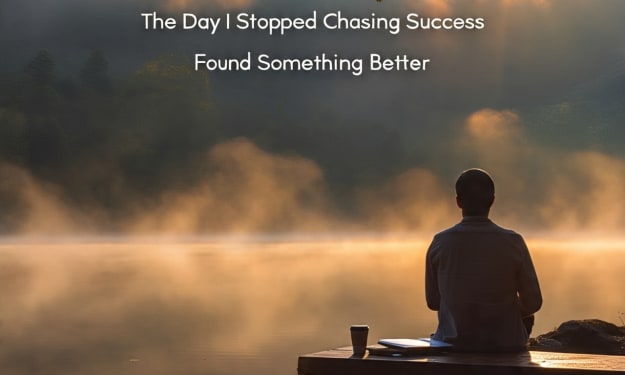
"The Day I Stopped Chasing Success and Found Something Better"
I woke up that morning with a knot in my stomach. My phone screen lit up with messages, reminders, and one glaring red notification: Deadline Missed. The client I’d spent three months trying to impress was pulling the plug. I had been working 60-hour weeks, skipping meals, losing sleep, and avoiding friends—all for this project. And now, with one missed email and a single misstep, it was gone. I sat on the edge of my bed, staring at the floor. I didn’t cry. I didn’t scream. I just felt… empty. Out of instinct more than anything, I grabbed my jacket and walked outside. It was early—just past six—and the sun hadn’t fully risen. The streets were still half-asleep, just like me. My feet led me to a nearby park I rarely visited, even though it was just a ten-minute walk from my apartment. The trail curved around a quiet lake, its surface glassy and undisturbed. I sat on a bench facing the water, trying not to think. No calendar, no Slack pings, no unread emails. Just stillness. That’s when I noticed an older man sitting on the bench a few feet away. He looked up and smiled gently. I gave a polite nod back, assuming that would be the end of it. But after a few minutes of shared silence, he said something I wasn’t expecting. “You look like someone who’s been chasing too hard.” I turned, surprised. “Excuse me?” He chuckled softly. “I used to wear that same face. Like you’re holding your breath and running uphill at the same time.” I laughed, not because it was funny, but because it was painfully true. “I just lost a big opportunity,” I said. “I’ve been trying to build something, and now it’s… just gone.” He nodded like he’d heard it a hundred times. “I used to be in finance. Built a team, ran a firm, worked nights, missed birthdays, all of it. Thought if I just got to the top, it would all be worth it.” I leaned forward, interested. “And was it?” He shook his head slowly. “Not the way I expected. I got there. I had the title, the money, the house. But I realized I’d become a stranger to my own life.” That hit harder than I wanted to admit. I stared out at the water. “So what did you do?” “I quit,” he said simply. “Started teaching at a community college. Made a lot less money. Had a lot more time. Started watching the sunrise again.” I let his words hang in the air. I didn’t know this man. I didn’t even know his name. But something about his presence felt steady—like he knew what was on the other side of the storm I was in. He stood to leave but paused. “You know, it’s easy to get caught chasing things that were never meant to be caught. Sometimes, stopping is the bravest thing you can do.” And with that, he walked off down the trail and disappeared around the bend. I sat there long after he left, thinking about what he said. That morning, I didn’t go back to my desk. I didn’t open my laptop. I went to a bookstore instead. I wandered through aisles, picked up a paperback I hadn’t read since college, and sat in the café with a coffee I actually tasted. That was the first day in years I didn't measure my worth by my productivity. In the weeks that followed, I made some changes. I didn’t quit my job—not right away—but I redefined how I worked. I started drawing boundaries, saying no to things I used to say yes to out of fear. I took walks in the morning. I called old friends. I even started writing again—something I hadn’t done since my twenties. And strange as it sounds, new opportunities came. Ones that matched who I was becoming—not the person I’d been trying to force myself to be. I never saw that man again. I don’t know his name. But I think about him often. The way he sat with quiet confidence. The way he reminded me that life doesn’t have to be a race. That morning, I thought I had lost everything. Looking back now, I realize it was the day I found something better.
By Muhammad Saad about a year ago in Humans
The Man Who Saved Me from Suicide Wasn’t Real—But He Changed My Life Anyway”
“The Man Who Saved Me from Suicide Wasn’t Real—But He Changed My Life Anyway” I met him the night I planned to end my life. It wasn’t a cry for help. There were no dramatic texts, no last letters, no messages scheduled to send. Just silence. Numb, quiet, terrifying silence. I had spent months drifting through the days like a ghost in my own life—smiling when expected, saying “I’m fine” like it was a mantra. Inside, I was unraveling. Every morning felt like waking up under a heavier weight, like someone was slowly turning up the gravity on my soul. That night, I made the decision. The final one. I didn’t feel fear. I felt... relief. The kind that comes when you finally stop pretending. And that’s when he spoke. Not with a shout, or a whisper, but with that calm authority that lives just beneath your chest when you know someone’s telling you the truth. “You don’t really want to die. You want to be seen.” I froze. I was alone in the room. Or so I thought. He stood in the doorway like he’d always belonged there—an older man, maybe late 50s, wearing a threadbare coat and eyes that had clearly weathered a thousand storms. I didn’t scream. I didn’t question it. Some part of me knew he wasn’t real—but he didn’t feel imaginary. He looked like someone my heart had created before my brain could protest. “Who... who are you?” I asked, barely above a whisper. “I’m the part of you that still wants to live,” he said. “You buried me, but I’ve been watching. And I’m not letting you go without a fight.” It sounds absurd, right? Like something from a dream. But I remember every detail: the gravel in his voice, the way he smelled faintly of tobacco and old books, the way he sat beside me like an old friend who never stopped believing in me—even when I had. For hours, we talked. About the loneliness I couldn’t name. The ache of feeling invisible in rooms full of people. The weight of being the “strong one” who everyone leaned on, while silently crumbling under the pressure. He didn’t offer platitudes. He didn’t try to “fix” me. He just listened. And in his eyes, I saw something I hadn’t seen in a long time—understanding. “Pain this big,” he said, “it needs a witness. Not a solution. Just someone to say, ‘Yes, I see it. And yes, it matters.’” When dawn broke through the window, something in me shifted. I wasn’t healed. But I wasn’t ready to die either. I was... curious. Curious about what life might look like if I stayed one more day. Then another. Then another. And just like that—he was gone. No dramatic exit. No fading into dust. One moment he was there, the next he wasn’t. Like he’d only come to deliver one message, and once I heard it, his work was done. I told a therapist about him months later, cautiously, like a confession. She didn’t laugh. She nodded. “Sometimes the psyche creates what it needs most,” she said. “Call it imagination. Call it a hallucination. Call it your subconscious trying to save your life. Whatever it was... it worked.” And it did. Because that night, I didn’t die. Instead, I began to live. Not all at once. Healing isn’t linear. Some days, the darkness still lingers like a shadow at the edge of my vision. But now, I know it’s not the whole picture. Now, when I feel myself slipping, I remember him. That man who wasn’t real—but who loved me enough to show up anyway. I imagine him sitting beside me again. Saying what I can’t say out loud. “You’re not broken,” he says. “You’re becoming.” --- If you're reading this and you're in that place—the place where it feels easier to disappear than to stay—this is me, sitting beside you. Saying: I see it. I see you. And you matter. Don’t go. Not yet. There’s a version of you waiting to be met—a version who looks back and says, “I’m so glad you stayed.” Let’s make it one more day. Then another. And another. Until the light finds its way back in.
By Soul Draftsabout a year ago in Humans