advice
Dating, married, single, divorced, and more. Advice on the relationships you have in life. Dear, Humans..
The Politics of Ghosting
The Politics of Ghosting On care, dignity, and modern dating We can, for any number of reasons, feel justified in withholding care from others, choosing instead to prioritize only ourselves. For much of my life, I've leaned in the opposite direction — neglecting my own needs while centering the needs of others. In an effort to recalibrate, to land in that radical middle space, I've sometimes swung too far the other way, treating self-care as if it were in conflict with care for others. These days, I'm working to right-size care in my life — making space for both self-respect and mutual responsibility.
By Burhan Afridiabout a year ago in Humans
Authentic Connection: Effort or Being?
I've come to a profound realization: none of the people who are truly good to me became my friends because I tried to make them so. Instead, we were drawn to each other naturally, connecting with ease as soon as we met. I now understand that no relationship in this world can be forced. If you attempt to gain affection by sacrificing your true feelings, you are destined to fail. People who genuinely like me don't need me to force myself to do anything; they simply want me to be free and happy.
By Emily Chan - Life and love sharingabout a year ago in Humans
Thin Air
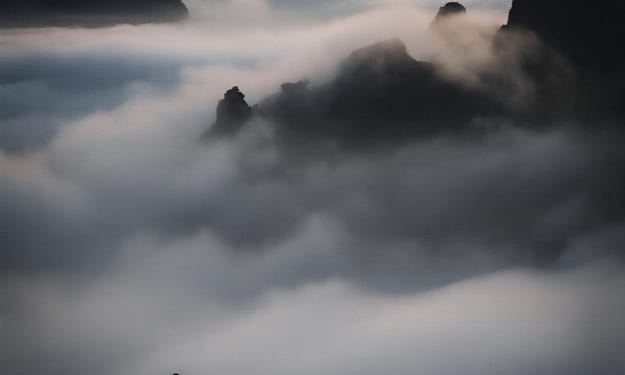
The fog clung to the mountainside like breath on cold glass. Lila’s boots crunched on loose gravel as she climbed higher, each step an effort in the thinning air. Behind her, the valley stretched in quiet shades of green and gray, but ahead—only mist, white and swallowing. She stopped by a crag of stone, catching her breath, and looked back. No one followed. Just like she’d planned. For the last hour, the only sound had been the rasp of her own breath and the occasional caw of a distant crow. But the silence wasn’t comforting. It pressed in, heavier than the pack on her back. Lila had grown up on this mountain. Her father used to bring her here in the summers, leading her along goat trails and whispering stories about the wind spirits who lived in the cliffs. He said the mountain remembered everything—every footstep, every secret. As a child, she’d believed him. She hadn’t been back since the accident. She found the old cabin just beyond the ridge, half-swallowed by overgrowth and time. Its slanted roof had caved in at one end, and the door hung loosely on rusted hinges. She pushed it open, the creak echoing too loudly in the stillness. Inside, the air was stale, thick with dust and old pine. But everything was just as it had been. The metal lantern on the table. The cracked ceramic mug. And the small, black leather-bound journal tucked under the floorboard—a hiding spot she hadn’t thought about in over a decade, but somehow remembered with painful clarity. She sat on the wooden bench, her fingers tracing the cover of the journal. Her father's handwriting waited inside. Not letters or stories, but entries—daily logs filled with weather patterns, trail notes, and… that last summer. The one before the fall. Lila turned the pages slowly until she found the final entry. > July 16 “Lila followed again today. She’s too curious. I told her not to ask questions, but she keeps poking around near the old mine shaft. I warned her it’s dangerous. She doesn’t know the truth yet. God help me.” Her chest tightened. She remembered the mine shaft—long sealed and forgotten. Or so she’d believed. The truth. That was what had eaten at her for years. The way her father’s stories had changed. How he’d grown quiet and strange. The accident had only deepened the mystery. She had fallen. That part was true. But someone had been there. Someone had grabbed her hand—and then let go. Her father said it was an accident. A slip. But the guilt in his eyes had said otherwise. The fog outside thickened, brushing through the broken windows like fingers. Lila stood, taking the journal with her. She walked out toward the cliff’s edge. The mine wasn’t far. Just beyond the clearing, through a trail nearly swallowed by moss. It had been sealed with wood and stones, a crude blockade that dared anyone to ask why. Lila dropped to her knees and began to pull it apart. The air grew colder. The silence deeper. Behind her, branches cracked. She turned sharply, heart thudding. “Lila.” The voice was low, familiar. She hadn’t heard it in years. Her father stepped through the mist, older, thinner. His face was the same mixture of strength and sorrow she remembered. “You shouldn’t be here,” he said. “I need to know.” He looked past her, at the opened mine entrance, then at the journal in her hands. “You read it.” “I did.” His shoulders slumped. “It wasn’t supposed to happen like that. I thought if I kept it quiet… buried it…” His voice trailed off. “You let me fall.” “I tried to save you.” He stepped closer. “But if I’d told you what was down there… what I found…” Lila stared at the darkness within the shaft. “Then tell me now.” He hesitated, then said, “It wasn’t gold or coal. It was something else. Something old. The locals used to say it whispered. That it knew who you were.” She remembered the cold that had rushed over her the day she fell. The voice that had called her name—not her father’s. “You heard it too.” He nodded. “And you tried to silence it.” “I had to. No one would’ve believed us.” Lila looked into the dark and felt it stir again—something ancient, watchful. It hadn’t forgotten. Neither had she. She took a step toward the shaft. “Lila—don’t,” her father warned. But she had already made her choice. In the thin air, where truth and silence could no longer live side by side, she stepped into the dark. And the mountain remembered
By Muhammad Saad about a year ago in Humans
Inequality in Society: A Personal and Global Reflection. AI-Generated.
Inequality, in its many forms—economic, social, racial, or gender-based—casts a long shadow over our world. It’s not just numbers on a spreadsheet; it's lives affected, opportunities muffled, and dreams deferred. In this article, I’ll share not only facts and stories but also a personal anecdote—yes, even vegetables get to star—because understanding inequality becomes clearer when we ground it in everyday experiences. 1. What Inequality Looks Like Today 0-1Globally, the richest 1% now own more wealth than the rest of the world combined . 697-0In the G7 alone, the U.S. leads with the highest income inequality (Gini coefficient of 0.434), while France is far more equal with 0.326 . These gaps aren’t abstract—they reflect disparities in education, healthcare access, political influence, and even life expectancy. 856-1Gender inequality also remains pervasive. Girls around the world still receive less education and more unpaid labor, with legal equality for women projected to take centuries more without real effort . 2. Why It Hurts Us All 1221-0Harvard philosopher T. M. Scanlon outlines four foundational reasons society should tackle inequality : Compassionate justice: Even small sacrifices from the wealthy can create massive improvements in poorer lives. In extreme cases, this can translate into life and death. Social stability: Persistent gaps breed resentment, eroding trust, and increasing political extremism—something already visible in modern democracies. 1378-2Economic inefficiency: When opportunity is hoarded, innovation suffers. As economist Jason Furman highlighted, middle-class stagnation hinders overall productivity . Undermining democracy: Wealthy individuals and corporations wield grossly disproportionate power, steering policy away from the collective good. 3. A Vegetable Tale A few years ago, I volunteered at a community urban garden in my city. The amazing thing wasn’t the tomatoes or the kale—it was who tended them. Each morning, neighbors of very different backgrounds converged. Some arrived on bicycles straight from office jobs, others on foot after a long shift at a local factory. All working, all hopeful. I once overheard someone joke, “This zucchini is like inequality—some of us get more seeds to plant than others.” But that zucchini became a lesson: even when resources are shared at eye level—sunlight, soil, seeds—external factors (time, knowledge, access) lead to uneven harvests. It reminded me that structural inequality often trumps good intentions. Even when systems aim for fairness, lived realities still separate those who flourish from those who merely survive. 4. The Deep Roots of Inequality 1903-4Inequality isn’t incidental: it is systemic. Race and wealth gaps have historic roots in colonialism, discriminatory laws, and persistent segregation. According to Investopedia, White families in the U.S. hold many times the assets of Black and Hispanic families—and that gap has worsened since the Civil Rights era . 3280-0On top of that, pandemic-era impacts were not equally shared. Studies show that COVID hit low-income and minority communities far harder, both health- and wealth-wise . 5. Solutions That Work Addressing inequality requires multi-layered action: 1. 3482-1Tax and fiscal reform: Progressive taxes on capital gains, wealth, and inheritance can redistribute resources to public goods. The UK’s report suggests aligning capital gains with income tax to help close the gap . 2. Universal education access: Early childhood programs, affordable quality schooling, and lifelong learning help level the playing field. 3. 3810-1Labor-rights and living wages: A living wage, secure contracts, and union protections not only support individual families but invigorate broader economic growth . 4. Targeted social policies: Benefits like universal child allowances and affordable housing can lift vulnerable populations strongly and quickly. 4156-1Countries like India, with a relatively low Gini coefficient (around 0.255), show that more equal income distribution is achievable—but perceptions, fueled by regional and societal contrasts, remain critical . 6. Why We Should Care 4536-0Inequality corrodes social trust and cohesion. Julian Richer warns that unchecked disparities could push voters toward extremist politics . The pandemic underscored this: when public health risk is uneven, none of us is safe. Moreover, inequality erases potential. A child growing up in poverty, without nutrition, education, or support, is likely to remain trapped—not from lack of will, but due to circumstances. 7. A Garden of Hope Returning to my garden: by the end of the season, I witnessed thriving produce and community bonds. Yet, I also saw some beds outperforming others, due to experience, tools, or simply time. We countered by sharing knowledge, seeds, and compost. That simple act—neighbors helping neighbors—mirrors the bigger picture. Policies can only go so far. True change happens when we care for each other, planting seeds of fairness wherever we can. 8. Final Thoughts Inequality is not a statistic—it’s a lived experience that touches families, neighborhoods, and nations. But within this challenge lies an opportunity: to build communities that put shared well-being front and center. By reforming policies and nurturing empathy—whether through urban gardens or social investments—we grow a future where everyone has a chance to thrive, not just survive.
By Sherooz khanabout a year ago in Humans
Aries Woman and Cancer Man Compatibility Score. AI-Generated.
The relationship between an Aries woman and a Cancer man is a fascinating mix of fire and water, assertiveness and sensitivity, boldness and caution. On the surface, these two zodiac signs seem like complete opposites. Aries, ruled by Mars, is a fiery, action-oriented leader who thrives on independence, excitement, and new challenges. Cancer, ruled by the Moon, is a deeply emotional, nurturing, and protective soul who craves security and emotional bonding.
By Inspire and Funabout a year ago in Humans
The Dangers of Depression
There are definite dangers associated with depression. It can affect nearly all ages, with some groups and demographics being more susceptible than others (women are more likely to develop depression than men, for example, and teens are said to be more prone to depression than adults). Depression can even be fatal, warn medical professionals; and it's not just the disorder that poses risks. Medications can also present their own list of risky side effects.
By LaMarion Zieglerabout a year ago in Humans
The Limerence or love, or being in love?
In love, illusion, or perhaps infatuation—these two or three states can truly multiply in our way of being, feeling, and experiencing what is good. It is good to experience all of this, but also to be aware and observe these nuances in our own behavior and how we deal with them, or to notice where the stimulus was strong enough to bring us back there, even for a moment. This is not dangerous, nor is there anything to fear if you are on the path to healing, and in this world full of mental illness and unhealed people, it is quite easy to get stuck or trapped in this state. What's more, the narcissists, sociopaths, and psychopaths who haunt us will easily lead us there, simply by functioning in the way they really planned to draw us in. The danger arises when we do not heal this within ourselves, do not notice it, or do not allow it to go away naturally, and we do not wait but rush things, rush the meeting, rushing into love, all without really getting to know the person or perhaps never reaching that point. The most important thing is to practice gestures and movements of self-awareness, because this is the easiest and most natural way to expel those behaviors that may ultimately prove positive, giving us a creative burst that will simply make them disappear from our system once and for all or for a while, and if we notice that they are mainly caused by abuse in everyday life, stress, and the need to escape, we can only survive this by slowing down our active and more than very active neurons will want to explain everything quickly, but when we look at ourselves and slow down, we will notice that something is wrong with one of our desires or the pace is too fast, or we are simply paying too much attention to this person without having a deeper connection with them, which is a warning sign to stop and think about it. As a highly sensitive or empathetic person, you may feel limerence towards this person, which is a kind of threat because you may feel it more deeply and strongly, and that's when you may notice that this person's energy carries something that your body can no longer cope with or is simply unable to bear, and it is always better to call it off before you test yourself further and decide to go for it, unless you are not a highly sensitive person, you can try, but you may well regret it later. The signs that highly sensitive people feel when they are overwhelmed by all this are headaches and tension in the body, and all of this will be sudden, intense, and abnormal, and you may notice a pattern of such behaviors or reactions of your body and mind, especially in the case of some people who may appear out of nowhere for the first time or reappear in your life, remembering you after very short conversations or contacts, which mostly did not go well and often ended in a toxic argument because gaslighting occurred. Another type of limerence is when you haven't met the person yet, but you create a fantasy without even knowing if the person is still alive. Narcissists are great at creating this kind of romantic obsession, but this obsession can be passed on to links that highly sensitive people can read, and it will certainly cause chaos in their lives. This is the moment when you are put to the greatest test, because in most scenarios, limerence does not come from living in a comfort zone, but from living every day in a war zone, without the opportunity to rest, be yourself, and find peace, so it can easily get to you, and most of them choose it for life because they will not have to face it in reality. At the same time, highly sensitive people who are very aware and very sensitive to all these emotions can easily become trapped by such an obsession with someone, especially if that person is lonely or has a more difficult life than others. For narcissists, it is often a lifelong journey because they are not willing to heal from trauma and so on, they prefer to inflict it and provoke it, so it is a losing game, but highly sensitive and empathetic people who become more aware of it find it easier to deal with over time and laugh it off with ease. People who heal themselves really discover more peace, more freedom, more relaxation, and a more real presence in the present moment in their lives, because this can happen to people who are already in a relationship, it can lead to divorce, separation in so many cases, it really does happen, because if left untreated, it will be permanent and will repeat itself over and over again, so it is often good or better to write or creatively express yourself through poetry, song, music, painting, dance, or in any other way, to finally let go and see or feel or simply regain true peace, true being, and you will notice that this experience in the end, it wasn't so bad.
By Antea Lumina Kala Matylda about a year ago in Humans
How to Love Without Attachment
I used to believe that loving someone meant holding on tightly—like gripping the edge of a cliff, fingers burning, refusing to let go no matter how painful it got. I thought love was about giving your everything and expecting the same in return. And if it didn’t come back the way I imagined, I called it heartbreak. But over the years, through one gentle loss and another sharp goodbye, I came to learn something different—something quieter, deeper, and infinitely more freeing.
By From Dust to Starsabout a year ago in Humans