advice
Dating, married, single, divorced, and more. Advice on the relationships you have in life. Dear, Humans..
What if Your Toughest Critic Isn't Them, But You?
What often tortures us isn't the circumstances themselves, but how we interpret them. I still remember in my first few years in the workplace, any criticism or advice from colleagues, supervisors, friends, or even my partner would trigger a very strong emotional reaction in me. I'd think to myself, "I've worked so hard, why can't I get 100% affirmation?"
By Emily Chan - Life and love sharingabout a year ago in Humans
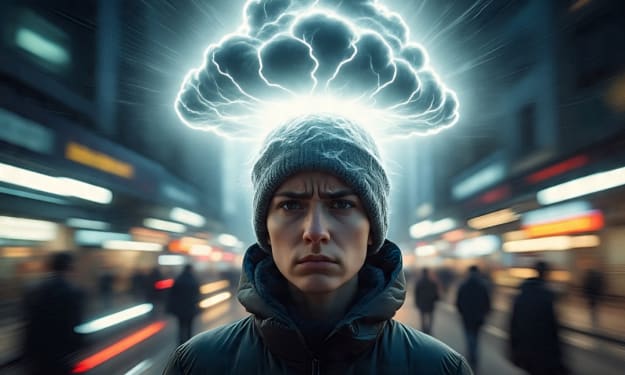
Unmasking Anxiety: Understanding the Modern Face of a Hidden Epidemic
Anxiety has always been a part of the human experience—a natural reaction to stress, danger, or uncertainty. But in 2025, it's clear that anxiety has transformed from an occasional emotional response into a widespread, chronic epidemic. Nearly 1 in 3 adults worldwide now report experiencing significant anxiety symptoms, according to the World Health Organization, and among teens and young adults, that number is even higher. This surge in anxiety isn't just a result of people being "more open" about mental health. According to neuroscientist Dr. Lea Kwon at Stanford University, the very structure of modern life has shifted the brain's stress systems into overdrive. "Humans were not built for constant stimulation, digital comparison, and the 24-hour news cycle," Dr. Kwon explains. "We’ve created a world that continually triggers our amygdala—the brain's fear center—without giving our nervous system a chance to recover." In previous generations, anxiety was typically tied to specific, identifiable threats: public speaking, job interviews, or dangerous situations. Today, however, anxiety often arises from more diffuse sources—constant exposure to social media, economic instability, climate concerns, and a lingering post-pandemic unease. Researchers have coined this new form of anxiety as "ambient anxiety"—a persistent, low-grade sense of dread that doesn’t always have a clear source. It lingers in the background like static, wearing down mental resilience over time. For many, it manifests in physical symptoms: chest tightness, insomnia, digestive problems, and even panic attacks. Twenty-three-year-old Amara Jacobs, a graduate student in New York, knows this feeling all too well. "There are days when nothing is wrong, but I wake up with my heart racing," she says. "It’s like my body thinks there’s a lion in the room, but there’s not. Just deadlines and notifications." Science is working hard to catch up. In 2025, researchers have made breakthroughs in understanding the biological roots of anxiety. Using advanced brain imaging, scientists have discovered new patterns in the brain’s default mode network—a system involved in self-reflection and rumination. In anxious individuals, this network appears to be hyperactive, suggesting that anxiety may stem more from how we process thoughts than from the thoughts themselves. This insight has led to a wave of new treatments beyond traditional therapy and medication. One promising avenue is neurofeedback, a non-invasive method where patients learn to regulate their brain activity through real-time feedback. In clinical trials, patients reported a 40–60% reduction in anxiety symptoms after just a few weeks. Meanwhile, mental health apps have become more sophisticated, using artificial intelligence to track patterns in mood, sleep, and behavior. These tools can now alert users to early signs of rising anxiety—before a panic attack hits. "It’s like having a therapist in your pocket," says Dr. Kwon, who helped design one such app. But while technology offers support, experts caution that it can also contribute to the problem. Social media, in particular, has been linked to increased anxiety, especially among teens. The constant scroll of highlight reels, filtered perfection, and doom-laden news creates a relentless feedback loop of comparison and fear. "One of the best things people can do for their mental health is take breaks from their screens," says therapist Jordan Lively, who works with adolescents in Los Angeles. "Digital detox isn't just a buzzword anymore—it’s survival." At the same time, society is shifting its perception of anxiety. What was once stigmatized is now more openly discussed in schools, workplaces, and families. Celebrities, athletes, and influencers are speaking out about their struggles, creating a culture of openness that helps normalize seeking help. "Anxiety is not weakness," says Amara. "It's a sign that your body and mind are trying to protect you. Understanding that changed everything for me." Looking forward, the goal is not to eliminate anxiety entirely—after all, it serves a purpose. Instead, experts emphasize building emotional resilience and creating environments that support mental well-being. Schools are introducing mindfulness programs. Workplaces are rethinking productivity culture. Cities are investing in green spaces, knowing that access to nature lowers anxiety levels. And most importantly, individuals are learning to recognize their triggers and regulate their emotional responses. The story of anxiety in 2025 is complex, but it’s also hopeful. With new knowledge, better tools, and growing empathy, we're learning not just how to treat anxiety—but how to live with it in healthier, more compassionate ways. And perhaps, in unmasking it, we also begin to unmask ourselves.
By Muhammad Saad about a year ago in Humans
A Journey Beyond Death: The Haunting Message of a Woman Who Died for 27 Minutes
In a remarkable tale that intertwines the concepts of life, death, and the mysterious experiences that may occur in between, the story of a woman who reportedly died for 27 minutes before returning to life has captivated many. Her journey and the poignant message she left behind have sparked discussions about the afterlife and the human experience of death. The woman at the center of this story, who has chosen to remain anonymous, experienced a sudden medical crisis that led to her cardiac arrest. During those harrowing 27 minutes when her heart stopped beating and her brain ceased functioning, she journeyed into what some might describe as the afterlife. Though her experience in this state remains largely a mystery, it is what happened when she returned to consciousness that has resonated deeply with her family and friends. Upon awakening, the woman was disoriented but soon composed herself enough to grasp a pen. In an almost instinctive manner, she scribbled a message on her palm: a series of symbols and letters that were both cryptic and haunting. The message has since been a focal point for discussions about near-death experiences and what they might reveal about the human condition. Many who have had similar near-death experiences report sensations of peace, bright lights, or encounters with loved ones who have passed away. Some even claim to have received guidance during these moments, influencing their life choices upon return. This woman’s message adds another layer to those accounts, prompting intrigue and curiosity from psychologists, spiritual leaders, and the public alike. The dichotomy of life and death has been a subject of human inquiry for millennia, permeating cultures, religions, and philosophies. From ancient texts to modern research, people have sought to understand what happens after we take our final breaths. The woman’s experience raises pertinent questions that resonate with these historical inquiries. What messages do we carry into the beyond? What do they say about our life experiences, beliefs, and connections to others? This story also shines a light on the subject of life after death within contemporary society. Depending on individual beliefs, interpretations can vary widely, ranging from complete skepticism to profound spiritual insight. For many, the idea of an afterlife provides comfort, while for others, it remains a philosophical question without definitive answers. Family and friends of the woman gathered after her experience to discuss what her handwritten message could mean. Some believed it to be a manifestation of her subconscious thoughts or unresolved issues that she needed to confront, while others viewed it as a sign, perhaps a glimpse into something greater than our everyday lives. The opinions vary, illustrating how personal and unique the interpretation of such experiences can be. Experts in the field of psychology suggest that near-death experiences, including the one this woman had, often lead to significant changes in one’s outlook on life. Survivors may develop a greater appreciation for relationships and time, deepening their connections with loved ones. This narrative reinforces the notion that, regardless of the scientific explanation, such experiences can profoundly affect the living. Furthermore, the woman's haunting message encourages deeper conversations about death itself—how we cope with it, how it shapes our interactions with each other, and how it ultimately guides our lives. Many people living with terminal illness or personal loss benefit from exploring these ideas together. Sharing personal stories may provide solace, whether through discussions about the afterlife, memorializing those we have lost, or simply sharing our hopes and fears. In examining the implications of the woman’s experience and her message, one can’t help but think of life’s fragility and the profound questions that linger in the shadows of mortality. What truly defines our existence? Is it the connections we forge? The love we give and receive? The memories we leave behind? These questions echo the sentiments shared by the woman upon her return—perhaps revealing that the connections we hold dear truly transcend life itself. As society continues to explore the realms of consciousness, spirituality, and the nature of existence, stories like this one ignite the collective imagination. They push us to ponder our beliefs and confront our understanding of life and death. Whether viewed through a scientific lens or a spiritual one, this woman’s fascinating experience reminds us to cherish our lives, foster connections, and remain open to the mysteries that lie ahead—both in life and beyond it. In conclusion, the haunting message scribbled by a woman who journeyed into the unknown serves not only as a tale of resilience but also as a catalyst for deeper thought and conversation about life's ultimate questions. Through shared experiences, we can find unity, understanding, and perhaps even comfort in the mysteries that await us all.
By DigitalAddiabout a year ago in Humans
The Woman and Her Role in a Man’s Life: Multidimensional Impact and the Consequences of Male Singleness
Introduction The role of women in the lives of men has been a subject of profound significance across cultures, epochs, and disciplines. Women have historically been recognized not only as companions and nurturers but also as pivotal contributors to the psychological, emotional, social, and physical well-being of men.
By Stefano D'angelloabout a year ago in Humans
Aries Woman and Aquarius Man Compatibility Score. AI-Generated.
When the fiery Aries woman meets the free-spirited Aquarius man, sparks are sure to fly—both figuratively and literally. This is a relationship built on intellectual stimulation, adventure, and mutual respect for individuality. Aries, ruled by Mars, is a sign of passion, courage, and impulsiveness, while Aquarius, ruled by Uranus and Saturn, is innovative, eccentric, and deeply idealistic. Their combination of fire and air can fan into a blazing romance or be swept away by too much unpredictability, depending on how well they balance freedom and intimacy.
By Inspire and Funabout a year ago in Humans