advice
Dating, married, single, divorced, and more. Advice on the relationships you have in life. Dear, Humans..
The Great Coffee Spill of Room 204
The Great Coffee Spill of Room 204 How One Caffeine Catastrophe United an Office, Ruined a Laptop, and Made Carl a Legend It was a Tuesday—unremarkable in every way. The kind of day where the office hums with fluorescent light, passive-aggressive Slack messages, and the distant wheeze of an overworked HVAC system. Room 204, the largest conference room on the second floor of Keystone & Bell Marketing, was hosting the weekly all-hands meeting. Carl was not typically a central figure in these meetings. A quiet, agreeable guy from IT, Carl usually sat near the back, sipped his oversized travel mug of Colombian dark roast, and nodded along as department heads buzzed through their updates. But on that particular Tuesday, fate, gravity, and caffeine had other plans. The meeting had just hit peak tedium. Janice from HR was explaining a new PTO tracking system when Carl, adjusting his chair, misjudged the space between his mug and the edge of the table. The cup teetered—everyone saw it—then toppled. What happened next became company legend. The mug hit the table with a loud clunk, flipping onto its side. A tidal wave of hot coffee erupted, arcing like a caffeinated comet across the polished wood. The brown liquid flew in glorious slow motion, dousing Janice’s spreadsheets, splattering Phil’s new white sneakers, and—most critically—cascading over the edge of the table and directly into the open laptop of the VP of Sales, Denise. There was a gasp. Then silence. Then the unmistakable sizzle of liquid meeting electronics. Denise stared at her screen, blinking rapidly. The room waited. Sparks flickered from the USB ports. The laptop let out a feeble beep and died. Carl froze. His hands hovered mid-air like he was trying to reverse time. “I—I’m so sorry,” he stammered, face flushing tomato red. Denise stood slowly. She looked down at her ruined laptop, then at Carl. Everyone expected an explosion. But then, something incredible happened. She laughed. A short, surprised burst at first. Then a full-bodied, head-thrown-back cackle that echoed off the beige walls. “Well,” she said, wiping her eyes, “that’s one way to end a meeting.” The tension shattered. People chuckled, then erupted into applause. Carl, still mortified, gave a weak bow. What no one could have predicted was what came next. Denise’s laptop had been a beast—a seven-year-old dinosaur with an attitude. “Honestly,” she said later that day, “I think Carl did us all a favor.” Turns out, she'd been meaning to upgrade for months but had never gotten around to it. Carl’s spill was the final push she needed. But the spill did more than kill a computer. It broke the ice in an office that had long been siloed by departments and deadlines. For the first time in months, people were talking—not just about work, but about each other. Someone made a meme of the spill, photoshopping Carl’s face onto a superhero diving to save the laptop. Someone else brought in mugs labeled Team Carl. By Friday, the office had declared it “Caffeine Casual Day,” and Carl arrived to find a new travel mug on his desk with the inscription: The Legend of Room 204. HR even invited him to co-host the next company trivia night. “Do you realize what you did?” Phil asked Carl at the coffee station the following Monday. “Ruined Denise’s laptop?” “No. You brought us together, man. That room hasn’t laughed like that in a year. You spilled more than coffee—you spilled the tension.” Carl blinked. “That might be the cheesiest thing I’ve ever heard.” “Still true.” After that, things really did shift. Collaboration across teams improved. People started eating lunch together again. Denise got her new laptop—and insisted Carl be the one to set it up, grinning the whole time. They even let him name the Wi-Fi network for the room. He called it: Café 204. The moment became a rallying point, a company in-joke that reminded everyone not to take things too seriously. And Carl? He didn’t let it go to his head. He was still Carl from IT. Still quiet. Still sipping coffee, though now from a spill-proof mug. But if you asked anyone on the second floor what started the culture shift at Keystone & Bell, they’d all say the same thing. It was the coffee. It was the laptop. It was the fall of Carl’s mug in Room 204. And the rise of a legend.
By Muhammad Saad about a year ago in Humans
Taurus Woman and Libra Man Compatibility Score. AI-Generated.
When the grounded Taurus woman meets the charming Libra man, a fascinating dynamic is born. She is steady, loyal, and values simplicity, while he is graceful, diplomatic, and obsessed with harmony. Together, they form a pair that is often aesthetically pleasing, emotionally layered, and at times, surprisingly challenging. Both Venus-ruled, they share a love for beauty, luxury, and romance—but express it in very different ways. Can earthy sensuality blend with airy idealism? Let’s take a deeper look.
By Inspire and Funabout a year ago in Humans
When the World Quietly Ends: Three Invisible Moments That Change Everything
The world doesn’t always end with explosions. Sometimes, it ends with silence. With inboxes that stay empty. With phone calls that never come. With a seat at the dinner table that’s been vacant for so long, no one remembers who used to sit there.
By Kamran Zebabout a year ago in Humans
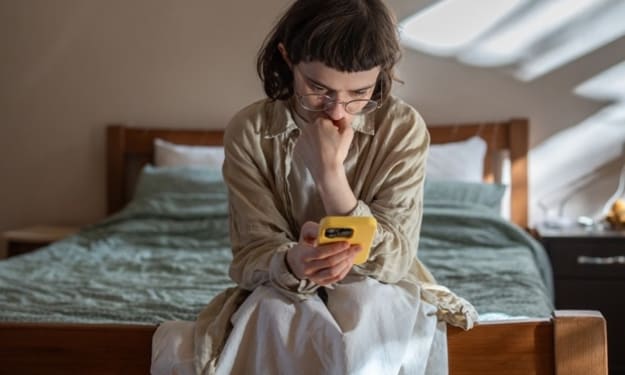
How Much Does Online Negativity Really Affect Your Mind?
In a world where much of our lives play out online, from casual scrolling on social media to posting opinions in forums or sharing photos with friends, one thing is hard to avoid — online negativity. Whether it comes in the form of hateful comments, passive-aggressive replies, or outright bullying, the internet can often feel like a harsh, unforgiving place. But how much does this negativity actually affect your mind? The answer is more significant than most people realize. While the internet was once seen as a space for connection and sharing, it has increasingly become a battleground of opinions, criticisms, and personal attacks. Research now shows that this digital hostility doesn't just hurt feelings — it can have real psychological consequences. One of the most common forms of online negativity is cyberbullying. Unlike traditional bullying, which happens face-to-face, cyberbullying can occur at any time, follow people into the safety of their homes, and remain visible for others to see. Studies have linked cyberbullying to increased levels of depression, anxiety, low self-esteem, and even suicidal thoughts, especially among teenagers and young adults. But even less direct forms of online negativity — like reading hateful comments or being exposed to toxic conversations — can have an emotional impact. According to psychologists, repeated exposure to hostile content online can trigger stress responses in the brain. These responses include increased cortisol levels, disrupted sleep, and elevated heart rate, all of which are associated with chronic anxiety and emotional burnout. Social media platforms, where likes and comments can feel like personal validations, are particularly powerful in influencing self-worth. Negative feedback, such as criticism of appearance, lifestyle choices, or beliefs, can lead to self-doubt and feelings of inadequacy. For those already struggling with self-confidence, even a few harsh words online can magnify inner insecurities. Moreover, the anonymous nature of the internet often makes people feel more emboldened to say things they would never express in person. This creates a culture where negativity thrives and spreads quickly. Users who consume this negativity daily may find themselves feeling more cynical, irritable, or emotionally numb without realizing the source of their mood change. There is also a phenomenon known as emotional contagion, where people tend to adopt the emotions of those around them — even online. If your feed is filled with angry rants, bitter arguments, and hateful memes, your own mood can begin to reflect that hostility. Over time, this can subtly shift your mindset and change how you see the world and yourself. In some cases, online negativity can create paranoia and social withdrawal. People may fear expressing their thoughts or sharing personal stories due to fear of backlash. They may start editing their identity to fit in, avoiding topics they care about, or isolating themselves from digital communities entirely. This can lead to a lack of connection and support — the very things the internet was meant to provide. But there is good news. Awareness of these effects is growing, and many users are taking steps to protect their mental well-being online. Setting boundaries, such as limiting time on toxic platforms, muting negative accounts, and curating a more positive feed, can make a big difference. Practicing digital self-care — like taking breaks from screens, engaging in real-life activities, and focusing on face-to-face interactions — helps restore emotional balance. Also, speaking out against online negativity when you witness it and offering support to those affected can help foster healthier online communities. Platforms, too, are under increasing pressure to regulate harmful content and offer better tools for reporting abuse. In the end, online negativity is not just a small inconvenience. It can slowly erode mental health, lower self-esteem, and create lasting emotional scars. Recognizing its effects is the first step toward taking control. The internet can be a place of growth, connection, and inspiration — but only if we take steps to protect our minds from its darker side. Word count: 799
By DigitalAddiabout a year ago in Humans
Digging into the Past: What Ancient Proteins Say About Real Medieval Meals
When we think of medieval meals, it is easy to imagine giant turkey legs, overflowing goblets of wine, and tables covered in bread and cheese. Popular culture often paints a dramatic picture of what people in the Middle Ages ate. But what did medieval people really eat? Thanks to modern science, particularly the study of ancient proteins, researchers are uncovering the truth about the diets of people who lived centuries ago — and the results might surprise you. For a long time, archaeologists relied mostly on written records, art, and cooking tools to guess what people ate in the past. But those sources often reflected the diets of the rich and powerful — kings, nobles, and monks. The diets of ordinary people were harder to trace. That changed when scientists began examining ancient proteins preserved in human teeth and bones. Proteins are more durable than DNA and can survive for hundreds or even thousands of years. When people eat, tiny bits of food proteins get trapped in their dental plaque. Over time, these harden into tartar and stick to teeth. Today, researchers can remove that tartar, analyze it, and identify specific proteins from meat, grains, vegetables, and dairy that the person once ate. This method, called paleoproteomics, is giving historians a clearer picture of what real medieval meals looked like — not just at royal feasts but at regular dinner tables. For example, in northern Europe, researchers found milk proteins in the teeth of people who lived more than 800 years ago. This discovery suggests that dairy products such as cheese, butter, and possibly yogurt were more common in medieval diets than previously thought. While some records had suggested milk was mainly for children or the sick, the protein evidence shows it was regularly consumed by adults too. In other cases, the analysis revealed surprising ingredients. At one medieval monastery site in the UK, scientists discovered evidence of cod and herring proteins in people who lived far inland. This suggests that salted or dried fish was transported over long distances and that the medieval trade networks for food were much more active than once assumed. In parts of Central Europe, protein evidence has revealed that peas, beans, lentils, and grains like barley and wheat made up a large part of daily meals. These plant-based proteins support the idea that many medieval people followed mostly vegetarian diets, not by choice, but due to cost and availability. Meat was expensive and often saved for special occasions or religious holidays. Interestingly, the study of ancient proteins also helps correct myths. In some medieval records, it was believed that certain foods were avoided due to religious or cultural taboos. But protein analysis tells another story. In some regions where pork was thought to be rarely eaten, scientists found clear evidence of pig proteins in human remains. This shows that actual diets could differ from official rules or recorded customs. Beyond uncovering what people ate, these studies help us understand medieval health. The presence of certain food proteins can show whether diets were rich in nutrients or lacking in key vitamins. Combined with dental and bone health studies, this can tell us which social classes had better diets, how food shortages affected populations, and even how diseases linked to nutrition spread. The process is not easy. Extracting proteins from old remains requires advanced tools and careful handling to avoid contamination. But as technology improves, more and more discoveries are being made, even from tiny samples. Scientists now hope to build global maps of ancient diets and compare how food habits changed over time and across cultures. What makes paleoproteomics especially exciting is that it gives a voice to the ordinary people of the past. Most historical records were written by the elite, but protein analysis does not lie. It reflects what people actually ate — rich or poor, healthy or sick, ruler or farmer. So next time you watch a medieval drama or read a historical novel, you might wonder if that banquet scene is truly accurate. Thanks to the power of ancient proteins, we are now closer than ever to knowing what was really on the menu hundreds of years ago.
By DigitalAddiabout a year ago in Humans
Growing Up African Taught Me Things Western Schools Never Could
They taught us how to write essays, solve equations, and analyze Shakespeare. But they didn’t teach us how to greet elders with both hands, how to read a room without words, or how to carry resilience like a second skin.
By Abdushakur Mrishoabout a year ago in Humans
From Sweat to Freshness: The Chemistry Behind Soap and Shampoo
Understanding how everyday cleansers remove odor, dirt, and oil from human skin We rarely stop to think about it, but every time we step into the shower and reach for soap or shampoo, we’re engaging in a sophisticated chemical process. Beneath the lather and fragrance lies a science that’s been evolving for centuries. Why do we smell after sweating? How exactly do soap and shampoo remove those odors and leave us feeling fresh? And what happens at the microscopic level when we wash our skin and hair?
By FAROOQ HASSANabout a year ago in Humans
I Never Thought This Would Happen to Me.
I always believed that heartbreak was something that happened to other people — in books, in songs, in distant stories I’d listen to with quiet sympathy. I had built my life carefully, like stacking fragile glass on a shelf I was sure would never fall. I followed the rules, trusted deeply, and tried to live with kindness. But none of that prepares you for the moment everything you thought was certain turns into dust. It began on an ordinary Tuesday. That’s how most extraordinary pain begins — in ordinary moments. The sun had been warm that morning, streaming through the curtains, kissing the wooden floor with light. I remember thinking how peaceful the house felt. My husband, Adeel, had just left for work, or so I thought. We had been married for six years. Not perfect years, but full ones — laughter over burnt toast, arguments over nothing, lazy Sunday mornings tangled in blankets and dreams. He was my best friend. At least, I believed he was. Around noon, I got a call from an unknown number. I almost ignored it, but something — maybe instinct, maybe fate — made me answer. A woman’s voice greeted me. Calm. Too calm. “Hi, I just thought you should know... Adeel is not at work. He’s with me.” For a moment, I couldn’t even understand her words. They sounded like noise, like a wrong language whispered through a bad signal. But then she repeated herself, slower this time, as if she knew the storm she was unleashing. My heart dropped. My fingers trembled as I gripped the phone tighter, suddenly cold. I asked who she was. She told me her name. Told me they’d been seeing each other for months. That she thought I deserved to know. That she was tired of being the “other woman.” I hung up without saying another word. The silence in the room became unbearable. The sunlight that had felt warm earlier now felt fake, intrusive. I stood there, alone in the middle of the living room, unable to cry, unable to move. I waited until Adeel came home that evening. He looked surprised when he saw me. Maybe he expected me to be out. Or maybe he knew. I don’t remember what I said first, but I do remember his face when I told him about the call. The fear. The guilt. The exhaustion. At first, he denied it. Then, when I didn’t blink, he collapsed into honesty — not out of courage, but defeat. Yes, he had cheated. Yes, it had been going on. Yes, he regretted it. But no, he couldn’t explain why. I didn’t scream. I didn’t break plates or throw things, though later I wished I had. I just sat down and listened. And then I went to bed, alone, in the room we had once painted together. The days that followed were a blur of disbelief, anger, numbness, and aching. I didn’t eat much. I didn’t talk to many people. I didn’t even tell my parents right away. There was a strange shame wrapped around the betrayal — as if I had failed too. But slowly, something began to rise in me. Not rage. Not revenge. Just clarity. I started journaling every night. Writing down everything — memories, pain, questions, even the dreams that haunted me. The words became my therapy. Each page was a mirror, and each sentence helped me find pieces of myself that I had long neglected. I remembered how I used to love painting. How I once dreamed of traveling alone. How I used to laugh more freely before I became someone who always made sure others were okay first. I realized how much of myself I had given away in the name of love — little pieces, traded silently, until I didn’t know where I ended and someone else began. Adeel tried to fix things. He said the right words. Promised change. Asked for counseling. But by then, I had already crossed the invisible bridge between heartbreak and healing. And once you cross it, you can’t go back to pretending. So I left. Not out of anger. Not to punish him. But to find myself again. I moved into a small apartment not far from my old neighborhood. It had peeling paint and squeaky floors, but it felt like freedom. I started working again — freelance writing, some art commissions, even tutoring. My days were busy, and my nights were quieter. Sometimes lonely, yes, but peaceful in a way I hadn’t known in years. Healing isn’t pretty. It’s not a perfect upward climb. Some days, I cried until my chest hurt. Other days, I felt invincible. But the important thing was — I kept moving forward. I met new people. Some stayed. Some didn’t. I learned that not every conversation had to lead to something. Sometimes, a shared coffee or a deep talk with a stranger is enough to remind you that the world is still full of warmth. One evening, about eight months after I left, I stood in front of a mirror and didn’t recognize the woman staring back. Not because she looked broken — but because she looked whole. There was a softness in my eyes again. Not naïveté, but peace. There was strength in my shoulders, shaped by all the times I chose myself when it would’ve been easier not to. I smiled — not for anyone else, not for a camera, but for me. They say the hardest part of heartbreak is not the pain, but the silence that follows. The quiet after the storm, when you're left to sweep up the pieces of a life you didn’t know could shatter so easily. But sometimes, in that silence, you hear yourself for the first time in years. I used to wonder why it happened. Why someone I trusted could hurt me so deeply. But now, I no longer need the answer. Sometimes, the purpose of pain isn’t to be explained — it’s to transform you. And it did. I traveled. I hiked solo in the mountains. I painted again — raw, messy, colorful things that reflected the chaos and beauty of my healing. I wrote stories like this one. And for the first time in a long time, I lived without apology. So if you’re reading this, and your heart is breaking — if someone shattered your trust and you don’t know how to breathe without the weight of their presence — let me tell you something. You will survive. Not just survive — you will rise. It won’t be easy. It won’t be quick. But one day, you’ll look back and realize the worst thing that happened to you also gave birth to the strongest version of you. I never thought this would happen to me. But now that it has, I wouldn’t trade it for anything. Because it led me back to myself.
By Muhammad Ilyasabout a year ago in Humans