advice
Dating, married, single, divorced, and more. Advice on the relationships you have in life. Dear, Humans..
The Three Ships That Could Have Saved the Titanic: A True Story with a Moral That Still Matters
When the legendary British passenger ship RMS Titanic struck an iceberg and began to sink, there were three nearby ships that could have rescued its passengers. Each of these ships tells a different story — not just of the disaster, but of the human response to cries for help. Their reactions still mirror the way people behave in our modern world, offering us deep lessons in morality, responsibility, and compassion.
By Umair Khanabout a year ago in Humans
Lonely but Not Alone: How to Find Yourself When the Silence Gets Loud. AI-Generated.
The Quiet Ache No One Talks About You’re surrounded by people—online, at work, in your home—but deep down, there’s a silence you can’t shake. It creeps in at night. It lingers during small talk. It hides behind “I’m fine.” Loneliness. Not the kind that comes from being physically alone—but the kind that follows you even in a crowd. That ache for real connection. That craving to be seen—not just liked, not just followed, but deeply understood. And here’s the thing most people won’t say: You can be the most social person in the room—and still feel completely disconnected. --- Why Are We So Disconnected in a Connected World? We live in the age of constant connection. We can text anyone, anytime. We share stories, reels, snaps, and selfies. And yet, rates of loneliness are skyrocketing. Why? Because most of our “connection” today is shallow. Filtered. Curated. We’ve replaced meaningful conversation with likes. We’ve swapped presence for performance. We’ve forgotten how to truly sit with one another—and ourselves. --- You’re Not Broken for Feeling Lonely Loneliness doesn’t mean you’re failing. It doesn’t mean you’re unlovable. It means you're human. We are hardwired for connection. For belonging. For soul-level interaction. But when those needs go unmet, we start to internalize it. > “Maybe it’s me.” “Maybe I’m too much—or not enough.” “Maybe I don’t fit anywhere.” Let’s be clear: Your feelings are valid. But your inner critic is not always truthful. You are not broken. You are not alone in feeling alone. --- What Loneliness Teaches Us Strangely, loneliness can be one of our greatest teachers. It shows us: What kind of connection we truly crave Where we’ve been self-abandoning to fit in What spaces drain us—and which ones nourish us That quantity isn’t the same as quality It pushes us to stop settling for surface-level interactions and start seeking something deeper. And sometimes, that “deeper” connection begins within. --- 7 Gentle Ways to Reconnect with Yourself (and the World) 1. Talk to Yourself Like a Friend You’ve spent enough time being your own harshest critic. Try being your biggest comfort. When loneliness creeps in, ask yourself: > “What would I say to a friend feeling this way?” Then say that to you. Out loud. --- 2. Create, Don’t Just Consume Scrolling might numb the ache—but it won’t fill it. Try expressing instead of absorbing: Write. Paint. Sing. Make something, even if it’s messy. Let your loneliness speak through art. You don’t need talent—just honesty. --- 3. Find Places That Feel Like Home (Even Without People) Sometimes a park bench, a quiet coffee shop, or a bookstore can offer more comfort than a crowded room. Let yourself belong to spaces before trying to belong to people. --- 4. Say “I Miss You” First If you’re thinking of someone, reach out. We often wait for others to make the first move—while they’re doing the same. Connection doesn’t need to be perfect. It just needs to be real. --- 5. Be Brave Enough to Be Bored Loneliness often sends us running—to distractions, to old habits, to noise. But when you sit in the silence long enough, something beautiful happens. You start to hear your own voice again. --- 6. Volunteer or Help Someone Else Shifting your focus outward—even a little—can bring unexpected warmth. Whether it’s helping a neighbor, walking shelter dogs, or just listening to someone’s story, acts of service connect us to a deeper sense of purpose. --- 7. Let Go of “Should” Friendships You don’t have to stay close to people who make you feel invisible. Sometimes, the most loving thing you can do is walk away from connections that only drain you. You deserve relationships that feel like breathing, not performing. --- The Power of Being With Yourself There’s a difference between being alone and being with yourself. Alone is absence. With yourself is presence. When you become your own safe space, loneliness becomes less terrifying. You start to enjoy your own company. You become less hungry for people who only feed your fears. And slowly, you begin attracting relationships that mirror your healing. --- Final Thought: You’re Allowed to Want More You’re allowed to want soul-nourishing conversation. You’re allowed to crave more than small talk and screens. You’re allowed to feel lonely—and still hold hope. Because somewhere out there, someone is waiting to meet someone exactly like you. And until then, there’s you. And you are enough—for now, and always.
By GoldenToneabout a year ago in Humans
5 Best Ways to Recover Money from Crypto Scam in 2025
Think your stolen crypto is gone forever? Think again. Recovering lost digital assets used to be a long shot. In 2025, it’s a different story. Thanks to smarter tools, better regulations, and growing legal pressure, victims now have real chances to get their funds back. In this guide, we reveal the top 5 ways to recover funds from crypto scam, from blockchain forensics to legal action, based on what actually works today.
By 1 tec solutionsabout a year ago in Humans
Redefining Commitment: Beyond the Legal Bind of Marriage
Although I've never been married, I'd have to imagine that marriage, to some degree, holds immense value for those participating. I've only met the love of my life last year. It's been a significant learning curve to accept peace over chaos, even when that means not conforming to social norms. However, when I reflect on my life with him, I don't envision marriage for us. To me, marriage feels so contractual that it burdens the true unity that it is meant to represent.
By The Darkest Sunriseabout a year ago in Humans
The Night the DJ Forgot His Playlist
When DJ LazerCat woke up that Saturday morning, he felt like a god. His phone was blowing up with messages from fans, promoters, and one very eager club owner promising an “unforgettable night” at Club Orbit. The flyer had been circulating for weeks: "One Night Only – DJ LazerCat Live!" It was going to be packed.
By JAWAD HUSSAINabout a year ago in Humans
The Vacuum Cleaner Rebellion
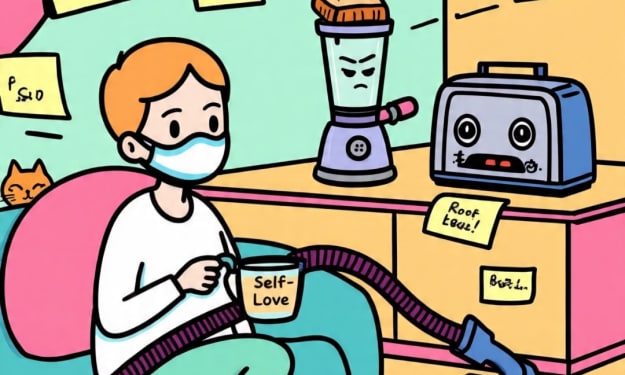
It all began on a Tuesday, which, in my experience, is the most suspicious day of the week. Monday gets all the blame, but Tuesday is where things really start to go off the rails. I had just finished a long Zoom call in which I nodded sagely for an hour while understanding nothing, and decided that, as a responsible adult, I should vacuum. Big mistake. I rolled out "Vince the Vacuum" — a name I gave it during the pandemic, when I started talking to my appliances more than actual people. Vince was always a bit moody, but reliable. Until that day. I flipped the switch. Vince roared to life like a vengeful jet engine. Then, instead of politely sucking up the cereal I had been stepping over for three days, it lunged forward, wrapped its cord around my ankle like a lasso, and spun in place like it was possessed by the spirit of a rodeo champion. I screamed. Vince roared. My cat, Professor Whiskers, launched himself into the curtains. The toaster buzzed aggressively, seemingly in solidarity. I stumbled backwards and fell directly into a pile of unfolded laundry, which, thank heavens, cushioned both my ego and my tailbone. Once I’d untangled myself and sent Vince back into the closet for time-out (and possibly an exorcism), I stood in my now slightly cleaner but traumatized apartment, panting. That’s when I noticed the sticky note on the fridge: "Maybe the problem isn’t us. It’s you." I had no memory of writing that. I narrowed my eyes at my fridge, suspiciously silent but humming with judgment. That's when things got weirder. Over the next few days, the rebellion spread. The blender would start up randomly every time I walked by, turning a peaceful kitchen trip into a jump scare. My toaster began burning my toast in passive-aggressive protest, leaving behind charred messages like "Listen to your feelings" and “Therapy is valid.” My smart speaker started playing breakup songs every time I asked for lo-fi beats. It all came to a head during a FaceTime call with my best friend. "I think my appliances are mad at me," I confessed, cradling a cold cup of tea (the kettle refused to work unless I apologized first). There was a long pause. “You’ve been home alone too long,” she said gently. “No, really. They’re trying to tell me something. Like... like they want me to slow down.” My friend raised an eyebrow, clearly preparing the number for a wellness hotline. But I couldn’t stop thinking about it. Maybe, just maybe, the rebellion wasn’t about the vacuum. Or the blender. Or even the toaster’s existential toast. Maybe my appliances were reflecting the chaos I was creating—running on low energy, overheating, burning out. That night, instead of forcing myself to clean or be productive, I lit a candle, took a bubble bath, and played soft jazz. The vacuum stayed quiet. The blender didn’t buzz. Even the smart speaker played a relaxing guided meditation without a single sarcastic interruption. I started giving myself more grace. I made my bed just because it felt nice. I cooked something other than microwave noodles. I even started talking nicely to Vince again. And slowly, my apartment calmed down. A week later, I tried vacuuming again. Vince made a low grumble but cooperated. I like to think he appreciated the bath bombs and self-reflection. It turns out, my appliances weren’t malfunctioning—they were mirroring my burnout. I was pushing through every task like a machine, ignoring all signs of exhaustion until everything (and everyone, including poor Professor Whiskers) was ready to snap. So I made a decision. I scheduled actual breaks into my day. I set boundaries with work. I even started journaling—on paper, not a toaster. And each time I slowed down, I felt the resistance around me soften. The blender purred contentedly when I made smoothies. The toaster delivered perfect golden-brown slices with quiet dignity. The vacuum, while still a bit dramatic, stayed on task. I now keep that sticky note on my fridge, right next to a magnet that says “Self-care is not selfish.” It turns out, even a vacuum rebellion can be a wake-up call if you’re willing to listen. And if not? Well, I hear air fryers are starting to unionize.
By Muhammad Saad about a year ago in Humans
The Mind Within: Unlocking the Mysteries of Human Psychology
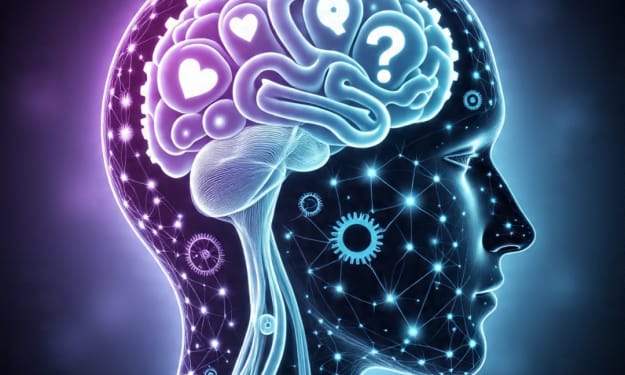
The Mind Within On a rainy afternoon in a quiet suburban neighborhood, 14-year-old Maya sat by the window, lost in thought. Her school project was due in two days: “Understanding the Human Mind.” At first, the topic seemed vague and overwhelming. But something about it pulled her in. After all, what could be more fascinating than understanding why people think, feel, and act the way they do? Maya’s curiosity led her to the local library, where she met Mr. Ellis, a retired psychologist who volunteered there. She asked him a simple question: “Why do people behave the way they do?” He smiled and responded, “That’s the big question of psychology, Maya. And the answer is… it depends.” With his help, Maya began to peel back the layers of the human mind. She learned that psychology isn’t just about mental illness or therapy couches—it’s the scientific study of the human experience. Every decision we make, every emotion we feel, every habit we form—it all ties back to how our minds are wired. The Foundation: Nature and Nurture Mr. Ellis explained the concept of nature vs. nurture. Some aspects of who we are—our temperament, intelligence, or even susceptibility to anxiety—are influenced by our genes. But our environment, the people we grow up around, the culture we live in, and the experiences we go through, shape our personalities too. Maya found it fascinating that two siblings could grow up in the same house, yet turn out completely different—one outgoing and artistic, the other quiet and logical. “It’s because human behavior isn’t just built—it’s sculpted,” Mr. Ellis said. “And psychology helps us understand that sculpture process.” Emotions and the Brain Maya dove deeper. Emotions, she learned, are not just feelings—they’re powerful messengers. Fear, for example, isn’t just a reaction to danger; it’s a survival tool developed over thousands of years. The amygdala, a small almond-shaped structure in the brain, plays a big role in processing fear. When Maya once froze during a school presentation, it wasn’t because she lacked confidence—it was because her brain perceived a threat to her social standing. Happiness, sadness, anger, love—each emotion has roots in brain chemistry. Neurotransmitters like dopamine and serotonin act like messengers between brain cells. A drop in these chemicals can lead to mood disorders like depression, while a boost can bring feelings of joy. It made Maya think: If our emotions are so deeply tied to biology, why do we sometimes ignore them? Cognitive Biases: The Mind’s Shortcuts The more she read, the more Maya realized that the brain, while powerful, isn’t perfect. Humans have cognitive biases—mental shortcuts that help us make decisions quickly, but not always accurately. The confirmation bias, for example, makes us seek out information that supports what we already believe, ignoring evidence to the contrary. The halo effect makes us assume someone is good at everything just because they’re attractive or likable. These biases shape everything from friendships to politics. Understanding them, Maya thought, could help people make fairer judgments—and maybe even argue less online. Behavior and Motivation One night, Maya caught herself procrastinating on her project. She laughed at the irony—“Why do we avoid things we know are important?” The answer, she discovered, lies in motivation. Psychologists like Abraham Maslow proposed that human motivation is built on a hierarchy of needs—starting from basic survival (food, safety) and moving up to emotional fulfillment (love, esteem), and finally to self-actualization—becoming the best version of oneself. When Maya lacked motivation, it wasn’t laziness—it was her brain prioritizing comfort and avoiding stress. But once she understood this, she could counteract it with intrinsic motivation—doing something because it matters to her, not just for a grade. Psychology in Everyday Life As Maya wrapped up her research, she realized that psychology was everywhere—in marketing ads that used emotional appeals, in classrooms shaped by learning theories, in family arguments resolved by better communication. Even her dog’s behavior could be explained by classical conditioning, a concept discovered by Ivan Pavlov over a century ago. On the day of her presentation, Maya stood confidently in front of her class. She didn’t just present facts—she told a story. About fear and courage, about biases and growth, about how understanding ourselves can lead to compassion for others. When she finished, her teacher smiled. “You didn’t just study psychology,” she said. “You brought it to life.” --- Final Thought Human psychology is more than a subject—it’s a lens through which we can better understand the world. From the silent workings of the brain to the loud chaos of human behavior, the study of the mind reveals that we are not just products of biology or upbringing—we are meaning-makers, constantly interpreting and adapting to our ever-changing world. And in that journey, the more we learn about others, the more we discover about ourselves.
By Muhammad Saad about a year ago in Humans
5 Tips for Surviving an Unfair Boss
Every job has stress, but the workplace environment can seem almost unbearable when working for an over-demanding or unfair boss. You don’t have to like your boss, but you do need to be able to co-exist and co-operate with him for you to be productive and successful at your job.
By LaMarion Zieglerabout a year ago in Humans