
Roots of Resilience: A Farmer's Struggle
The Silent Struggles and Resilience of a Farmer’s Heart
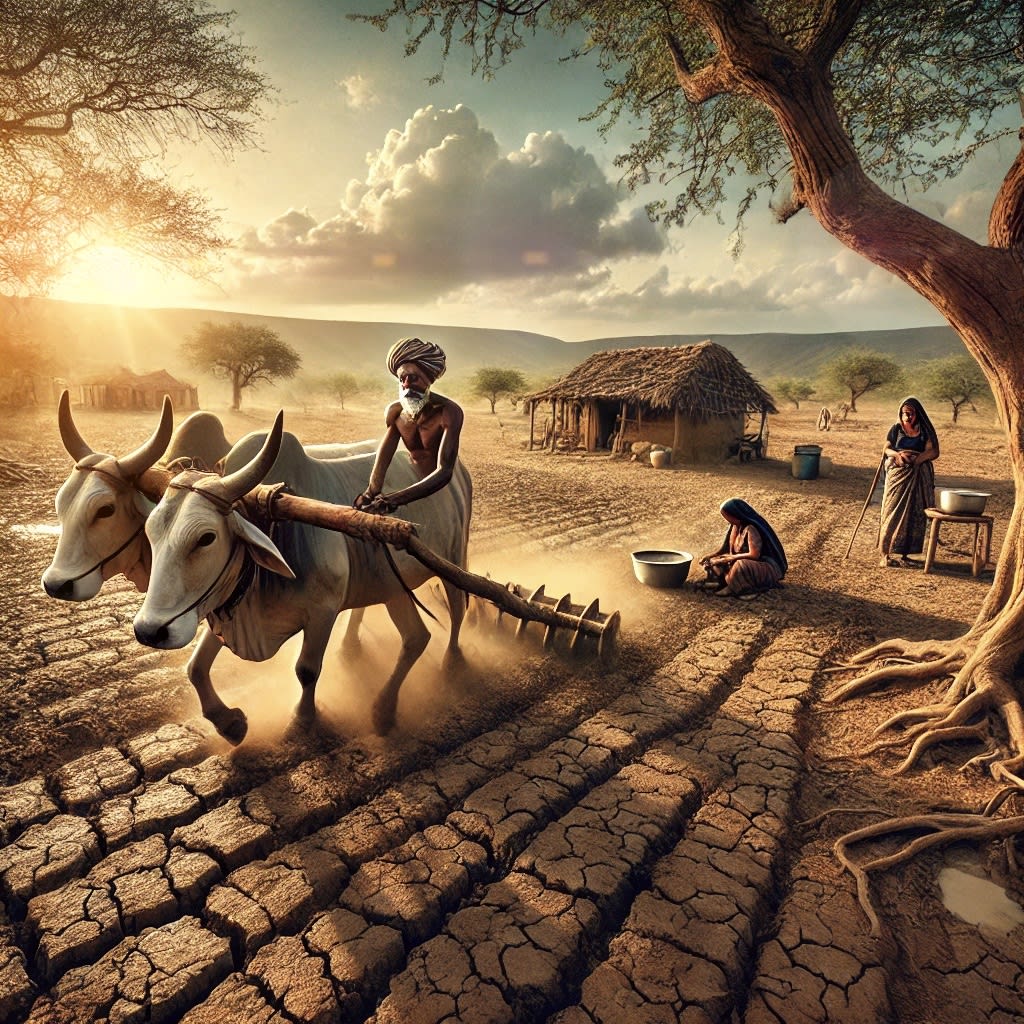
Part I: The Seed of Hope When I was a child, the mornings would begin with the sound of birds in the distance and the first rays of sunlight kissing the fields. The air would be cool, heavy with the scent of the earth, a scent that carried the promise of another harvest. My mother, wearing her faded cotton sari, would tie her hair in a simple bun, while my father, his face lined with years of hard work, would ready the bulls for a long day in the fields. The soil beneath our feet wasn’t just land—it was a canvas for dreams, a place where my parents poured their sweat, their hopes, and their love. Every season, they worked with the rhythm of the land, marking time by the sowing, the nurturing, the harvest, and the rest. As a child, I didn’t understand the weight of their labor—how the earth, though life-giving, was also a silent oppressor. My parents’ love for the land was unconditional, a bond forged over generations. But like all great loves, it came with sacrifices—long hours, relentless toil, and the ever-present uncertainty that loomed over every crop.
Part II: The Struggle of the Land As I grew older, the harsh realities of farming became clearer. The rains grew unpredictable, and what once seemed like the bountiful gift of nature began to feel like a cruel lottery. Our land was small, yet my father never complained. Even when the droughts came and the seeds failed, he pressed on, believing that the next season would be better. He would say, “The land always gives back. It’s just a matter of time.” But I could see the cracks in his spirit, the deep furrows etched in his brow. And when my mother, ever the optimist, would smile through her tired eyes, I knew that even her hope was beginning to fray. One year, the monsoons came late, and our crops withered before they had a chance to bloom. The sky, once their partner, had become a distant, indifferent observer. That year, my father didn’t speak much. He stood in the fields, staring at the dry, cracked soil, as if waiting for a miracle that wouldn’t come. The debts began to mount. My father would tell me stories of the land’s past—how it had once been fertile, how his ancestors had worked it with pride. But now, all I saw was a struggle for survival. Each harvest that failed, each crop that didn’t make it to the market, chipped away at the spirit of the man I called my father. His hands, once strong and steady, trembled when he held the plow. My mother’s once-joyful face had become a mask of worry.
Part III: The Silent Suffering The pain of a farmer is not just in the back-breaking labor, but in the silence—the unspoken agony of watching dreams wither in the face of forces beyond control. When the rains failed again, my father walked the fields late into the night, under a blanket of stars that seemed just as distant as his hope. There were no words left to say. Just the rhythm of the plow, the crunch of dry earth underfoot, and the whisper of the wind that carried away his frustrations. I remember a moment, a single moment, that would stay with me forever. One evening, as my father sat beside me, staring at the horizon, he said, “There is no greater pain than knowing you’ve failed those who depend on you.” His voice cracked as he spoke—words I had never expected to hear from the man who had always been the pillar of strength in our home. His shoulders slumped that evening, and for the first time, I saw him as human—fragile, broken by a world that was supposed to care for those who worked it. I didn’t know how to comfort him. What could I say to a man who had given his life to the soil, only to see it betray him?
Part IV: The Unexpected Storm The following year, my parents made one last attempt. They invested every penny we had left, borrowing from relatives, to plant a crop that was supposed to be our salvation. I remember the excitement in their voices as they planted the seeds, but it was a brittle excitement, fragile and fleeting, as if they knew the storm was coming. The drought returned, more ferocious than before, and with it came the despair. We watched helplessly as the crop, once full of promise, began to wilt. My father could not hide his tears that year. “The earth doesn’t care,” he whispered, staring at the ground, his hands trembling. “We are nothing but fools, hoping for something we cannot control.” But in the midst of this destruction, something unexpected happened. A storm, unlike any we had ever seen, gathered on the horizon. It was not the monsoon rain, but a thunderstorm that came with fury and rage, as if nature itself was punishing us. The crops, already brittle from the drought, were swept away in an instant. And yet, as I watched my father, my heart broke not just for the loss, but for the way he stood tall in the face of it, as if he had already made peace with the earth’s cruelty. Part V: Resilience and Hope
The storms of life, much like the weather, come without warning. Yet, as my father often told me, resilience is the root that keeps us grounded. That year, with nothing left to give, my parents took one last chance—planting a new crop, this time something more sustainable. And when the rains came, they were not kind, but they were enough. The harvest was small, but it was enough to survive. And in that survival, I saw something more profound than the earth’s ability to give: I saw the resilience of the human spirit, its capacity to endure, even in the darkest of times. In time, the land healed, and so did my father. He didn’t speak of the struggles anymore, but when I looked at him, I saw a quiet strength that was born not of victory, but of the struggle itself.
Part VI: Reflection and Legacy
Now, as I stand on the threshold of adulthood, I carry the weight of my father’s sacrifices with me. His struggles shaped me, not just as a person, but as someone who understands the value of hard work, of persistence, of never giving up, even when the world seems determined to break you. My father’s story is not one of triumph, but of survival. And perhaps, in that survival, there is something even more powerful—a lesson for all who toil beneath the sun, year after year, knowing that the rewards are never guaranteed but that the fight itself is worth everything. I often return to the fields, now barren and quiet, but in my heart, the song of the soil continues. It’s a song of tears, of hope, of dreams that may never be realized but continue to inspire those who dare to dream them. Sometimes, it is in the deepest struggles that we find our greatest strength. And in the silence of the fields, where the farmer’s cry goes unheard by many, we are reminded that it is not just the land that gives, but the spirit of those who refuse to surrender to it.
About the Creator
Enjoyed the story? Support the Creator.
Subscribe for free to receive all their stories in your feed.
Comments
There are no comments for this story
Be the first to respond and start the conversation.