
Manifesto: Love Doesn’t Burn
We confuse chaos with passion — and peace with boredom. But real love doesn’t need to hurt to be real.
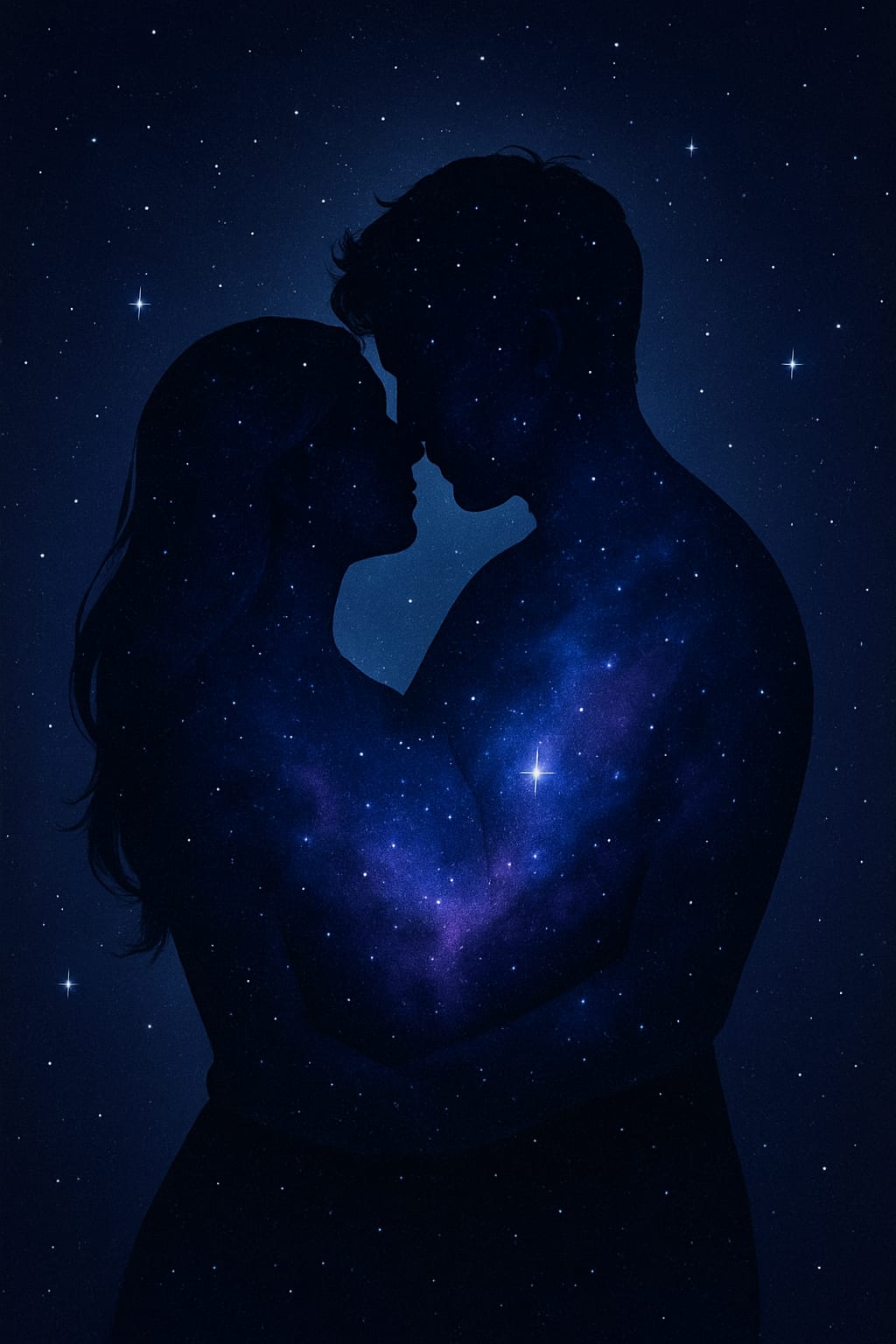
“You Mistake Chaos for Passion”
You mistake inconsistency for excitement. You mistake stability for boredom.
When someone makes an effort, you call it desperation. When someone gives
you time, you call it needy. When someone shows up for you, you assume
they’re the one who needs you.
You don’t recognize love when it enters your life. Then you complain that love
doesn’t exist anymore. That everyone just wants to play games. That no one
loves purely anymore.
But when you had something real right in front of you — you ran.
It felt too simple. Too calm. Too available. There wasn’t that burning chaos you
associate with passion.
And you thought: If there’s no fire, there’s no love. Didn’t you?
I don’t think you’re afraid of people who leave. You’re afraid of the ones who
stay.
The ones who don’t give you reasons to lose your mind. The ones who choose
you — quietly, consistently — without making you question it.
You confuse love with temporary attraction. With power games. With the kind
of fire that burns fast and disappears even faster.
And when someone actually sees you, listens to you, looks for you, includes
you — you take it for granted.
You assume that’s how it’s supposed to be. You don’t stop to appreciate it,
because you don’t know how to receive.
Maybe somewhere along the way, someone made you believe — or you taught
yourself — that love has to break you to be real.
That if it doesn’t hurt, it doesn’t matter. That if it’s not chaos, it’s not passion.
Yes, you believe all that. You’ve come to think that love must hurt, burn, and
destroy you to mean something. And yet, deep down, you know.
You know that real love is calm. Gentle. Warm. You have a faint image of it —
a memory, a sensation of how it’s supposed to feel.
But when it actually shows up — when someone sees you, chooses you, stays
— you don’t recognize it. You reject it.
You crave the circus instead. The shouting, the tears, the broken plates, the
drama. You crave the kind of chaos that once made you feel alive.
But what you call feeling alive is what’s slowly killing you.
I think there’s a conflict inside you — a confusion between what you believe
you deserve and what you actually want. Because what’s really happening is
this: you’re trapped in an attachment style that keeps pulling you backward,
even when you want to move forward.
Most often, it’s a disorganized attachment — that painful mix of wanting love
but being terrified of it. You learned that love isn’t safe, that it can come with
absence, rejection, or pain. So now you crave connection and sabotage it at the
same time. You want to be loved — but when someone actually tries, you run.
Because in your mind, love was never peace — it was war.
Or maybe it’s an anxious attachment — where you desperately crave
closeness, but deep down you don’t believe you can keep it. So you cling to
what rejects you and reject what’s stable. You confuse passion with uncertainty.
And when someone treats you with respect, with consistency, you get bored —
not because they’re wrong for you, but because you don’t know how to exist in
a love that doesn’t hurt.
Be honest with yourself. When you’re alone and imagine the kind of person you
want to meet — that real, steady love that stays, that matters — what do your
thoughts sound like?
If you listen closely, most of them begin with “I want.”
I want them to love me.
To accept me.
To wait for me.
To understand me.
To be there.
To know.
To feel.
To never leave.
But how many of your sentences start with:
“I want to give…”
“I want to be…”
“I want to build…”
“I will offer this too”?
Think about it. When you picture your ideal partner, do you ever ask yourself if
you are the ideal person for them? Or even try to be?
Because sometimes, when someone shows genuine interest, care, and patience,
you assume it’s owed to you. That it’s natural to receive it. That if they like you,
they’re supposed to give you everything.
But why?
I see people around me starving for adrenaline. Starving for pain. They say they
want peace, but when peace finally arrives — they don’t know what to do with
it.
They get restless. They reject it. They sabotage it. Because peace doesn’t
consume them. It doesn’t make them feel “alive.”
But what you think is living is actually what’s killing you.
And if your goal is self-destruction — fine. Just don’t use love as your weapon.
And don’t drag others down with you.
“We Called Love a Disease”
I see people constantly complaining that “there are no good people left.”
That everyone is selfish. That too many people hurt, use, or play games. That no
one knows how to love anymore.
But the irony?
Most of them are describing themselves.
It’s like they’re yelling at their own reflection, blind to the fact that they are the
reflection.
And honestly? I can’t blame anyone.
We’ve destroyed each other. Emotionally. Mentally. Spiritually.
We’ve turned love into a battlefield. Relationships into war zones.
We’ve turned women into men, and men into shadows.
How could I blame anyone for how they see love when all of us were once
forced to look at it through broken glass?
Because the truth is — every one of us once had a pure image of what love
meant. Simple. Gentle. Childlike.
That innocent belief that if you loved sincerely, everything would be okay.
Until someone came along. Then another. Maybe five. Maybe ten. Each one
leaving behind a betrayal, a wound, a painful lesson.
And slowly, piece by piece, they erased what you used to believe. Until there
was nothing left of that pure version of love.
And yes, at that point… you start to think love itself is a disease.
But maybe we should ask: why has love been called a disease since the
beginning of time?
Because it’s the one state that makes people irrational — and they don’t run
from it. Because it makes you lose control — and most people would rather
keep control than find happiness. Because love shakes you to your core.
It softens the places you swore would never break. It makes you vulnerable.
And in a world that teaches you to survive, not to connect, vulnerability
becomes dangerous.
Maybe love isn’t the disease. Maybe the world is so sick that anything pure and
healthy looks like a threat.
You see, that’s what I love about life — nothing is ever certain.
Everything is a question mark.
And if you’re a curious person, you end up discovering more than you ever
imagined.
Sometimes even more than you wanted to.
There’s something deeply fascinating about curiosity. Wanting to understand.
Wanting to know everything — about people, about life, about love.
But curiosity comes with a price: the pain of truth.
Because the more you learn, the more you realize. And realization hurts.
You start to see that so much of what you believed was an illusion.
That you — and generations before you — have been misled. Not out of
malice, but out of repetition. Out of fear. Out of innocence.
A friend once told me, “Luiza, don’t be too smart — men don’t like smart
women.”
And I remembered that.
I didn’t listen, but I remembered.
Because if there’s one thing I’ve never been good at, it’s pretending.
Pretending I don’t see. Pretending I don’t feel.
Pretending I don’t care. Pretending I don’t want to understand more.
Here’s what I believe: you don’t need dozens of relationships to understand
love. You just need to pay attention. To observe. To listen.
Without filters. Without projecting only your own experience onto everything.
If there’s one thing that always fascinates me about romantic relationships,
it’s the beginning.
Everyone loves to say, “This relationship destroyed me.”
But I’m not interested in the ending.
The ending is just the consequence.
What matters is the beginning — because that’s where everything is already
written.
Let me explain.
When two people meet and start liking each other, they both filter what they say
and do. They text less than they’d like to. They hold back when something
bothers them. They hide their real needs — out of fear.
Fear of being “too much.”
Fear of scaring the other person away.
Fear of being seen as desperate.
And when one of them actually chooses to speak — calmly, honestly, clearly —
the other reacts with suspicion. “Hm… why are they saying this now?”
Be honest: If you and I were just getting to know each other,
and I told you that something in our dynamic didn’t feel right — but said it with
care and respect — what would you think?
You’d probably have two options:
1. Get scared and pull away,
but not before telling me I’m “too sensitive” or “asking for too much.”
2. Or, see me as needy.
But rarely do people consider the third —
and most important — option:
“Maybe this person is being honest because they care.
Because they actually want things to work.”
People avoid expressing their needs, not because they don’t have them,
but because they know vulnerability often makes others run. Or judge.
But here’s the truth:
when someone tells you sincerely what they need, it’s not desperation — it’s
emotional maturity.
If you ask me, the foundation is everything.
In love. In work. In life.
If the base isn’t solid, everything built on top will collapse.
A house without a foundation doesn’t need an earthquake — one strong wind is
enough.
The same goes for relationships.
The beginning — whether it lasts a week, a month, or three — is the
foundation.
If you don’t lay down the right bricks, you’ll pay for it later.
And no, I’m not talking about screaming, slamming doors, or breaking things.
I’m talking about communication. Saying what you feel.
What you need. Who you are.
And most importantly — pay attention.
Not to what they promise, but to what they do.
Because if you see a red flag and choose to paint it pink, that’s on you.
If you make excuses for every behavior that hurts you — that’s also on you.
And if you stay, don’t complain six months later that “you knew it all along.”
People confuse love with self-sacrifice.
“It’s fine, I can handle it.”
“It’s just a phase.”
“They need me.”
No. It’s not a phase.
Anything you allow to take root will grow — and it will choke you.
Then you’ll sit there saying, “I was such a fool… I knew it from the start.”
Yes, you did. But you chose to ignore it.
Here’s the simple truth: You see a person’s real behavior from the start.
There’s no such thing as “too early.”
There’s no “let’s wait and see.”
You see it the moment you express a need —
and especially when you explain why it matters.
If they respond with, “Yeah, but my needs are more important than yours,”
that’s your cue to leave.
Because love is not negotiation. It doesn’t ask you to abandon yourself.
Especially not at the beginning.
Because how you lay the foundation is how you’ll live inside that house.
You either own your choices — or you spend the next year complaining about
“what they did to you.”
What I’m writing here isn’t an angry text.
It’s not a bitter confession.
It’s a manifesto — maybe.
I’m not here to blame anyone. This isn’t some hidden dedication.
It’s just that today, while talking to a friend, we realized how often people fall in
love with potential — with the version of someone that exists only in their
imagination.
We fall in love with what could be, not with what is.
We fall for the idea of the relationship, the vision we’ve built in our own minds.
We see qualities in the other person that they haven’t even begun to see in
themselves.
And based on that illusion, we fight. We stay. We forgive. We justify.
We ignore every red flag because we’re attached to the fantasy of what this
could become.
So we pour our energy into proving their worth — showing them how good
they could be if only they wanted to.
And when they don’t want to, or can’t, we end up exhausted, heartbroken,
drained.
And then we say, “They hurt me.”
But most of the time, it wasn’t them who hurt us. It was our expectations.
That’s why breakups hurt so deeply. Because you’re not just losing a person —
you’re losing the story you wrote in your head. The dream you built on hope,
not on truth.
If you’re honest with yourself, you knew from the start.
You knew who they were.
You felt it in your gut that they weren’t right for your soul. But you stayed —
because you projected.
You wrote an entire script based on tiny gestures, rare moments that gave you
hope. And then you built expectations. And expectations — not people —
are what truly cut you open.
Because in the end, people come and go. No one really belongs to anyone.
But expectations? They stay. They stick to your soul, your mind, your body.
And when they’re not met, they leave scars.
They transform you.
So if you want to understand why it hurts so much, stop asking what they did to
you.
Start asking what you promised yourself — in their name.
“Everyone Wants to Be Understood, But No One Wants to Be Honest”
The other day I was listening to a few podcasts with Mel Robbins about
relationships.
She said something that stuck with me:
people, especially in the early stages, skip the truth.
Out of the need to be liked, to be chosen, to seem perfect,
they only show the polished version of themselves.
And that’s exactly where everything goes wrong.
Because when someone opens up about their past —
a toxic relationship, a painful breakup, a mistake —
most people respond with:
“Oh, I’d never do that.”
“I’d never say that.”
“I would’ve handled it completely differently.”
Bullshit.
Stop lying to yourselves.
The beginning of a relationship isn’t the time to convince.
It’s the time to be real.
Because if you start by playing a role,
don’t be surprised when you’re asked to keep performing it long-term.
Oh boy… beginnings.
They’re the biggest traps in relationships.
And then we wonder why people end up hurt, betrayed, disappointed.
Because no one admits how it actually started.
No one says, “Yeah, I was fake.”
No one confesses, “Honestly, I didn’t really care about the other person — it
was all about me.”
It was always me:
I wanted to talk.
I wanted to be seen.
I wanted to be heard.
I decided when we met, how long we stayed, what we did.
I was the center.
And when the other person finally stood up and walked away,
suddenly they became the crazy one.
“They weren’t right.”
“They were too sensitive.”
“Too dramatic.”
No.
They just realized the show was about you,
not you two.
No one sees the effort you put in.
But everyone throws stones when you stop.
No one notices how much energy, emotion, or time you invested.
But the moment you say “enough,” they judge you.
“Love Was Never Meant to Be This Complicated”
So what are the signs you should take seriously — right from the start?
Let’s be honest.
You don’t make any decisions.
Everything is decided by the other person.
You just adapt.
You feel guilty for asking — for attention, for clarity, for affection.
Everything you need becomes “too much.”
They make you question your limits.
Whenever you speak up, you’re “too sensitive.”
They slowly chip away at your standards.
They sabotage your instincts.
You feel that something’s off, but you start to believe you’re the problem.
You’re not.
They avoid clear conversations.
Every serious question turns into a joke — and that is an answer.
They promise, but never follow through. They talk beautifully, but actions are
missing.
And here’s the simple truth: when someone truly wants you — it shows.
You already know that.
The moment you have to beg for love, to explain how you want to be treated —
that’s already the end.
From that point on, it’s no longer about you two.
It’s about how much of yourself you’re willing to lose just to stay.
Love is simple.
You’re the one making it complicated — either by giving too little, or by
settling for too little.
This piece isn’t here to teach you how to love.
It’s here to remind you of something you’ve always known:
Love is simple. And beautiful.
It doesn’t need games.
It doesn’t need chaos.
And if someone — through their words, their wounds, their treatment of you —
once tried to convince you that love hurts,
that it’s a weakness,
that it shouldn’t be felt, spoken, or shown —
know this:
that person didn’t love themselves.
And they certainly didn’t love you.
Before you ask love to give you something, ask yourself — what are you
willing to give it?
Go love — and it will show you what real love actually feels like.
About the Creator
Enjoyed the story? Support the Creator.
Subscribe for free to receive all their stories in your feed.
Comments
There are no comments for this story
Be the first to respond and start the conversation.